What Really Happens to Sand-Set Porcelain and Travertine Pavers in Orange County
Key Takeaways
• Porcelain (3/4”) and travertine (1 1/8”) pavers are not interlocking products, unlike true concrete interlocking pavers.
• Interlocking concrete pavers rely on edge lugs, joint sand, a poured concrete edge restraint, and a minimum 4” Class II road base to lock together as a system.
• Porcelain and travertine can absolutely be installed over a sand-set base, but expect some shifting and joint maintenance over time.
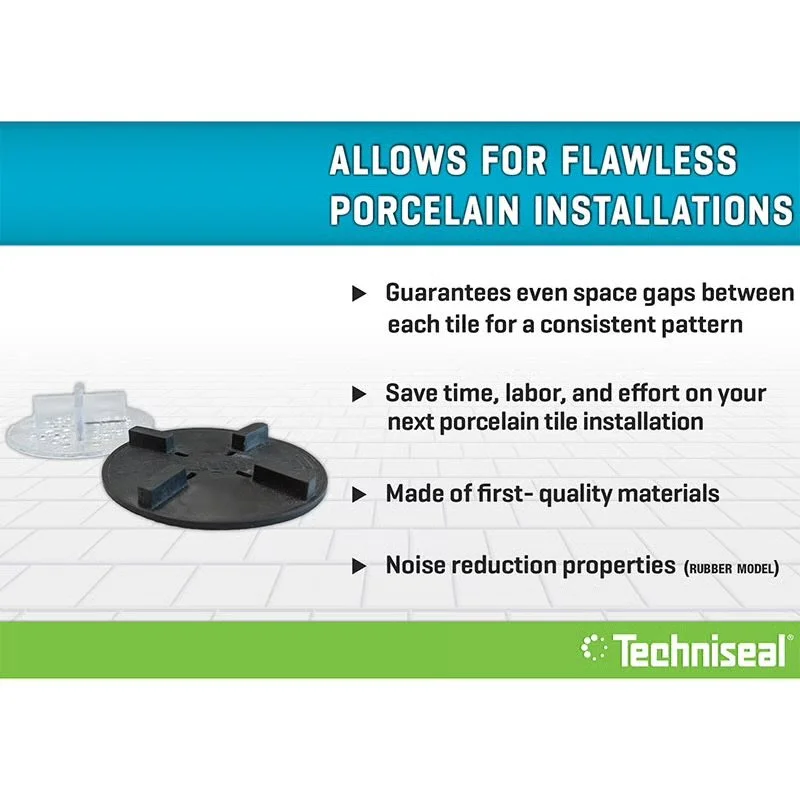
• Plastic tile spacers have become a meaningful upgrade, keeping polymeric joints even and improving long-term stability.
• A concrete sub-base is the more permanent option for porcelain or travertine, at a real cost and time premium over sand set.
Porcelain pavers have become one of the most requested finishes we see in Orange County right now, and travertine has never really left the conversation. Sometimes it comes from the homeowner directly. Sometimes it’s already sitting on the architect’s plans before we ever walk the site. Either way, part of our job is making sure the client understands exactly what they’re getting, not just what the material looks like in a showroom.
Here’s the piece that often gets skipped: porcelain and travertine pavers are not interlocking products. That distinction matters more than most people realize once the project is finished and the sun, irrigation, and foot traffic have had a year or two to do their work.
What Actually Makes a Paver “Interlocking”
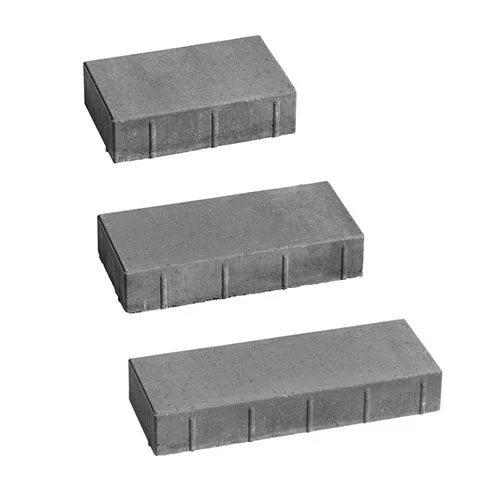
A true interlocking concrete paver earns that name through a system, not a single feature. Along the edges you’ll find lugs, small spacers molded into the paver itself, that keep each unit a consistent distance from its neighbor. Joint sand swept into those gaps locks the field together. A poured concrete edge restraint holds the entire perimeter in place so the pavers can’t migrate outward under load. And underneath all of it sits a minimum 4” of compacted Class II road base, the structural layer everything else depends on.
Every one of those elements relies on the others. Remove one and the system loses integrity.
Even with all of that engineered in, interlocking concrete pavers can still shift and move over time. That’s not a defect, it’s a flexible system by design, and it’s part of why we like it: a section that settles or heaves can be lifted, releveled, and reset without demolishing anything around it.
So Can You Install Porcelain or Travertine Over Sand?
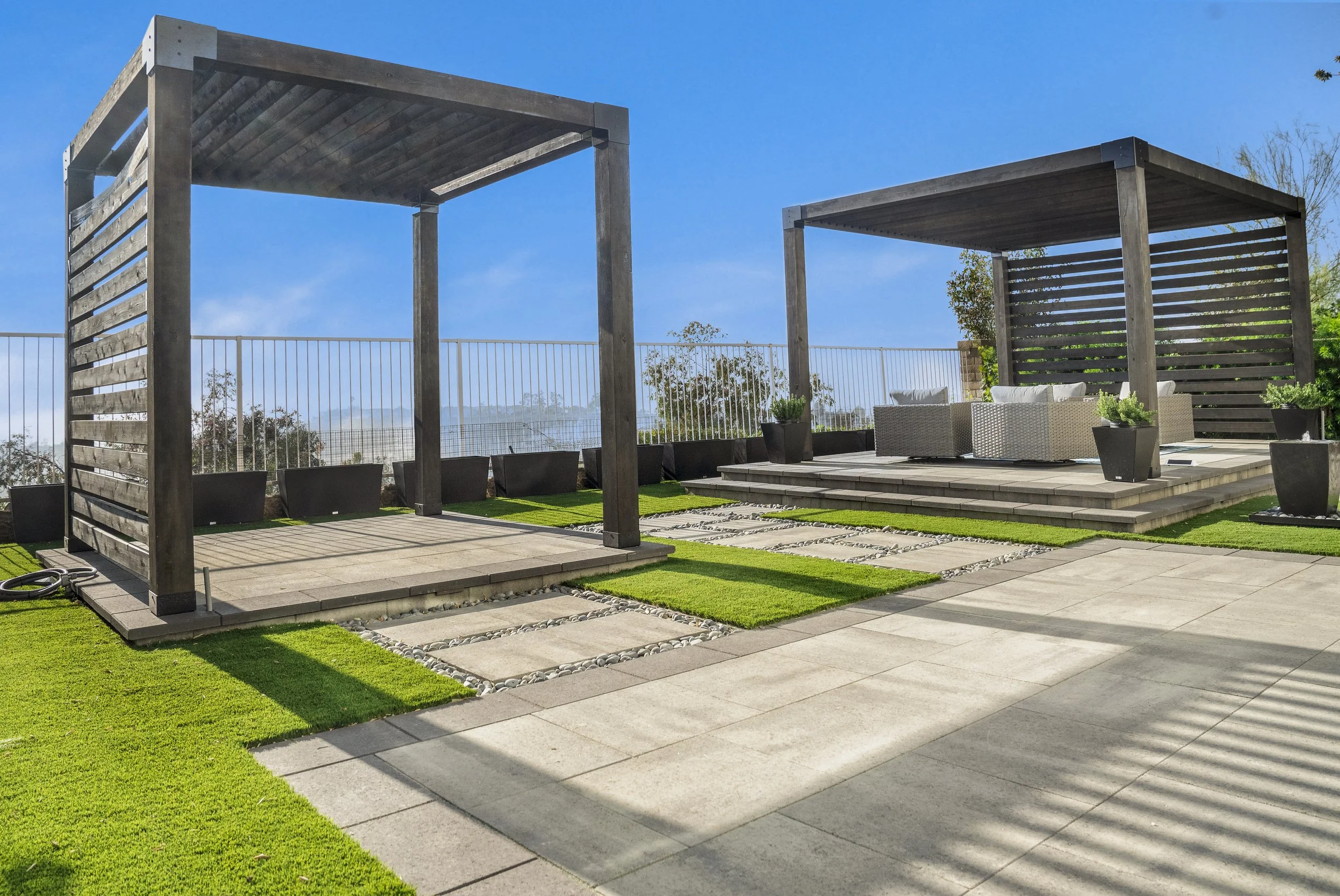
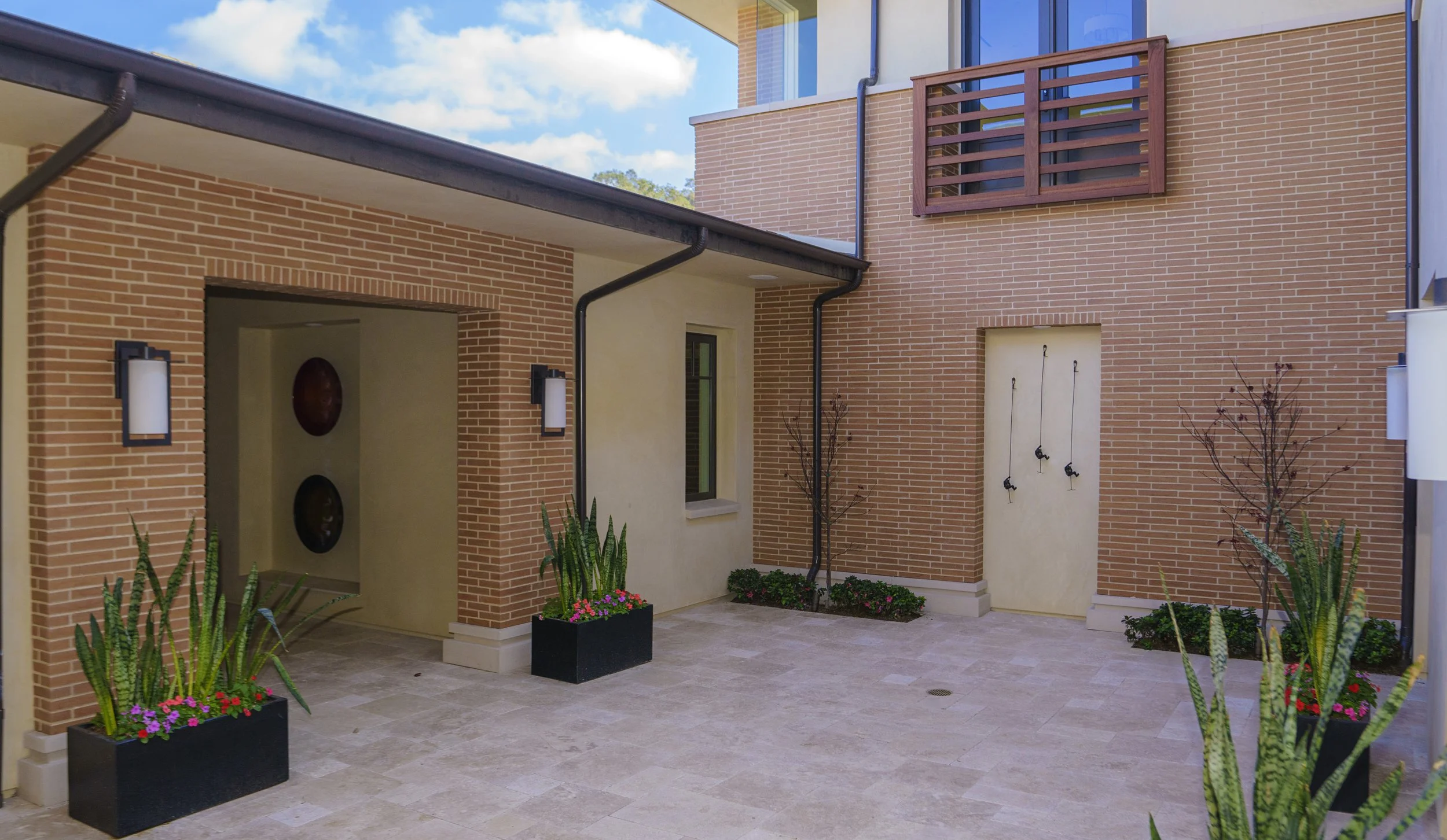
Yes, and we do it regularly for clients in San Juan Capistrano, Dana Point, and San Clemente who want that porcelain or travertine look without the cost of a full concrete sub-base. But it’s worth being honest about the tradeoff going in.
Southern California installers typically use plaster sand as the setting bed, which gives porcelain and travertine a smooth, level surface to sit on before install. It’s a good surface, but it isn’t a locking mechanism the way an interlocking concrete paver’s lugs and edge restraint are. Over years of thermal movement, irrigation, and foot traffic, some shifting is normal, and the joints become the part that needs attention.
Polymeric sand in those joints behaves differently than people expect. It hardens when dry and softens when wet, and over enough wet-dry cycles some material naturally washes out or breaks down. That’s simply the nature of the product on a sand-set application.
A few years back, a leading porcelain paver manufacturer introduced plastic tile spacers to address exactly this. Techniseal’s spacer system keeps joints evenly spaced and gives the polymeric sand a more stable channel to sit in, which has made a real difference in how these installations hold up over time. You can review the manufacturer’s technical spec sheet here. It’s a small detail, but it’s the kind of detail that separates an installation that ages gracefully from one that needs attention every couple of years.
The Tap Test
Here’s a simple way to understand what you’re standing on. Tap on a sand-set porcelain or travertine paver and you’ll hear a faint hollowness. That’s not a flaw, it’s physics. These materials run 3/4” to 1 1/8” thick, considerably thinner than a true interlocking concrete paver, which is typically 2 3/8” thick and installed as a far more solid, monolithic system. The concrete paver simply has more mass and a more rigid base assembly beneath it, so it doesn’t produce that same sound.
The Better Alternative, and Why It Costs More
For clients who want porcelain or travertine and want it to behave more like a permanent surface, a concrete sub-base is the answer. Setting these materials over concrete rather than sand protects the investment, minimizes long-term shifting, and gives the finished surface a solid, monolithic feel underfoot, closer to what you’d get from an interlocking system, without the hollow sound.
The honest reason more people don’t default to concrete sub-base every time comes down to cost and schedule. Forming, pouring, and curing concrete is a different scope of work entirely, more labor, more time, more coordination than a sand-set install. For a courtyard in Laguna Hills or a motor court in Newport Beach, that difference can be significant, and it’s one of the first things we walk clients through before they choose a direction. Time is money on a job site, and sand set will always move faster than concrete work.
Choosing What’s Right for Your Project
Neither approach is wrong. A sand-set porcelain or travertine installation, done correctly with proper base prep and modern spacer technology, can look and perform beautifully for years. A concrete sub-base simply buys you more permanence for a higher upfront cost. What matters most is that the decision is made with full information, not discovered by accident five years into ownership.
That’s the conversation we have with every client before a single paver goes down.