Preparing Your Outdoor Living Space for El Niño Before the Storms Hit
Key Takeaways
• A well-built outdoor space isn’t maintenance-free, a short seasonal check before heavy rain protects the investment you’ve already made
• Two things every homeowner can check now: surface drainage and paver joint sand/base integrity
• Behind the scenes, real wall drainage, V-ditches, and channel drains do the heavier work of redirecting water away from your home and slopes
• These systems are engineered in at the time of construction, they’re far less effective retrofitted into existing conditions, which is why planning ahead matters
• If you’re seeing standing water, erosion, or pitch running toward your home, that’s worth a call before the season, not after
An outdoor living space is not a static object. It’s a system stone, sand, gravel, drainage, and grading, all working together quietly under the surface. Most of the time, you never think about it. Then a wet winter arrives, and the parts of the system you can’t see decide whether the parts you can see hold up.
For homeowners in Newport Beach, Newport Coast, San Juan Capistrano, and Dana Point, a strong El Niño pattern isn’t an abstraction. It means sustained, heavy rainfall over a short window exactly the condition that finds every weak point in a hardscape at once. Some of what protects a property against that is visible and easy to check yourself. Some of it is engineered in from the start, and worth understanding even if you can’t inspect it directly.
What You Can Check Yourself
1. Surface Drainage: Watch Where the Water Actually Goes
Every patio, pool deck, and walkway should be sloped to move water away from the house and toward a designed drainage point not toward a fence line, a planter, or your neighbor’s yard by accident.
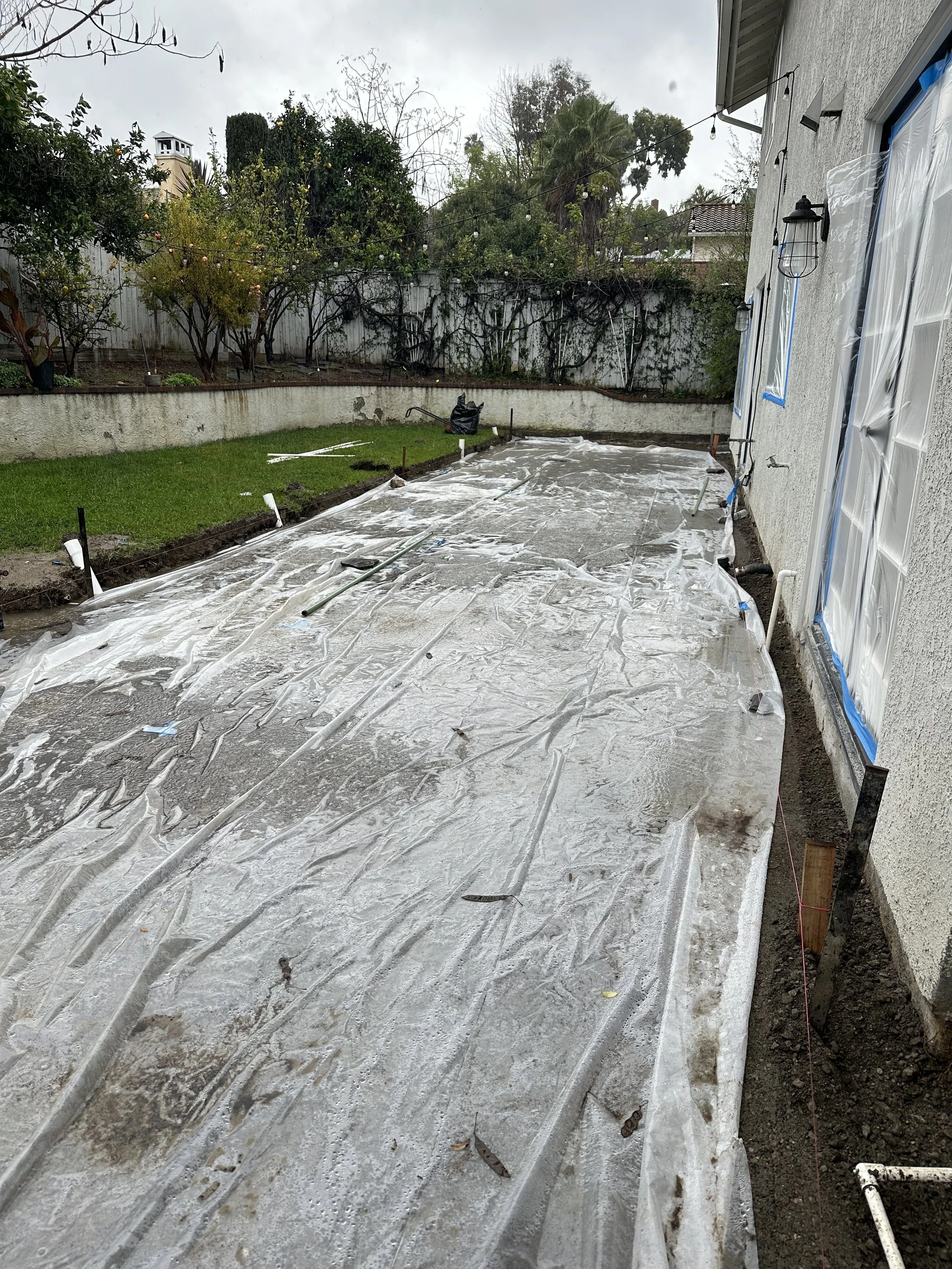
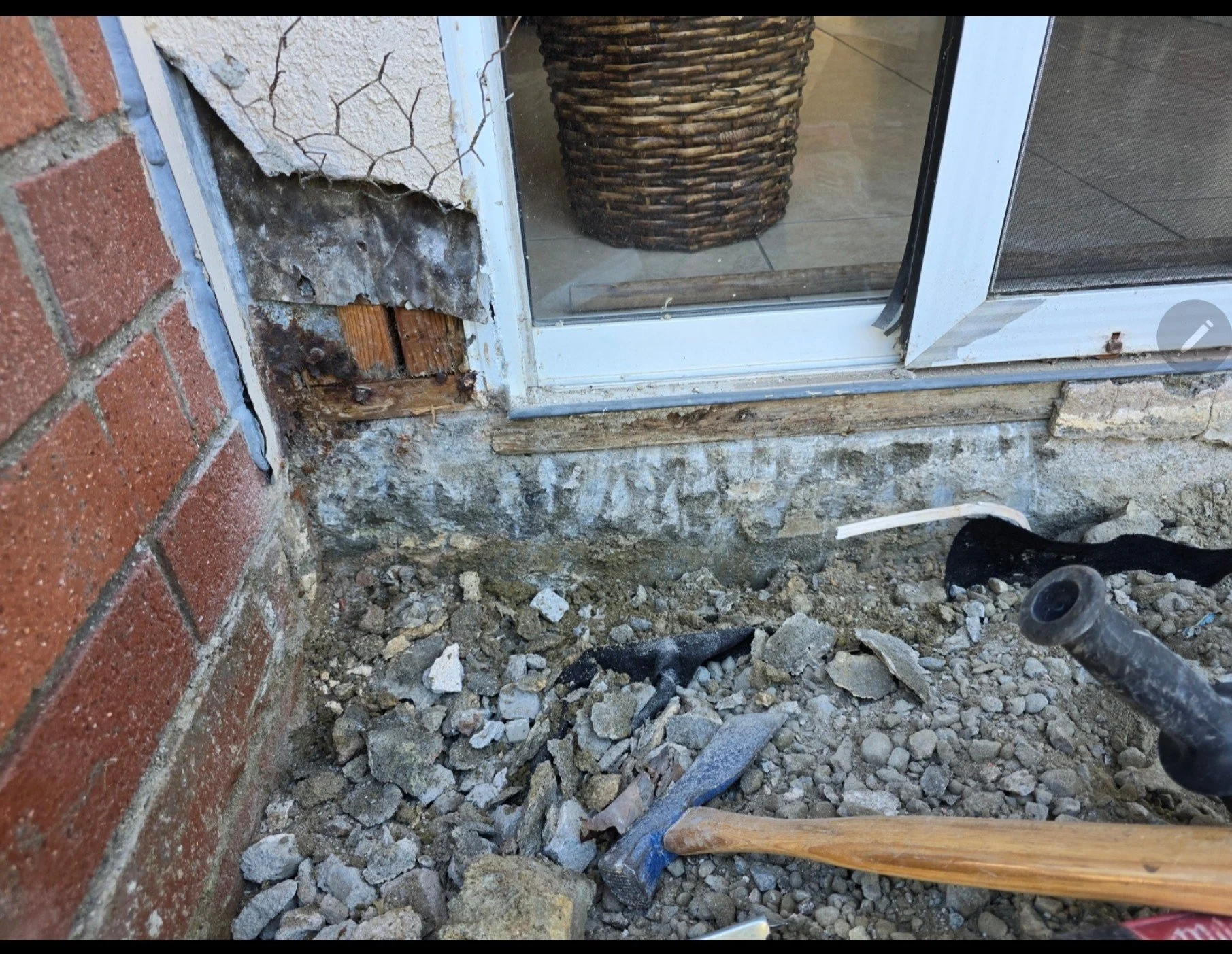
The check is simple: the next time it rains, or with a hose if it hasn’t yet, walk the space and watch. Water should move steadily and disappear. If it pools, moves slowly, or backs up toward a foundation or wall, that’s not a cosmetic issue over a full season of El Niño rainfall, standing water works its way into base material, joints, and soil in ways that show up later as settling or cracking.
This is especially worth checking around pool decks, where coping and deck drains are often the first place a wet winter reveals a problem, and along any patio that sits close to the home’s foundation.
2. Paver Joints and Base: The Part Nobody Thinks About
Paver joint sand does a job most people don’t realize it’s doing: it locks the pavers together as a single surface and keeps water from migrating straight down into the base beneath them. Over time, joint sand can wash out or compact, especially at edges, drain lines, and high-traffic areas.
Before a wet winter, look for joints that seem low, gaps that have opened between pavers, or areas where a paver rocks slightly underfoot. None of this is alarming on its own — it’s normal wear. But heading into a season of heavy rain, it’s the difference between a surface that sheds water as designed and one that lets water sit directly on the base material, which is where real problems start.
What’s Working Behind the Scenes
The following are components we design into a property at the time of construction. You can’t inspect them by walking the yard, but understanding what proper drainage looks like helps explain why some properties handle a wet winter without incident and others don’t.
Wall Drainage Done Right
A retaining wall holds back soil and, with it, water. On every wall we build, that water is managed with a perforated pipe set inside a bed of 12” x 12” three-quarter-inch rock, wrapped in filter fabric to keep soil out of the system, and tied into a solid SDR 35 line that carries the water to a proper outlet. It’s a closed, engineered system rather than a handful of gaps in the wall face, and it’s the reason a well-built wall doesn’t build up hydrostatic pressure behind it over a wet season.
V-Ditches on Slopes and Hillside Lots
On sloped properties whether alongside a retaining wall or entirely on their own on a hillside lot a concrete V-ditch intercepts water coming down the grade and redirects it along a controlled path instead of letting it sheet across the property or erode the slope itself. This is especially relevant for hillside homes in San Clemente, Laguna Niguel, and Coto de Caza, where a slope with no formal drainage path is often the first thing to show damage in a heavy rain year.
Slot and Channel Drains Near the Home
In areas where the grade pitches sharply toward the house, a slot or channel drain is built in to intercept the majority of that water before it ever reaches the foundation. This is a different tool than surface slope alone it’s a dedicated capture point for situations where the natural grade is working against the house rather than away from it.
Why This Has to Be Planned, Not Added Later
All three of these systems wall drainage, V-ditches, and channel drains are most effective when they’re part of the original design and construction. Retrofitting them into an existing hardscape or an already-graded slope is rarely as effective, and in many cases isn’t practical at all. This is one of the reasons a proper drainage plan at the outset is worth the conversation, rather than treating it as something to solve after a wet season exposes a weak point.
Our Approach
If you’re seeing standing water, a slope that’s eroding, or a grade that pitches toward your home rather than away from it, that’s worth a call before this winter’s storms move through Orange County, not after with a complete due over the right way. We can help with redirecting water properly, correcting hardscape pitch, and hillside improvements including retaining walls and V-ditches. Give us a call, don’t wait before it’s late.