
The Work You’ll Never See Is the Work That Matters Most
Key Takeaways
• The visible surface of a patio, wall, or driveway represents a small fraction of what determines whether it lasts
• Most hardscape failures trace back to what’s underground, not the materials on top
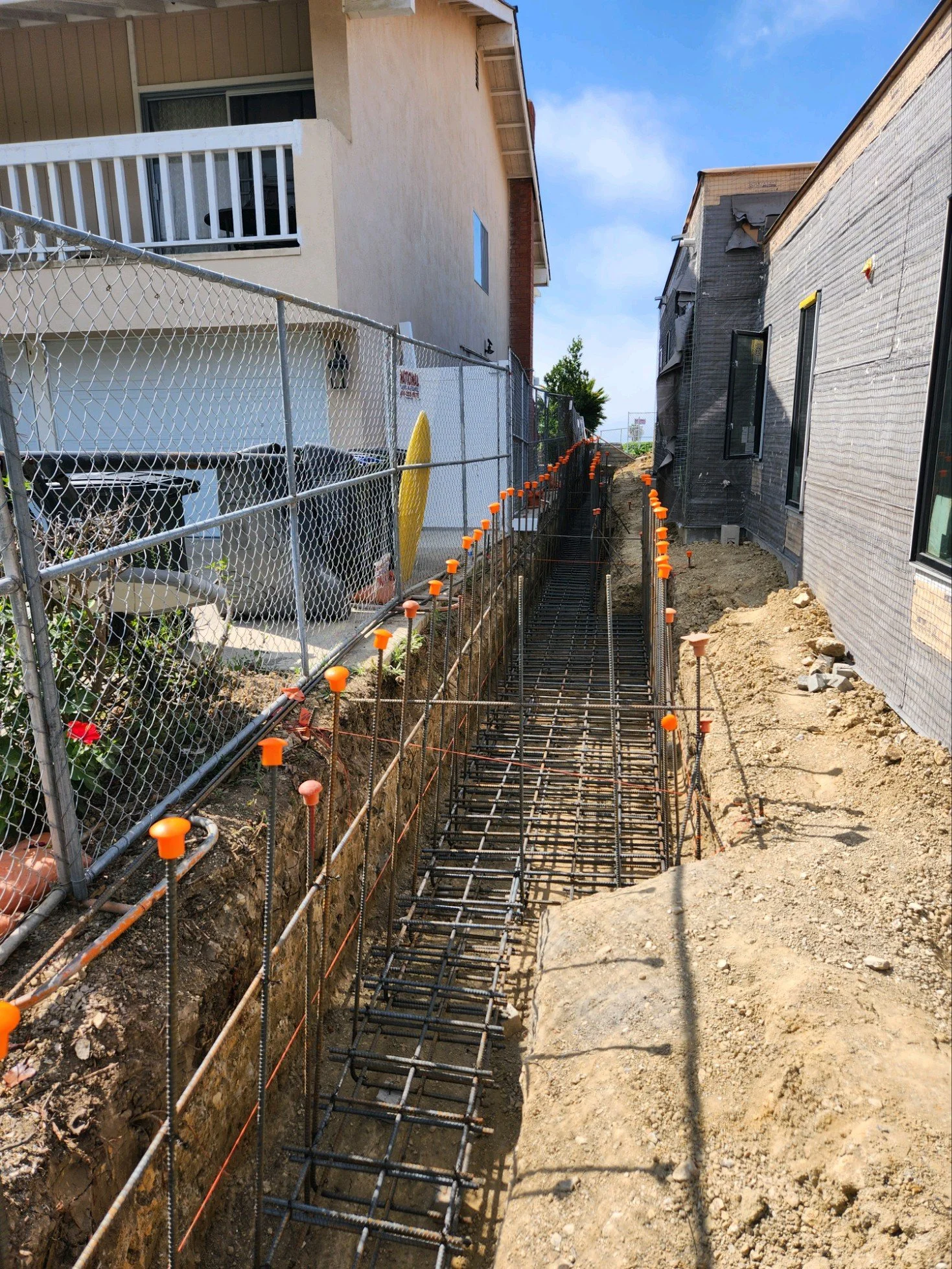
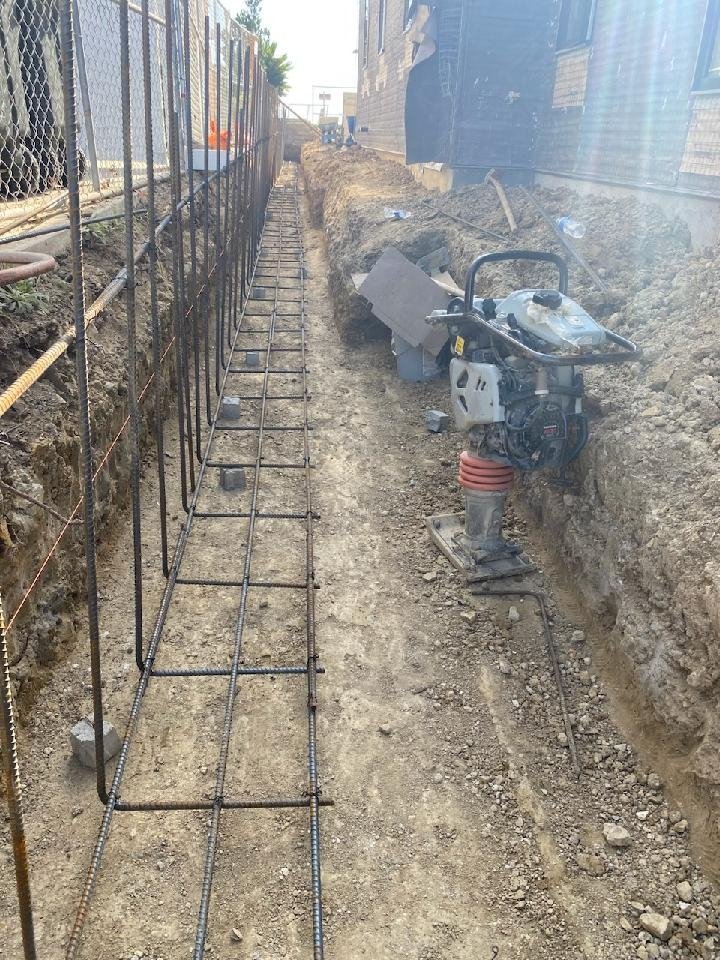
• Proper wall drainage uses a perforated pipe bedded in three-quarter-inch rock, wrapped in filter fabric, and tied into a solid line to a real outlet, not the weep holes still common in this industry
• Drainage systems are most effective when engineered into new construction; retrofitting a failed system later is far more disruptive and costly
• With more homeowners staying in their current homes long-term rather than moving, what’s underneath your hardscape now determines what you’re living with for decades
There’s a question worth asking before you hire anyone to build a wall, a patio, or a driveway in your backyard: what happens to the water?
Not the stone pattern. Not the color of the mortar. The water, because that’s the thing that actually determines whether what you’re building outlasts you or comes apart in five years.
Most homeowners never ask it, and most contractors are happy about that, because the answer to that question is where the real cost of a project lives, and it’s also where corners get cut without anyone noticing until it’s too late.
What You’re Actually Paying For
When you look at a finished retaining wall or a paver patio, you’re seeing maybe ten percent of the actual work. The stone, the coping, the finish grade, that’s the part that gets photographed and complimented. The other ninety percent is buried, and it’s the part that decides whether the wall you’re looking at is still standing in twenty years or has started leaning, cracking, or pushing forward under hydrostatic pressure.
That distinction matters more right now than it has in years. Homeowners across Orange County, from Newport Beach to San Juan Capistrano to Dana Point, are staying in their homes longer than they used to. Fewer people are renovating to sell. Most are renovating to live, for the next decade, the next two decades, maybe the rest of their lives in that house. Which means the work underneath your patio isn’t a technicality, it’s the thing you’re actually going to be living with.
The Detail Most Walls Get Wrong
Walk any neighborhood in Southern California and you’ll see retaining walls with small holes near the base, weep holes, spaced every few feet along the bottom course. They look intentional. They’re also one of the most common reasons walls fail.
Weep holes rely on water finding its way to a small opening through soil and backfill that’s constantly shifting, settling, and compacting. Half the time, they clog. The other half, they work just well enough to hide a slower problem, water building up behind the wall that the weep holes were never sized to fully relieve.
We don’t use them. Every retaining wall we build uses a perforated pipe set into a bed of three-quarter-inch rock, wrapped completely in filter fabric to keep soil from clogging it, and tied into a solid SDR 35 line that carries water to a real, engineered outlet, not a gap in the wall and a guess. On sloped properties, we add concrete V-ditches to intercept water running downhill before it ever reaches the wall. Where a yard pitches hard toward the house, we use slot and channel drains to catch it before it becomes a problem indoors instead of outdoors.
None of that is visible in the finished photo. All of it is the difference between a wall that holds for generations and one that needs to be rebuilt in a decade.
Why This Is Also a Trust Problem
Here’s the uncomfortable part: because this work is invisible, you have no reliable way to verify it after the fact. You can’t see the gravel bed once it’s backfilled. You can’t inspect the pipe once the patio is poured over it. You’re trusting the person you hired to have done the work correctly when doing it correctly costs more, in materials and in time, than doing it the easy way.
That’s exactly why finding a contractor you trust matters more in this industry than almost any other home improvement decision you’ll make. It’s also, frankly, one of the harder things to do right now. Homeowners consistently report difficulty finding contractors who are transparent about what’s actually happening beneath the surface of a project, and it’s not hard to see why: the incentive to explain what you can’t see is a lot weaker than the incentive to make what you can see look impressive.
Our answer to that has always been to over-explain, not under-explain. If you ask us what’s in the ground before your patio goes down, we’ll walk you through it in as much detail as you want. If a slope or a soil condition calls for something beyond our standard drainage approach, engineered fill, additional V-ditches, a different outlet strategy, we’ll tell you why, and we’ll tell you what it costs before we start, not after we find a problem. That’s not a sales pitch. It’s the only way this kind of work should be done, and it’s the standard we hold every project to, whether it’s a courtyard in Laguna Hills or a full hillside remodel.
Building for the Decades, Not the Photo
A hardscape built without proper drainage can look identical to one built correctly, for a while. That’s the trap. The failure doesn’t show up at the punch-list walkthrough. It shows up two, five, ten years later, as a hairline crack that widens, a wall that starts leaning a half-inch off plumb, or a patio that heaves after a wet winter. By then, fixing it means tearing out the very thing you paid for and starting over, at a cost far higher than doing it right the first time.
If you’re planning to be in your home for the long run, and increasingly, most homeowners are, the question isn’t whether the finished stone looks right on installation day. It’s whether the person who built it thought as carefully about what you’ll never see as they did about what you will.
That’s the standard we build to on every project, and it’s the first thing we’re happy to walk you through before you commit to anyone.
Ready to talk through your project? Schedule a consultation or call us at (714) 519-5009.