
Is Concrete the Right Choice for Your Patio?
Key Takeaways
• Poured concrete is the most cost-efficient large-format surface, especially with decorative finishes like broom, diamond saw cuts, or topcast
• It performs best on stable, well-engineered sub-grade expansive soil and poor drainage are its two enemies
• Cracking is a matter of when and how, not if the right control joints and reinforcement determine whether that's invisible or a problem
• It's the right call when budget efficiency and a clean, architectural line matter more than a textured, high-end look
There's a reason concrete remains the backbone of nearly every hardscape project in Orange County, from a modest side yard in San Clemente to a sprawling motor court in Newport Coast. It's poured in place, which means it can take almost any shape a designer draws, and it costs meaningfully less per square foot than pavers or natural stone.
But "cost-efficient" isn't the same as "simple." Concrete is unforgiving of shortcuts. The sub-grade underneath it has to be compacted correctly, control joints have to be placed where the concrete actually wants to crack (not just on a pretty grid), and the mix design has to account for our regional soil conditions because Southern California clay expands and contracts more than most homeowners realize.
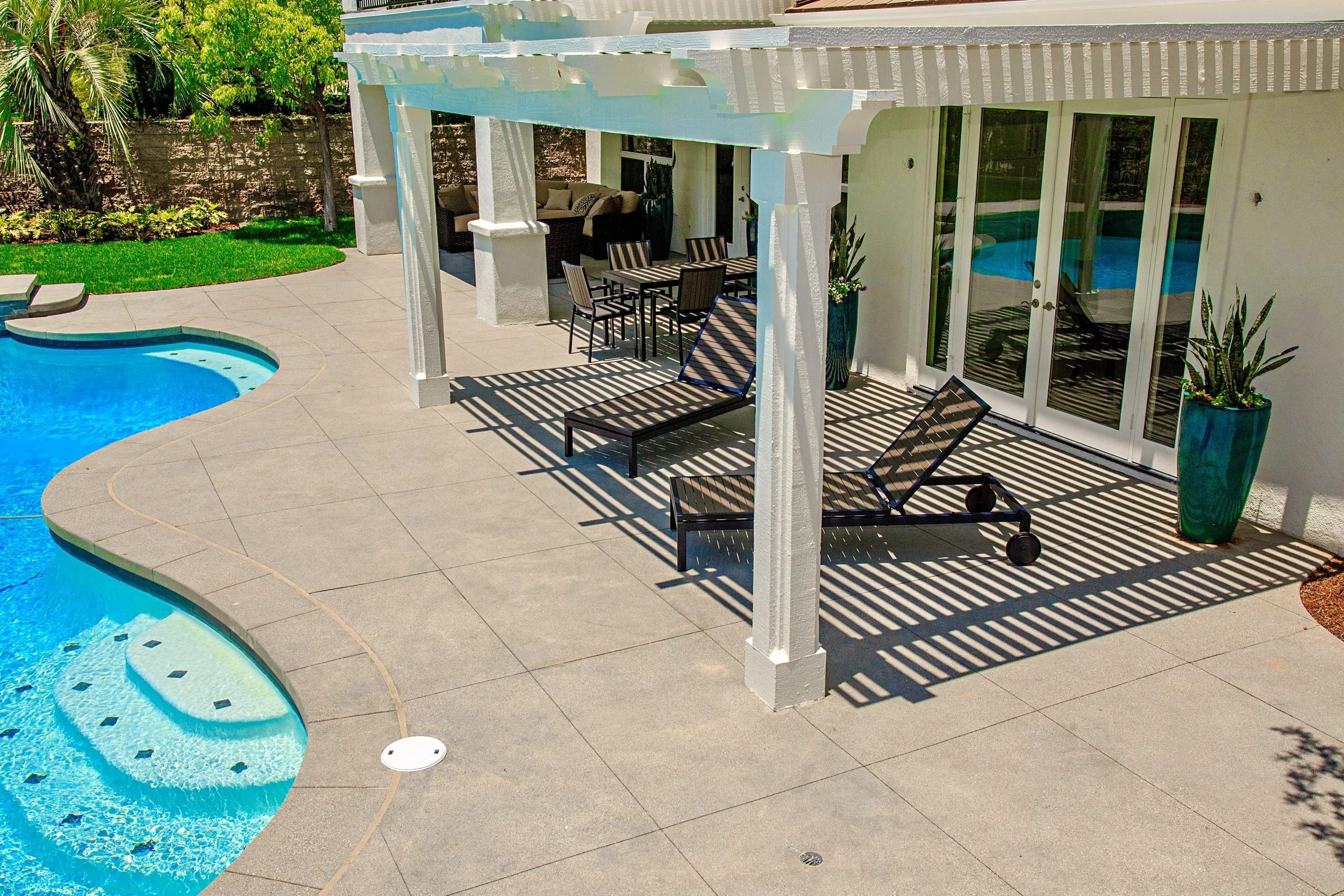
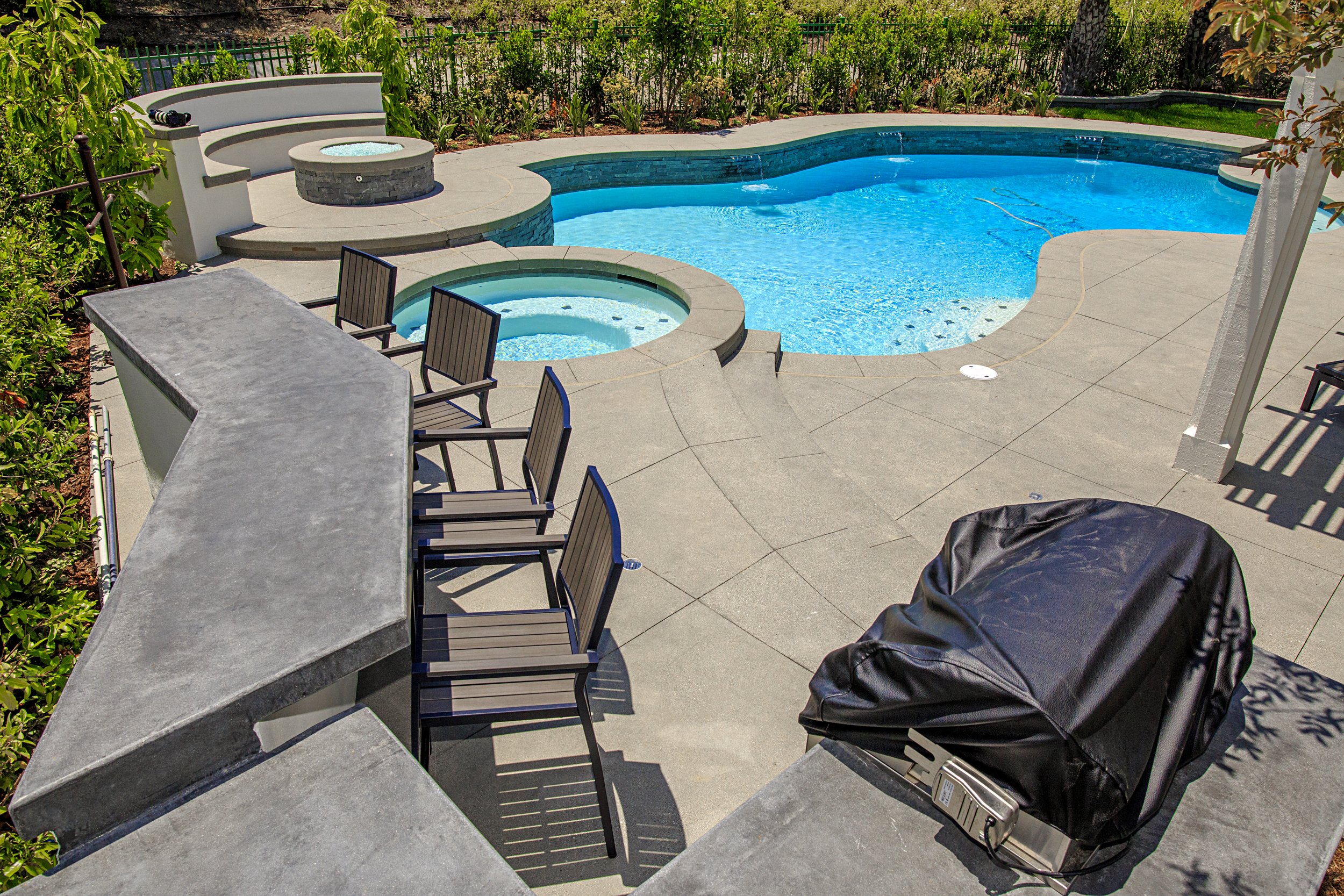
Where concrete shines. If you want a clean, minimalist look the kind of wide-open patio you see framing an infinity-edge pool in Newport Beach a broom-finished or lightly acid-washed concrete slab delivers that architectural simplicity better than a busier paver pattern would. It's also the practical choice for large motor courts and driveways in Dana Point and Laguna Hills, where the sheer square footage would make paver material costs climb fast.
Where it falls short. If your home has a more traditional or Mediterranean character common throughout San Juan Capistrano a monolithic concrete slab can look flat next to brick, stucco, and clay roof tile. Concrete also doesn't offer the same repair flexibility as pavers; if a section settles or cracks badly, you're often looking at a saw-cut and patch rather than lifting and resetting a few units.
What the finish options actually change. "Concrete" isn't one look broom finish gives you slip resistance and a soft, matte texture at the lowest cost point; salt finish adds a lightly pitted texture that reads more custom; exposed aggregate reveals the stone within the mix for a more natural, upscale appearance; and integral color or stamped patterns can push a plain slab closer to the look of pavers or stone, at a price still well under either. The finish you choose should match how the space is used a pool deck benefits from the slip resistance of a broom or salt finish, while an entry courtyard can carry a more decorative stamped or exposed-aggregate treatment.
What to expect over the life of the slab. Properly placed concrete, with control joints cut at the right intervals and reinforced with rebar or wire mesh where the design calls for it, will typically hold up for decades with minimal maintenance beyond periodic resealing every few years to protect against staining and moisture intrusion. Hairline cracking within control joints is normal and expected; cracking outside of a joint line usually points back to a sub-grade or reinforcement issue rather than a flaw in the material itself.
The honest answer. Concrete is the right product when the design calls for clean geometry, when budget efficiency matters, and when you have (or are willing to invest in) a properly engineered base. It's the wrong product when you want texture, pattern, or an old-world material palette that's a conversation for pavers or natural stone instead.
If you're weighing concrete against another surface for an upcoming project, we're happy to walk the site with you and give you a straight answer, not a sales pitch. Reach us at westhillsmasonry.com/contact or call 714-519-5009.