
The Six-Month Delay Nobody Warns You About
Key Takeaways:
• A lower bid is rarely just "the same job for less." It usually reflects less staffing, less material staging, and less capacity to respond quickly.
• Responsiveness is measurable: same-day site visits, materials and samples staged ahead of schedule, proactive updates before you have to ask for them.
• The projects that run six months over rarely fail on day one. They fail slowly, through a hundred small delays that compound.
• The true cost of a delayed project isn't just money it's a lost summer, a dug-up front yard for half a year, and the stress of chasing someone for answers.
• The best way to evaluate a contractor before signing isn't the price. It's how they behave during the bidding process itself.
Every homeowner in Orange County has heard the story, or lived it. A contractor who was warm and attentive during the sales pitch disappears once the deposit clears. A backyard that was supposed to take ten weeks stretches into eight months. Materials show up wrong, get restaged, show up wrong again. Site visits that were promised within the day take a week, if they happen at all.
It's a familiar enough pattern that it's earned its own reputation across the industry every contractor gets painted with the same brush, fairly or not. But the pattern itself has a cause, and it's rarely bad luck. It's almost always a capacity problem, and capacity problems are visible before you ever sign a contract, if you know what to look for.
What a Bid Actually Represents
A bid isn't just a number. It's a forecast of how a company plans to run your project how many crews they can dedicate, how much material they can afford to stage ahead of schedule, how much overhead they've built in to actually manage the job instead of just build it.
When two proposals for the same backyard in Newport Beach or San Juan Capistrano come in $40,000 apart, that gap has to live somewhere. Sometimes it's genuinely a difference in material grade or design complexity. But often, it's a difference in what the lower bidder can actually afford to deliver in terms of attention. Fewer people on payroll means fewer people available to answer a call. Less cash flow means materials get ordered only once they're needed, not staged in advance. Thinner margins mean less room to eat the cost of a same-day fix instead of scheduling it for "next week."
None of that shows up on the page. It shows up three months into the project, when you're the one calling to ask where everyone went.
What Responsiveness Actually Looks Like
It's easy to promise good communication in a sales meeting. It's harder to structure a company around it. On a well-run project, responsiveness isn't a personality trait it's a set of operational habits:
Samples and material selections get dropped off at the property, not mailed or emailed as a PDF and forgotten. Scheduling updates go out before a homeowner has to ask for one, not after three unanswered texts. A concern raised on-site a slab that doesn't sit right, a color that reads differently in full sun than it did on the sample board gets addressed the same day, walked through in person, not deferred to "we'll circle back."
This is the difference between a company built to sell jobs and a company built to run them. Homeowners in Laguna Hills or Dana Point rarely notice this distinction while comparing bids side by side on paper. They notice it acutely once the project is underway, when it's too late to choose differently.
The Cost That Doesn't Show Up on the Invoice
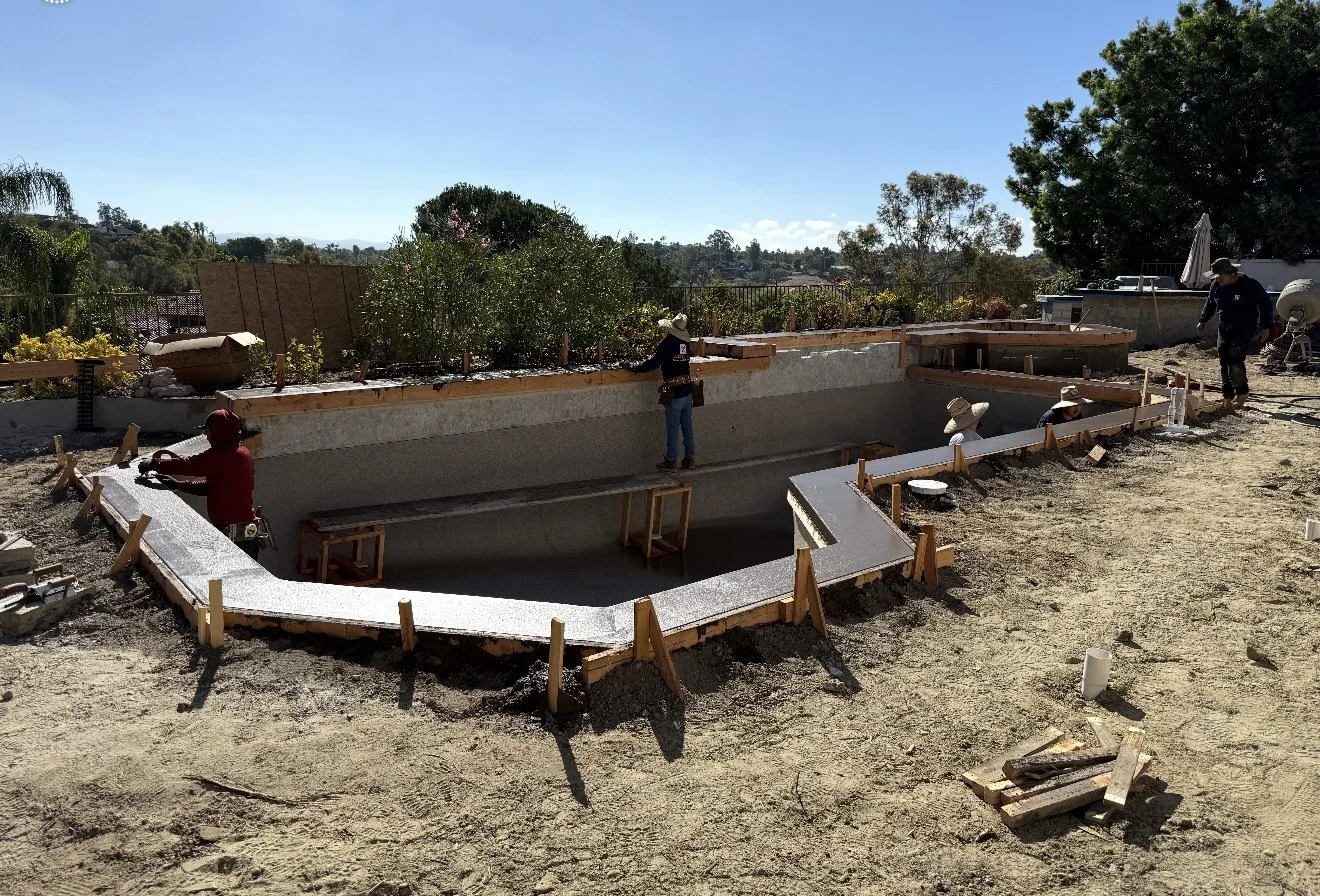
The math on a delayed project is worse than most homeowners expect going in. A project quoted at ten weeks that runs to eight months isn't just an inconvenience it's an entire summer with a torn-up backyard, a driveway that can't be used, a family that can't host the gathering they'd planned around the new space. It's the cost of living around a construction zone for months longer than budgeted, and often the cost of paying someone else to correct work that wasn't done right the first time.
By the time all of that is tallied, the "savings" from the lower bid are almost always gone, and frequently negative. The irony is that the homeowners who end up spending the most are usually the ones who thought they were being the most careful with money.
What to Actually Evaluate Before You Sign
The good news is that this is knowable in advance. The way a company handles the bidding process is a preview of how they'll handle the build. A few honest questions surface the answer fast:
How quickly did they respond to your first inquiry? Did they show up to the site visit prepared, with real measurements and real questions, or did they wing it? When you asked a technical question about drainage, about sub-base, about material lifespan did you get a specific answer or a vague reassurance? Did they offer references from completed projects near San Clemente or Newport Coast that you can actually call?
None of this requires expertise in construction. It requires paying attention to how a company behaves when they're trying to win your business because that's the best version of themselves you'll ever see.
The Standard Worth Holding Everyone To
This isn't an argument that price doesn't matter. It's an argument that price in isolation tells you almost nothing about what you're actually buying. A well-run, high-end contractor with a genuine track record moves differently samples arrive before you ask, concerns get resolved in hours instead of weeks, and the update you were waiting for shows up before you had to chase it.
That standard exists. It's just rarely the cheapest line on the page.
There's an old truth in this business: money loves speed, and speed loves money. The contractors who move fast who show up the same day, who stage materials ahead of schedule, who resolve a concern before it becomes a delay aren't just protecting your timeline. They're protecting your money. Every week a project drags is a week of carrying costs, lost use of your own home, and decisions that have to be made twice. Speed isn't a luxury add-on. It's where the real savings live.
Considering a hardscape project and want to know what a properly staffed, properly run build actually looks like from week one? Contact West Hills Masonry or call us at 714-519-5009.