
Standard Low-Voltage Lighting, or Is Smart Lighting Right for You?
Key Takeaways
• Standard low-voltage lighting remains reliable, cost-effective, and simple to maintain
• Smart systems now offer dimming, color-changing, and app-based zone grouping at a moderate cost premium
• Dimming and zoning offer the most everyday practical value; full color-changing is more of an entertaining feature
• The right system depends on how much you want to actively manage lighting versus "set it and forget it"
Landscape lighting has quietly become one of the more technologically advanced categories in outdoor design, and many homeowners in Newport Beach and Dana Point don't realize how far the options have come since their last project.
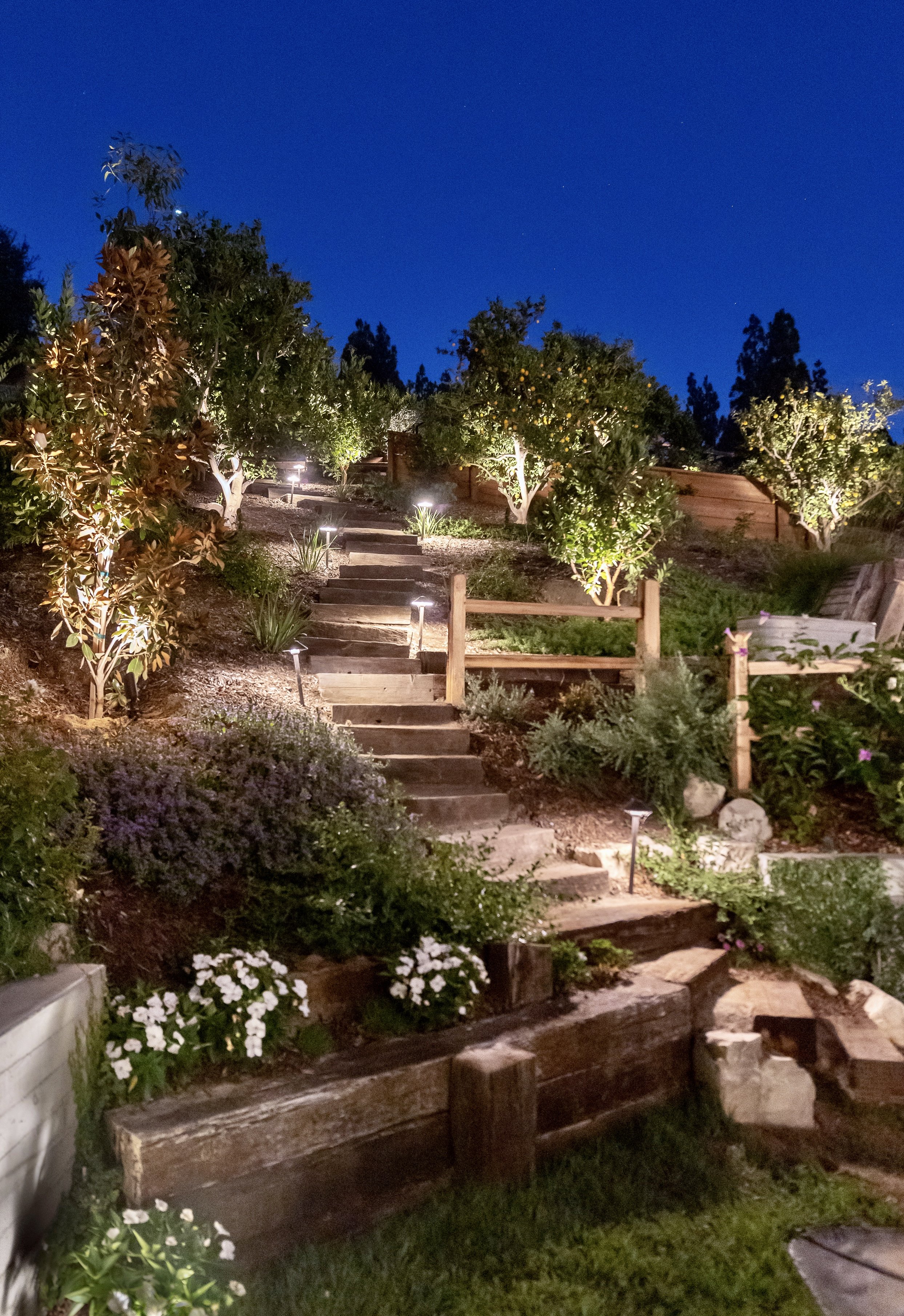
What standard lighting still does well. A traditional low-voltage system with warm white fixtures remains a completely sound choice reliable, simple to operate, and priced accordingly. If your goal is clean path lighting, uplighting on mature trees, and safe step illumination around a pool deck, standard fixtures do the job without added complexity.
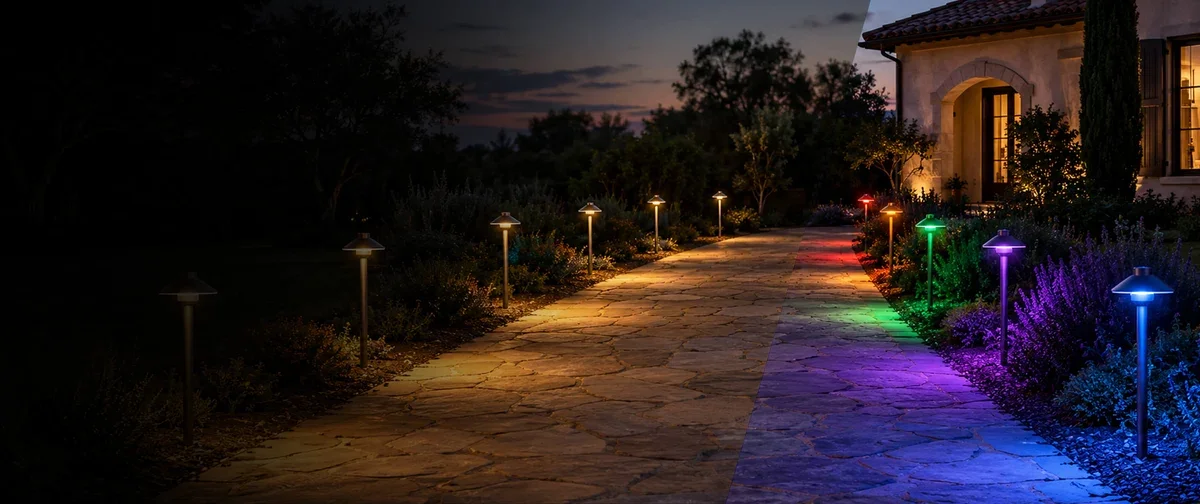
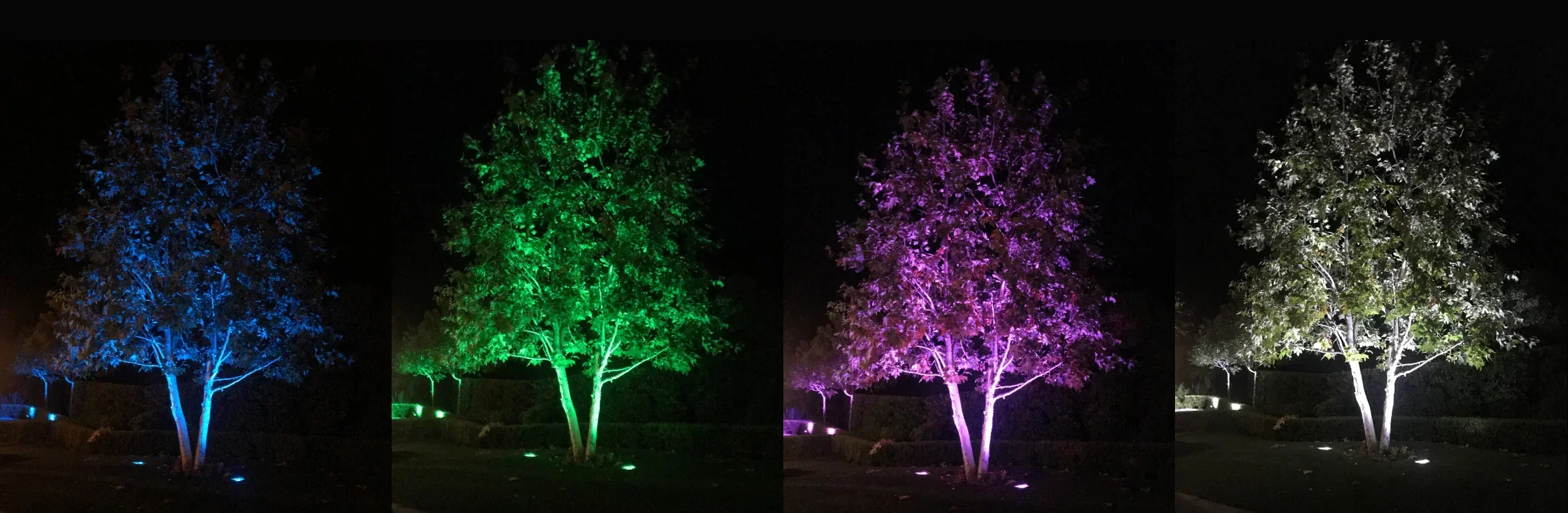
What's changed. Modern low-voltage transformers and fixtures now commonly support dimming by zone, app-based scheduling, and in many cases full color-changing capability useful for a holiday palette or an entertaining evening without running a separate string of decorative lights. Grouping fixtures into zones (patio, pathway, pool, architectural uplighting) lets you control mood area by area rather than an all-or-nothing switch.
What's genuinely useful versus a novelty. Dimming and zoning tend to earn their keep day to day being able to bring pathway lighting down while keeping a fire feature area bright is a real, everyday benefit. Full color-changing capability is more of an entertaining feature; it's worth it if you host regularly in San Clemente or Laguna Hills, less essential if your lighting priority is simply safety and ambiance.
Planning ahead matters more than the fixture choice itself. Whether you go standard or smart, the transformer sizing and wiring layout should be planned with future additions in mind adding fixtures later to an undersized transformer, or to a system wired without spare zone capacity, is far more disruptive and costly than accounting for it during initial installation. This is especially worth discussing if you're doing a phased backyard project and know lighting will expand as later phases complete.
Where fixture placement does the real work. Regardless of which control system you choose, the biggest visual impact usually comes from thoughtful fixture placement rather than the technology itself uplighting a specimen tree, grazing light across stone veneer facade to reveal its texture, and path lighting spaced to avoid a runway effect all matter more to the finished look than whether the system can shift to blue for a holiday party.
The honest answer. If you want dependable, attractive lighting and don't want to think about it further, standard fixtures remain a completely valid choice. If you like the idea of adjusting mood and zones from your phone, the smart upgrade is a modest cost increase for a meaningful gain in control.
We'll walk your property and recommend a lighting plan standard or smart that fits how you'll actually use the space. Contact us at westhillsmasonry.com/contact or 714-519-5009.