
Granite Slab for a BBQ Countertop: Is This the Right Product for You?
Key Takeaways
• Granite is naturally heat- and scratch-resistant, making it well suited to grill and side-burner areas
• It requires periodic sealing to resist staining from oil and food, more so outdoors than indoors
• Darker granite slabs absorb more heat in direct sun, which matters for bare-skin contact in summer
• It remains the most familiar, resale-friendly choice for a traditional outdoor kitchen look
Granite has been the default outdoor kitchen countertop for so long that many homeowners in Newport Beach and Dana Point don't even consider the alternatives and there's a reason it earned that reputation. It's genuinely tough, handles heat from a grill or side burner without damage, and resists scratching better than almost any surface you'll put a knife or cast-iron pan on.
What outdoor use changes. Indoors, granite sealing is often an afterthought. Outdoors, with full sun exposure, pool chemicals, and no roof overhead in many designs, sealing needs to happen more consistently typically once a year rather than every few years. Skip it, and the porous surface will pick up staining from oils and marinades faster than you'd expect.
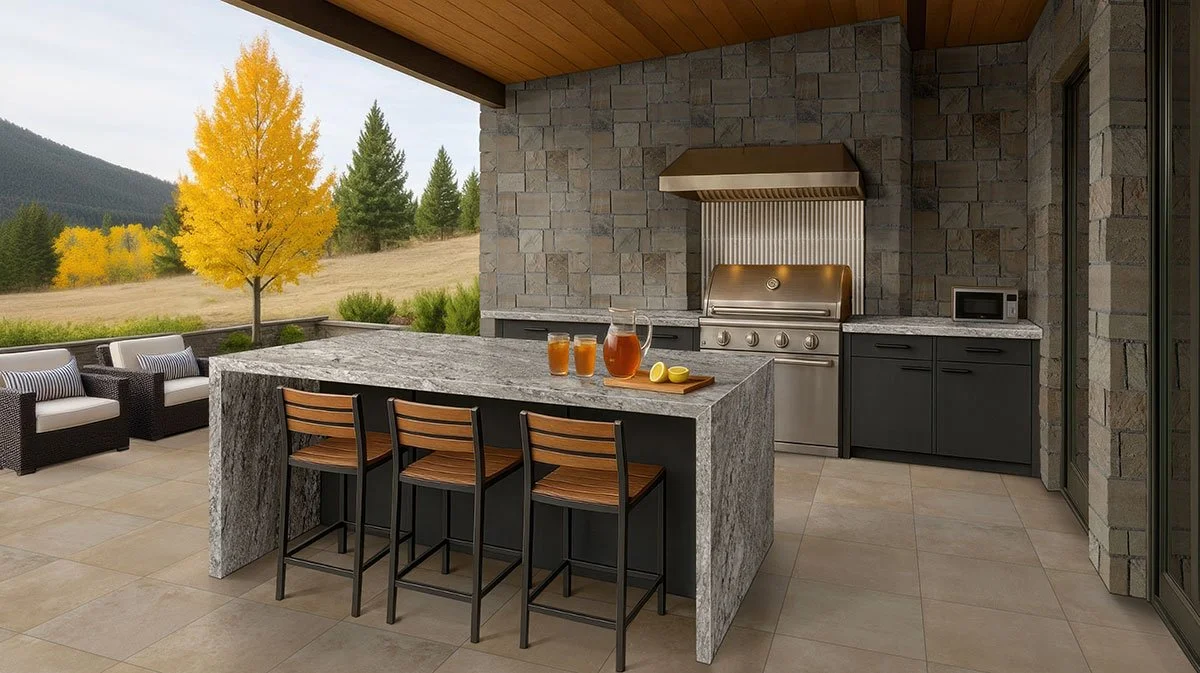
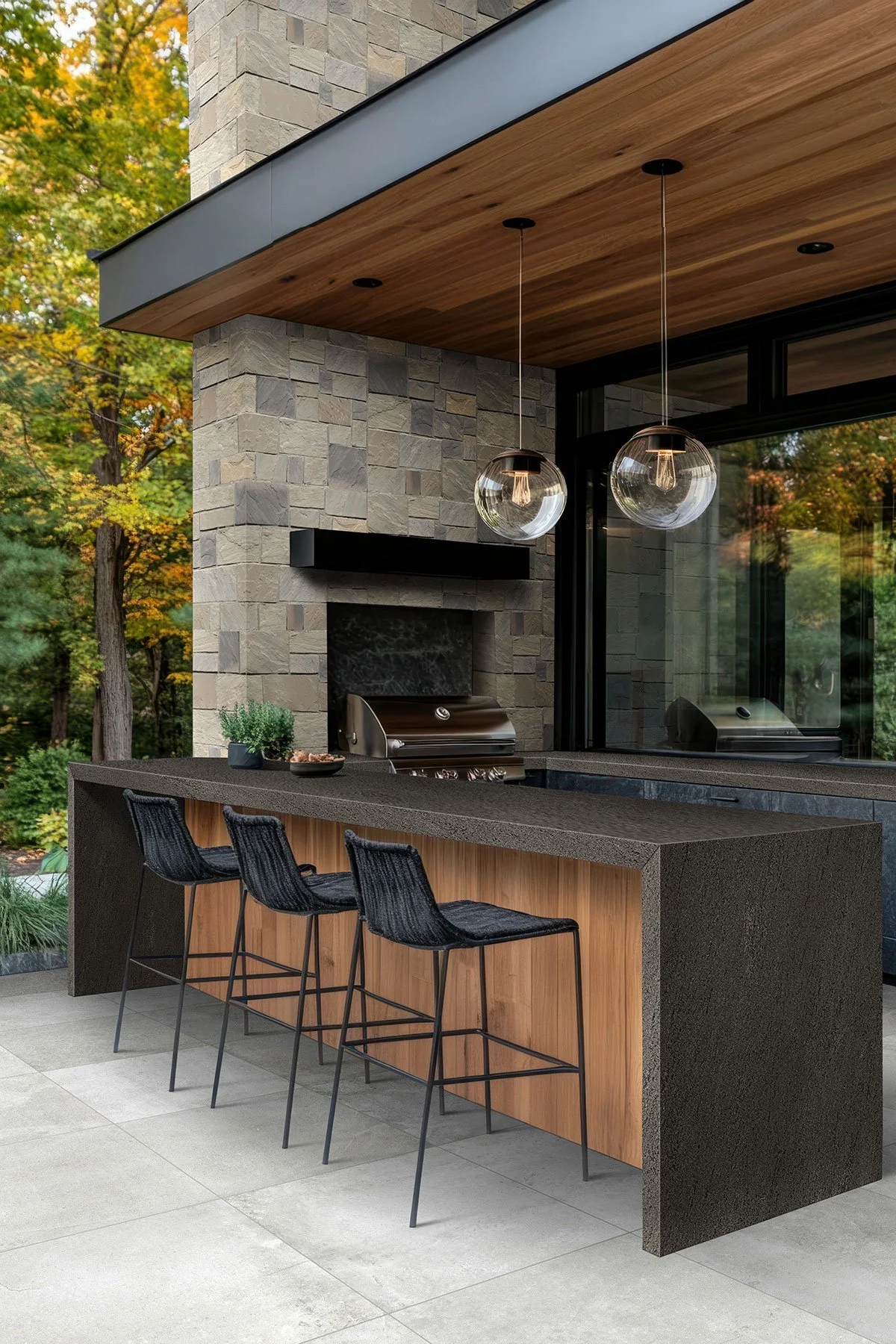
The heat factor. In a Laguna Hills or San Juan Capistrano backyard that sees full afternoon sun, darker granite slabs can get uncomfortably hot to the touch by mid-afternoon in July and August. Lighter granite colors mitigate this somewhat, but it's worth discussing seating and bar-top placement with your designer if your outdoor kitchen faces west.
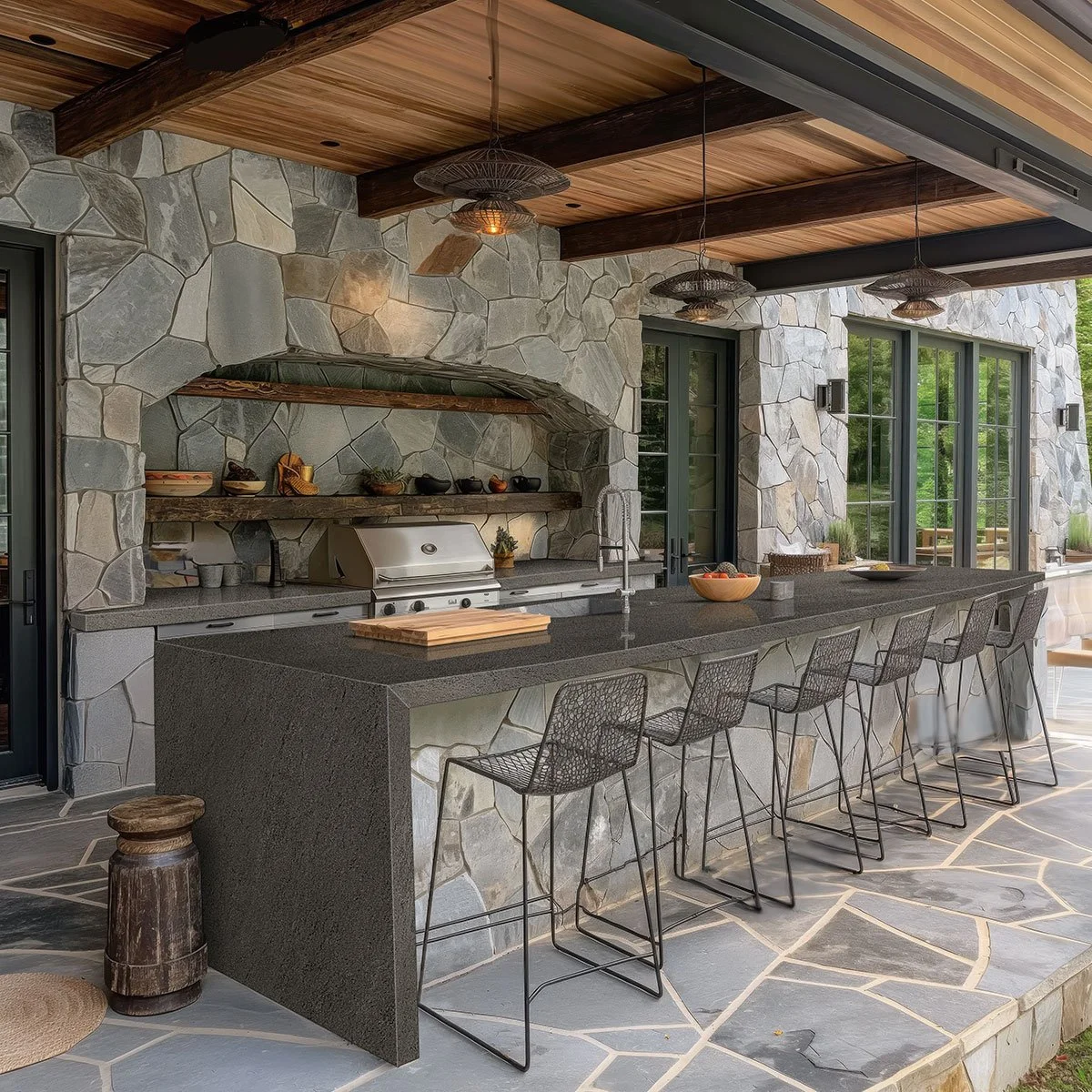
Thickness and edge details matter more outdoors. Outdoor granite countertops are typically fabricated at 3cm thickness rather than the 2cm sometimes used indoors, both for added durability against outdoor use and because most outdoor kitchen designs include unsupported overhangs for bar seating that need the extra thickness to span safely. Edge profile is worth a conversation too a simple eased or bullnose edge is easier to keep clean of grease and debris than an ornate profile with tight grooves.
Color selection in practice. Beyond the heat question, lighter and mid-tone granites tend to hide water spots, dust, and pollen better between cleanings than very dark, high-polish slabs — a small but real quality-of-life difference for an outdoor surface that isn't wiped down as often as an indoor kitchen counter.
The honest answer. Granite remains an excellent, proven choice for an outdoor kitchen durable, familiar, and easy for future buyers to recognize as quality. If you're diligent about annual sealing and thoughtful about slab color relative to sun exposure, it will serve you well for decades.
We'll help you select a slab and finish suited to your kitchen's orientation and sun exposure. Reach us at westhillsmasonry.com/contact or 714-519-5009.