Show Up to Our Job Site Unannounced. Here’s What You’d Find
Key Takeaways
• A clean, organized job site mid-project is one of the most honest signals of how a contractor operates
• Materials are staged and protected, not scattered; existing landscaping and hardscape are fenced or covered before demo starts
• The same crew lead who walked the property during design is the one running the job that day
• Every phase is photographed, not just the finished shot, and grading and drainage are checked before anything gets set
• We mean the invitation literally: call ahead only to make sure someone’s there to walk you around, not to give us time to clean up.
Most companies only let you see two moments of a project: the “before” and the “after.” Everything in between is invisible on purpose, because the middle of a construction site is messy, loud, and hard to control. We photograph the middle anyway, and we’re comfortable enough with what happens on our sites that we’ll say this plainly: come by unannounced. Call ahead only so we know to have someone there to walk you around, not so we have time to tidy up. It doesn’t matter if the job is a driveway in Newport Beach or a full backyard remodel in San Clemente, the standard is the same.
Here’s what that walk would actually look like.
The materials aren’t scattered, they’re staged
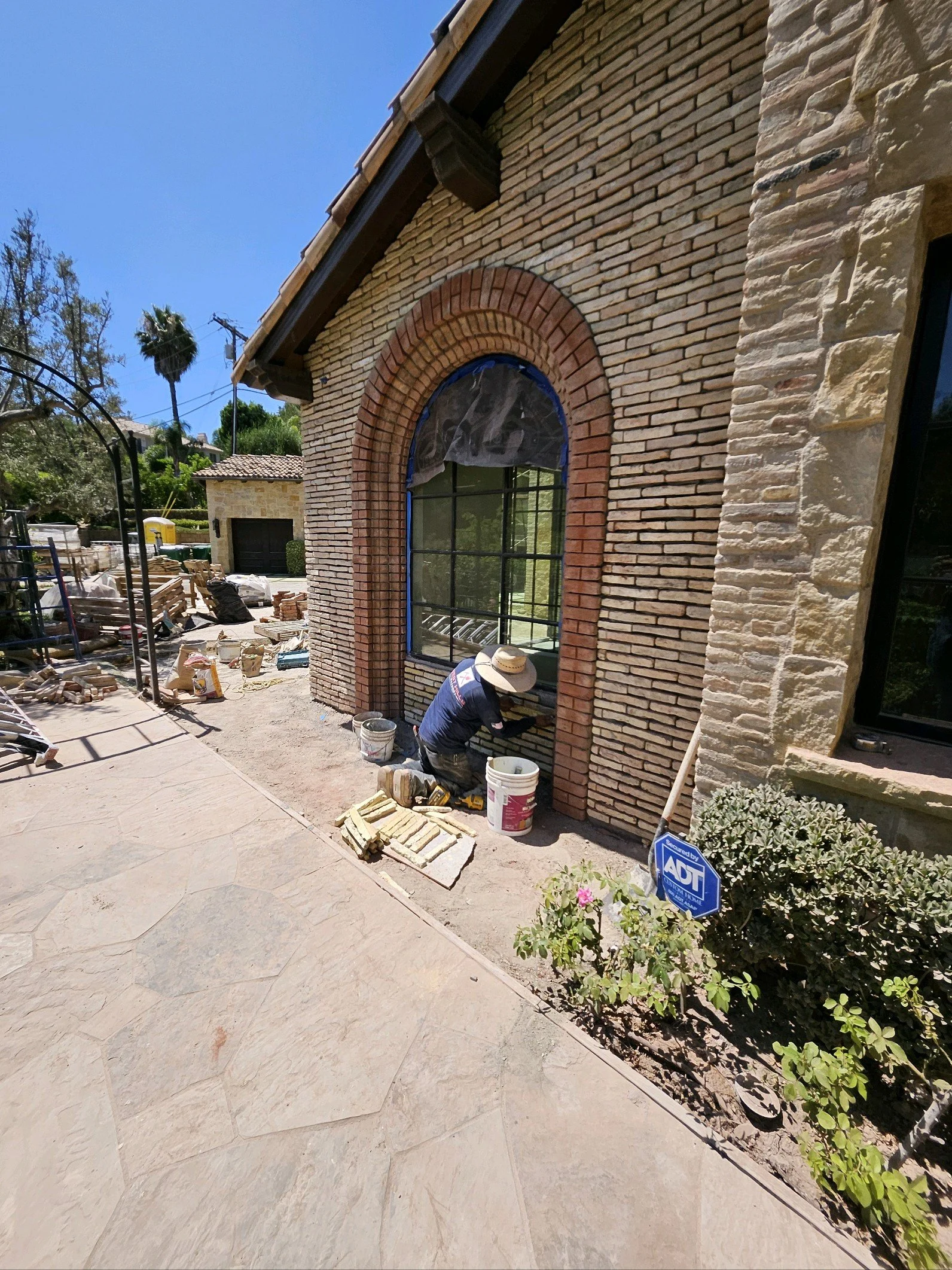
Pull up to one of our active sites and the first thing you’d notice is that nothing is piled where it doesn’t belong. Stone, pavers, and block are staged on pallets in a designated laydown area, usually along the driveway or side yard, not blocking access or sitting in a spot that will need to be worked around later. If it’s a natural stone job, you’ll see the actual slabs we walked the client through at the yard, not a substitute that showed up because the original was out of stock.
Existing landscaping is protected before anything gets touched
If there’s a mature tree, an irrigation line, or hardscape that isn’t part of the scope, it’s fenced, wrapped, or flagged before demo ever starts. We’ve talked before about protecting a 40-year-old oak through a full backyard rebuild, and that’s not a one-off story, it’s how every site gets set up. Protecting what’s staying is a five-minute job at the start of a project and a very expensive mistake to fix at the end of one.
The crew lead is someone you’ve already met
On a lot of jobs, the person who sold you the project disappears once the crew shows up, and you’re left figuring out who’s actually in charge on any given day. On our sites, the lead running the work is the same person who walked the property with Lance and me during design. If you have a question about how a detail is being executed, you’re not tracking down a stranger to answer it. That’s true whether the project is in Newport Coast or San Juan Capistrano.
Grading and drainage get checked before anything gets set
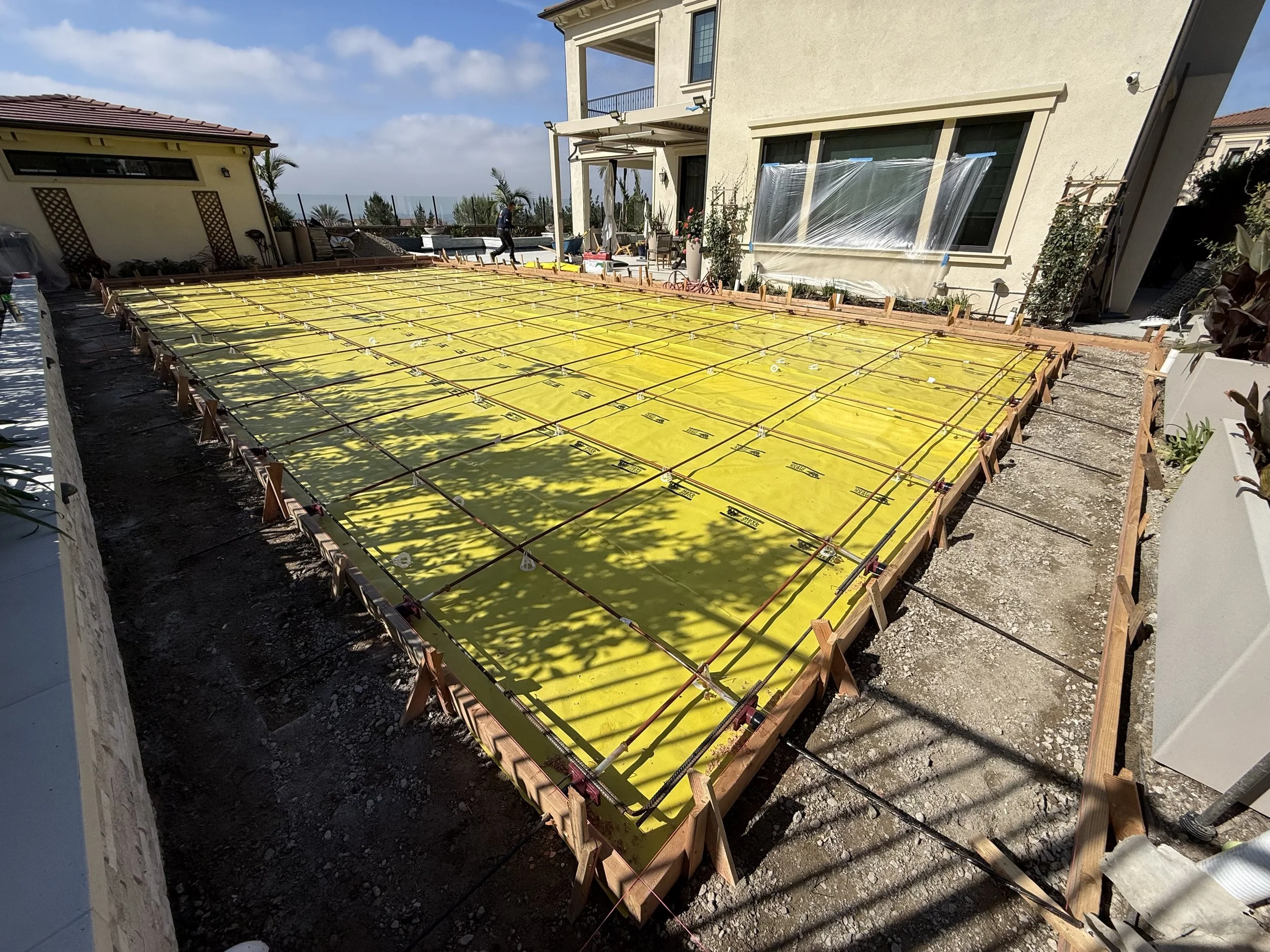
This is the part that never makes it into a finished photo, because you can’t see it once the stone is down. Before a single paver or block goes in, we’re checking slope, compaction, and where water is actually going to go once it rains. On a retaining wall or a pool deck, this step matters more than almost anything else on the job, and it’s also the step that’s easiest for a contractor to rush if nobody’s watching. We’re not rushing it, whether you’re standing there or not.
The site is documented, not just the highlights
We photograph every phase of a project, not only the hero shots. Demo, base prep, drainage, rebar and forming, and the finished install all get logged. If you showed up mid-project, you’d likely see someone on our crew doing exactly that, taking photos of work that’s about to be covered up and will never be visible again once the project is done. That documentation exists for the same reason a home inspector cares about it later: what’s underneath a project is what actually determines how it holds up.
What you won’t find
You won’t find a site that’s been left unattended with tools and materials sitting out. You won’t find debris from last week still on the ground because nobody’s gotten around to a haul-off. You won’t find a subcontractor on-site who we haven’t personally vetted, or work happening that doesn’t match what was in the scope you signed off on. And you won’t find a crew that treats an occupied property, one where a family is still living day to day, any differently than they would if the owner were standing right there watching, whether that property is in Dana Point or Laguna Hills.
The invitation stands
We’re not saying this to sound impressive. We’re saying it because it’s checkable. If you’re comparing bids on a six-figure project, ask every contractor on your list the same question: can I see an active job site before I sign anything? Most will hesitate, offer you a portfolio instead, or set up a staged visit weeks out. We’ll give you an address and a time, this week, on whatever job we happen to be running.
Call ahead so we know you’re coming. That’s the only advance notice we need.