5 Costly Hardscape Remodel Mistakes Orange County Homeowners Should Avoid
The most expensive mistake in a hardscape project almost never happens on install day. It happens weeks earlier, at the kitchen table, while you’re staring at two or three estimates that don’t seem to describe the same project.
That holds true whether the project in question is a backyard, a front yard facelift, a new-construction lot being hardscaped from the ground up, a simple driveway or back patio, or a full pool environment with a deck, an outdoor kitchen, and a covered entertainment area. Different scope, same five traps.
It’s the first place a good project can go sideways, long before anyone breaks ground in Newport Beach, Laguna Hills, Mission Viejo, or Villa Park.
Here are the five mistakes we see cost homeowners the most, in money, time, or both, and what to watch for instead, no matter which part of the property is being reimagined.
Key Takeaways
• Price gaps usually reflect scope, not greed. Have every contractor walk you through their estimate line by line before assuming the higher bid is padding you.
• Concrete skill doesn’t transfer to pavers. A contractor pouring a slab under interlocking pavers is a mismatch for a traditional driveway or patio.
• Service signals predict the project. Physical samples, prompt answers, a real portfolio, and one consistent point of contact matter as much as the price.
• Materials can shift between design and install. Confirm you’ll be consulted on stock changes and shown mockups before anything is set permanently.
• Match the warranty to the track record. A 10-year warranty means little from a company that hasn’t been open 10 years, ask directly, and confirm licensing, insurance, and permits.
Mistake #1: Comparing Bids Like They’re the Same Language
As a homeowner, you’re not expected to know construction terminology, and no contractor should expect you to. The problem is that some contractors explain their scope in plain English, and others hand you a line-item sheet that reads like a permit application.
When those two estimates land side by side with wildly different numbers, the instinct is to assume the higher one is padded. Ninety percent of the time, that’s not what’s happening. The higher number usually reflects a different base preparation, a different material grade, or a warranty that actually means something. The other ten percent is real, but it’s rarely the direction people assume, it’s more often the underpriced bid from someone who doesn’t fully understand the job, not the higher one taking advantage of you.
The fix isn’t guesswork. Ask each contractor to walk you through their number, step by step, the way they’d explain it to a crew member. Listen to how they talk about the work. Someone who genuinely knows the trade can explain excavation depth, base compaction, and drainage without reaching for jargon to fill space. Someone who’s guessing tends to talk in generalities.
Mistake #2: Hiring Concrete Experience for a Paver Job
A contractor can spend twenty years pouring beautiful concrete and still have never installed a single interlocking paver correctly. These are related trades, not identical ones.
Watch for a specific phrase: “We’ll pour a concrete slab underneath the pavers.” On a traditional residential hardscape, that’s a mismatch. Pavers are engineered to work with a compacted aggregate base and proper edge restraint, a system designed to flex slightly and drain, not sit rigid on a slab poured for a different kind of load. A driveway needs to hold up under your SUV pulling in every day, not a trash truck rolling through once a week. A pool deck needs a base system that handles moisture and coping details correctly, not one borrowed from a slab pour. When the base system doesn’t match the application, whether it’s a driveway, a front walkway, or the deck surrounding a pool, the pavers and the joints tell on it early, usually in the first year or two.
If a contractor’s answer to a paver question keeps circling back to concrete-pour logic, that’s worth a second opinion.
Mistake #3: Ignoring the Signals That Have Nothing to Do With Price
Once the numbers make sense, the decision usually comes down to something less measurable: how it feels to work with them. That instinct is worth trusting, and it shows up in specific, checkable ways.
• Do they answer promptly? Not instantly, but consistently, without you chasing them.
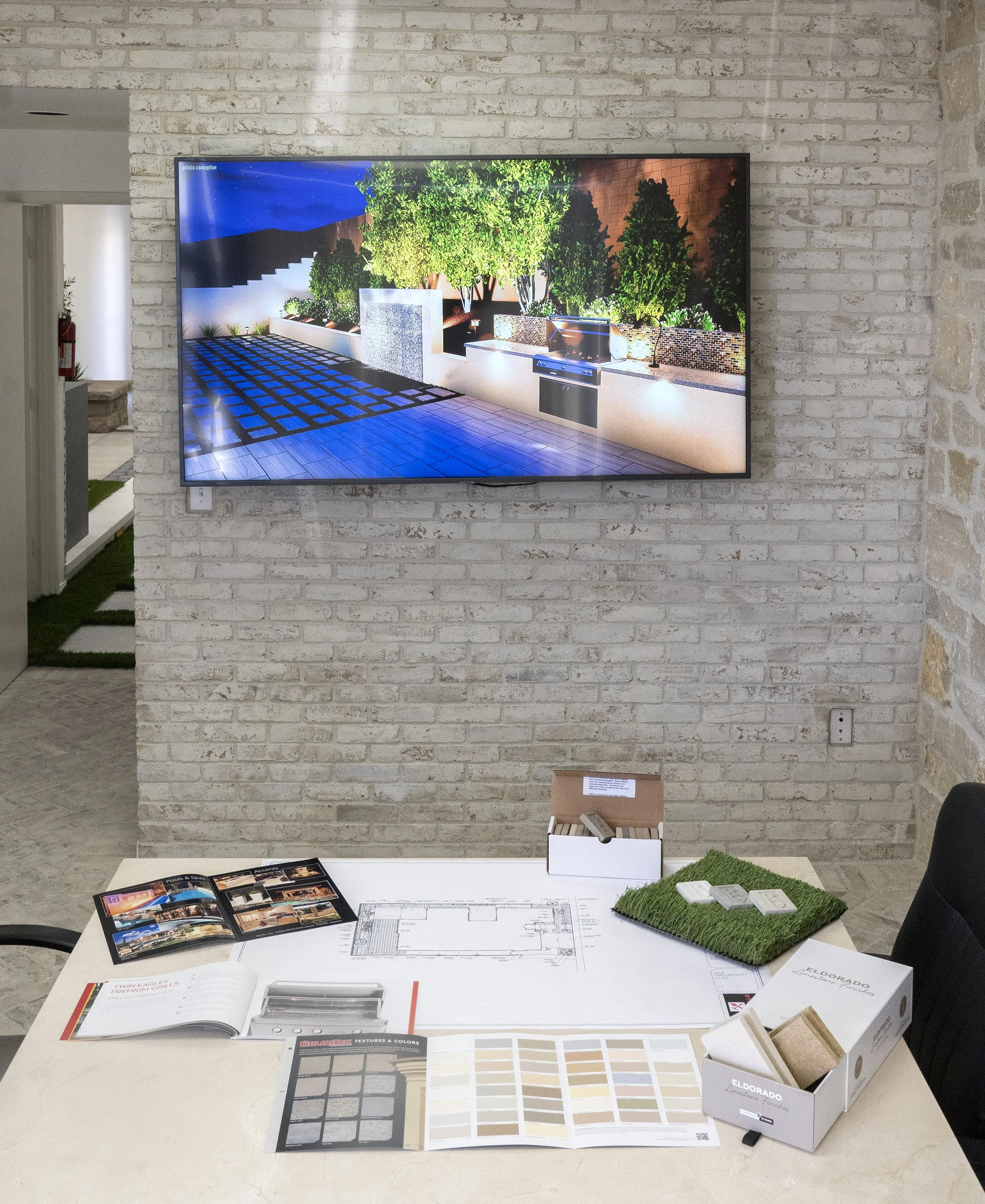
• Will they show you physical material samples, not just a photo or a spec sheet? Handing you an actual paver, stone, or veneer sample to hold is a small thing that tells you a lot about how much pride someone takes in the work.
• Can they show you finished projects, and ideally projects mid-construction too? A portfolio of only glossy final shots is fine. A contractor willing to show you the messy middle is showing you confidence in their process.
• What does their website actually look like? Not just whether it exists, but whether the work discussed with you shows up there. A serious, established company tends to have a presence that matches the caliber of the work they’re pitching you.
• Will they be your point of contact through the whole project, or do you get handed from salesperson to project manager to crew foreman with no one owning the relationship? Continuity matters more than most homeowners expect going in.
• Is there an open line of communication? The ability to send a text at 7 p.m. because a question crossed your mind, and know it won’t get lost, is part of what you’re actually paying for.
None of these show up on an estimate. All of them predict how the next several weeks or months will go.
Mistake #4: Treating Material Selection as a One-Time Decision
Materials aren’t locked in the moment you sign. A design conversation that started six months before a project breaks ground can run into a very different reality once it’s time to order: the exact stone, paver style, or veneer you fell in love with may be discontinued, on backorder, or simply not what’s currently in stock.
A contractor who cares about the outcome will walk you through those options as they come up, rather than quietly substituting something close enough and hoping you won’t notice. That includes finished-surface decisions too: a grout mockup or a finish sample laid out on-site before full installation, so you’re approving what you’ll actually be living with, not what you imagined from a small tile sample under different lighting.
Ask directly: will you be consulted through material changes, or informed after the fact?
Mistake #5: A Warranty Longer Than the Company’s Track Record
A ten-year workmanship warranty sounds reassuring, until you realize the company offering it has been in business for two years. A warranty is only as good as the business standing behind it a decade from now.
This isn’t a reason to avoid newer companies outright, plenty of skilled tradespeople start their own shop after years working for someone else. But it is a reason to ask directly how long they’ve operated under their current name, and to weigh that answer against the length of warranty they’re promising. It’s also worth confirming licensing and insurance directly rather than taking a logo on a truck at face value, and, for retaining walls or anything load-bearing, whether the project requires permits and whether that’s been factored into the plan from the start.
What This Actually Comes Down To
None of these five mistakes are about being suspicious of contractors. They’re about knowing which questions separate a company that treats your property, front yard, backyard, driveway, or pool environment, like a showpiece project from one that’s simply moving through it.
At West Hills Masonry, we'd rather you ask us every one of these questions before we ever pick up a trowel, whether the scope is a simple driveway in Newport Coast or a full pool deck and outdoor kitchen build in San Juan Capistrano. Walk through the estimate line by line. Ask to see the samples. Ask how long we've been doing this, and how long the warranty actually protects you. We built our name in Orange County on the answers holding up.
Ready to start the conversation the right way? Call West Hills Masonry at 714-519-5009, and we’ll walk you through the process, no jargon required.