
Porcelain Slab for a BBQ Countertop: Is This the Right Product for You?
Key Takeaways
• Porcelain slab is virtually non-porous, requiring no sealing and resisting stains better than natural stone
• It's highly resistant to UV fading, an advantage over some natural stones in full-sun installations
• It comes at a higher material cost than granite in many cases, offset by lower long-term maintenance
• Edge and seam detailing require a fabricator experienced specifically with porcelain, not just stone
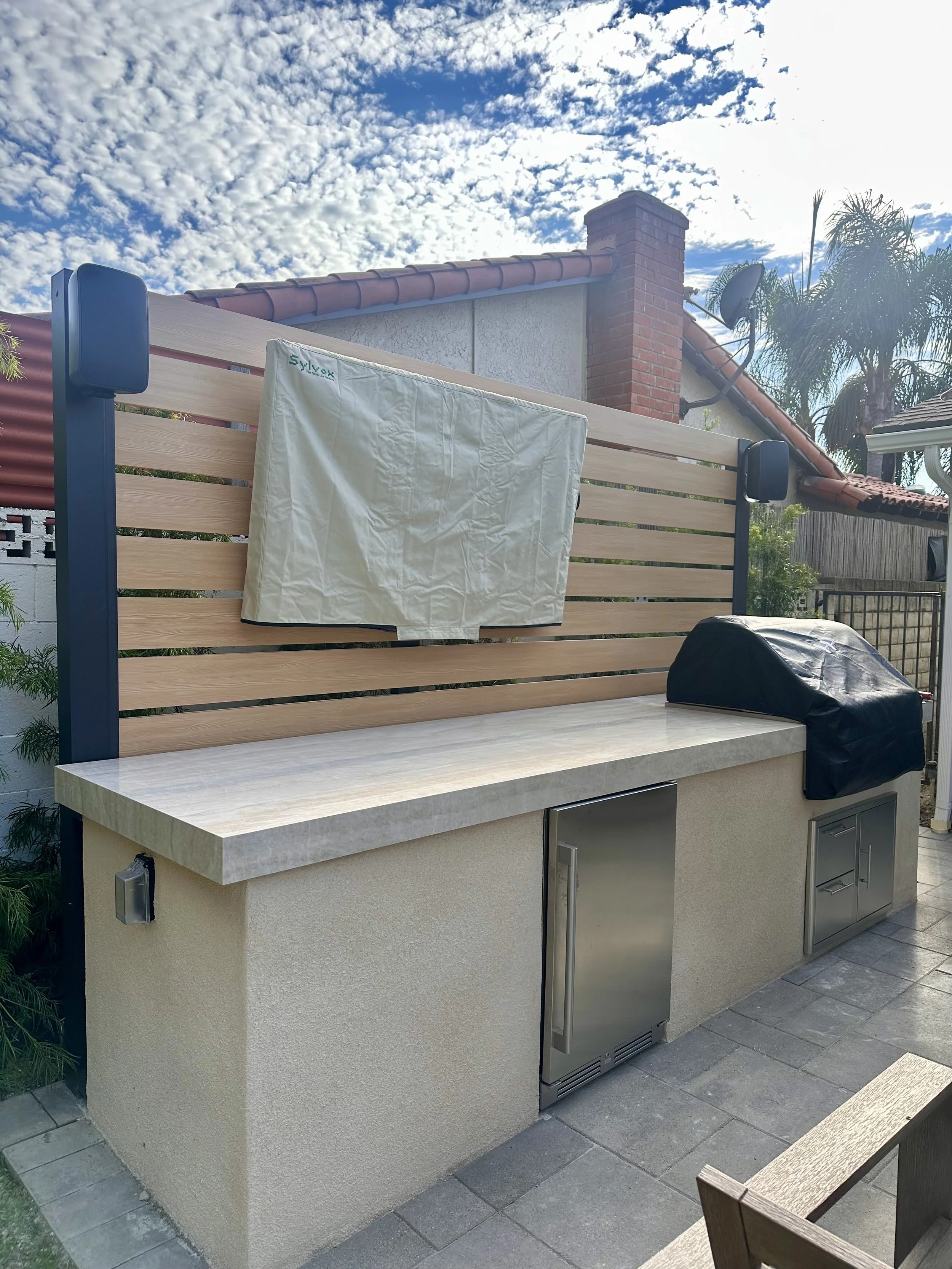
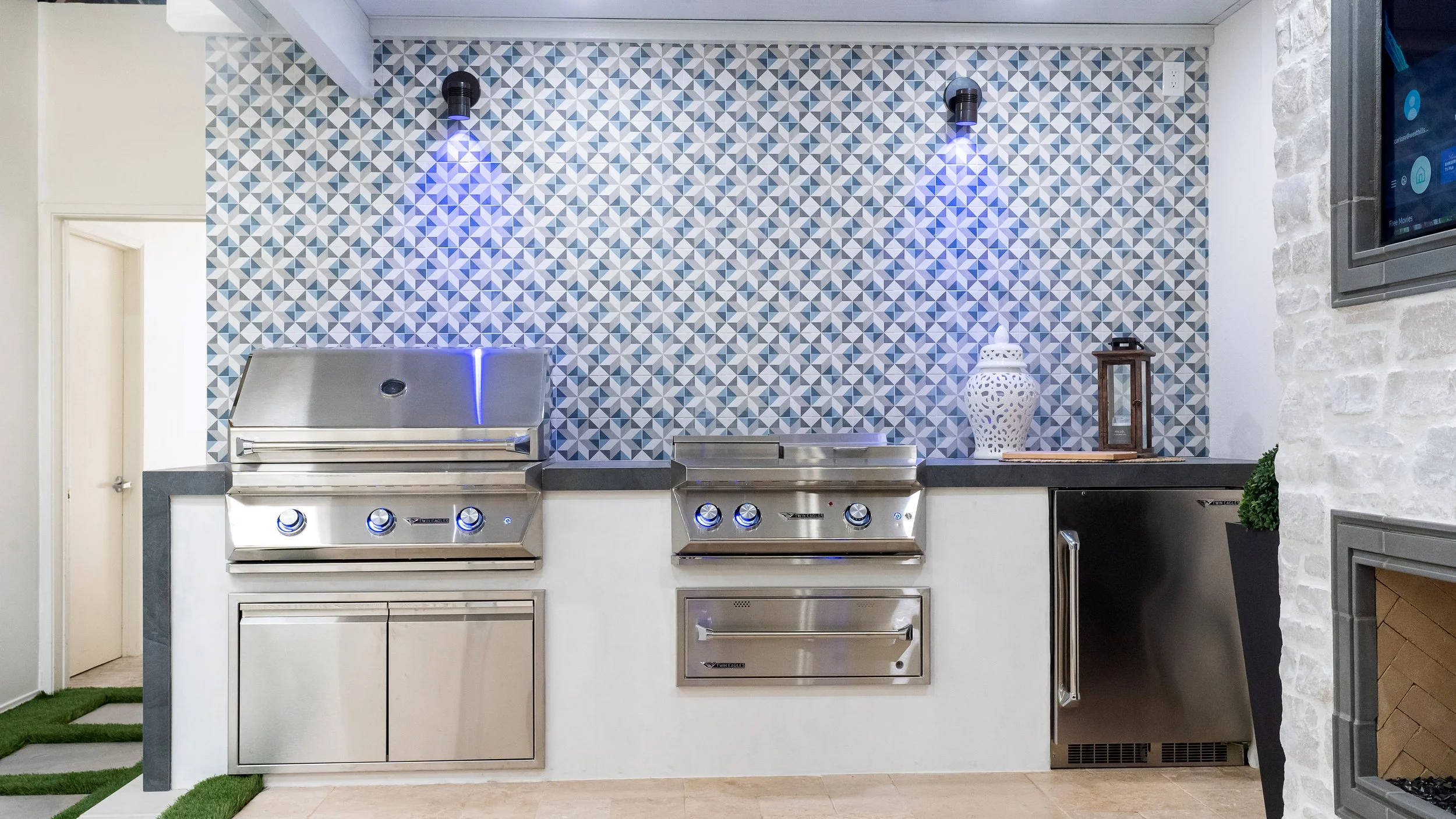
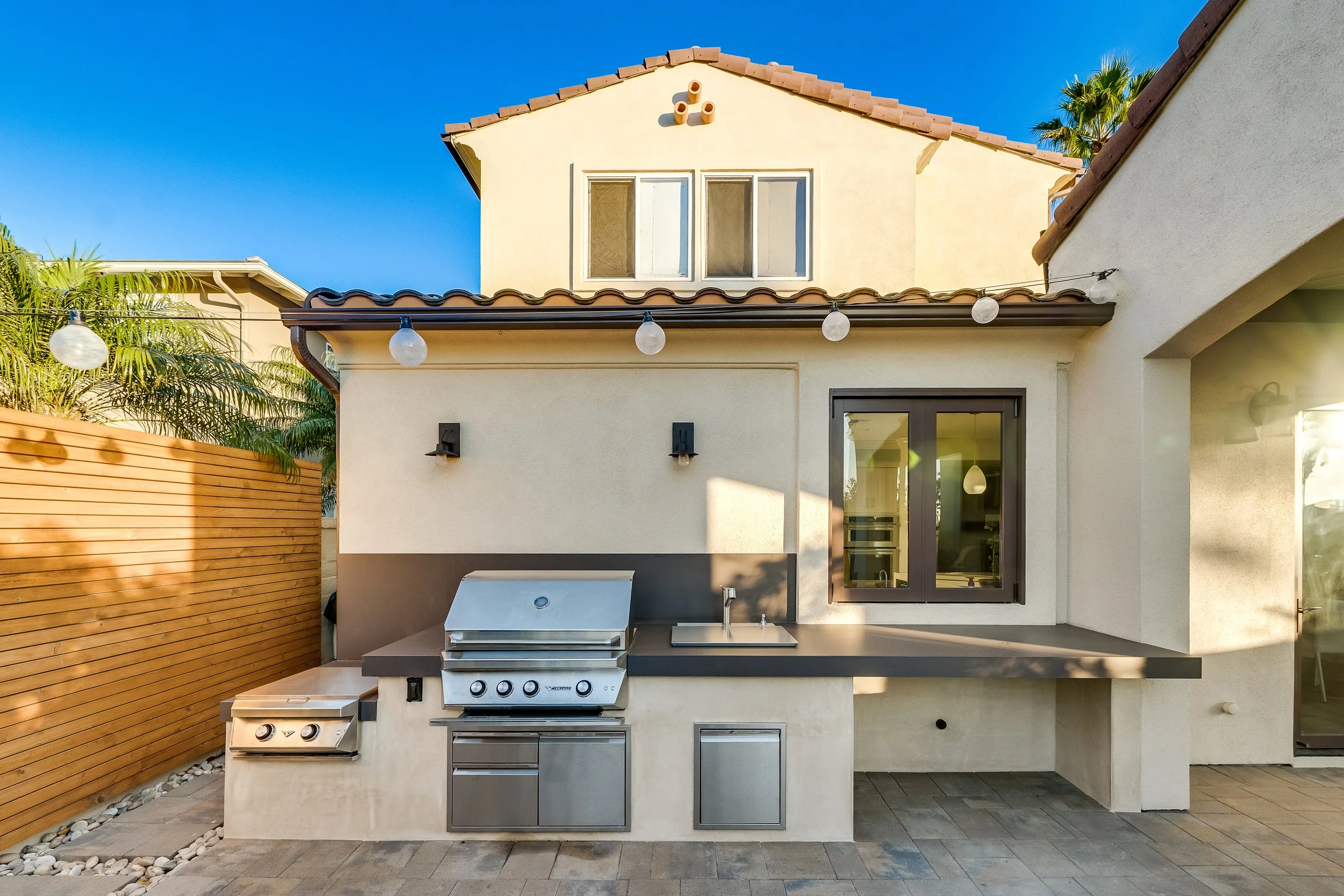
Porcelain slab is the newer entrant in the outdoor kitchen countertop conversation, and it's earned a real following among homeowners in Newport Coast and Dana Point who want the marble or concrete look without the upkeep either material demands.
The maintenance case. Because porcelain slab is manufactured to be dense and non-porous, it doesn't require sealing at all a meaningful difference from granite's annual maintenance ask. It also resists staining from citrus, wine, and grill grease better than most natural stone, which matters for an outdoor kitchen that actually gets used for entertaining.
The UV advantage. Full Southern California sun can fade certain natural stones and cause some engineered quartz products to discolor over years of exposure. Porcelain holds its color extremely well under UV, which is part of why it's become popular for pool-deck-adjacent kitchens in San Clemente and Laguna Hills where there's no shade structure.
The tradeoff. Porcelain slab requires a fabricator with specific experience in the material cutting, edging, and seaming porcelain is a different skill set than working with granite or quartz, and a fabricator without that experience can produce chipped edges or visible seams. Material cost also tends to run higher than granite, though the maintenance savings can offset that over time.
What proper support requires. Porcelain slab is typically fabricated at 12mm or 20mm thickness thinner than a comparable granite slab which means unsupported overhangs and cutouts for grills or sinks need to be engineered with additional substructure support underneath. This isn't a drawback so much as a different set of installation requirements, but it's exactly why fabricator experience matters: a fabricator used to granite's thicker, more forgiving material can under-support a porcelain overhang and end up with cracking that has nothing to do with the material's actual durability.
Cost in real terms. Material cost for porcelain slab often runs 15 to 30 percent higher than a comparable granite selection, though that gap has been narrowing as more fabricators bring porcelain into their standard offering. Factor the avoided sealing costs and reduced long-term maintenance into the comparison, and the total cost of ownership often evens out over the life of the countertop.
The honest answer. If low maintenance and color stability under direct sun are priorities, porcelain slab is arguably the best countertop material available for an Orange County outdoor kitchen today. Just make sure whoever fabricates it has done porcelain before.
We work with fabricators who specialize in porcelain slab installation. Contact us at westhillsmasonry.com/contact or 714-519-5009.