
The Yard That Makes Vacations Feel Unnecessary
Key Takeaways
• A truly resort-caliber backyard is built on hardscape decisions made before a single plant goes in the ground
• The difference between a "nice patio" and a space that makes vacations feel unnecessary is usually four things: grade, materials, layering, and light
• A blank dirt lot and a builder-grade backyard both start from the same disadvantage; the transformation comes from design intent, not square footage
• Homeowners in Newport Beach, Newport Coast, and San Juan Capistrano are increasingly requesting Mediterranean and coastal-resort themes for their outdoor living spaces
• The right partner treats your backyard as architecture, not landscaping
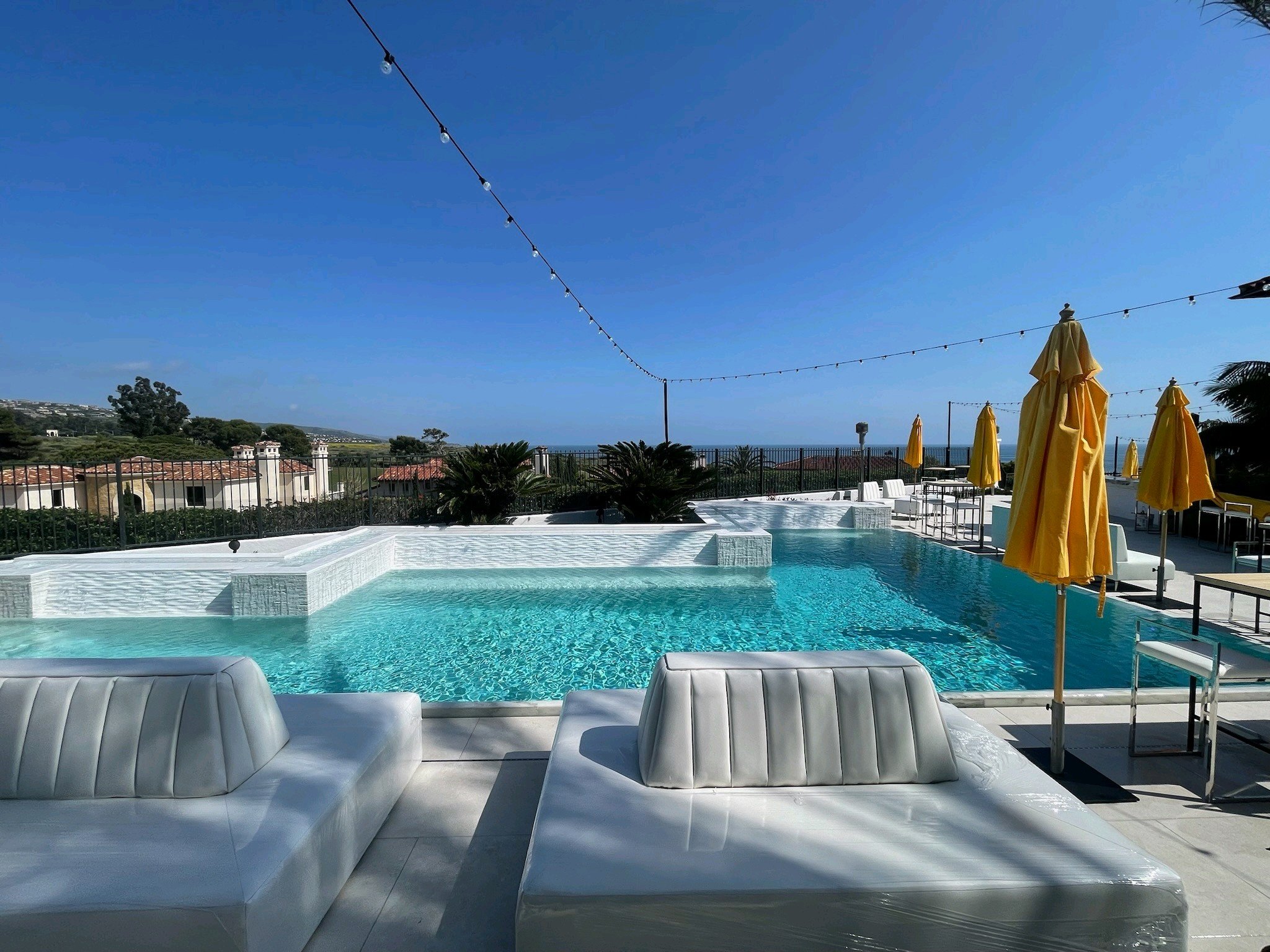
There is a particular kind of photo that stops people mid-scroll. A pool lit gold at golden hour. A wall of white stucco against a blue sky. Furniture that looks like it belongs on a hillside in Greece, not a quarter-acre lot in a Southern California subdivision. The caption underneath usually says some version of the same thing: this yard makes vacations feel unnecessary.
It is a bold claim. It is also, increasingly, an achievable one.
We have watched the "resort backyard" trend grow from a niche request into one of the most common phrases homeowners use when they sit down with us for a first consultation. Nobody says "I want a nice patio" anymore. They say, "I want to feel like I'm at a boutique hotel every time I walk outside." That is a different brief entirely, and it changes almost everything about how the space needs to be built.
What Actually Separates a Backyard From a Retreat
A backyard becomes a retreat the moment it stops looking like an afterthought to the house and starts looking like an extension of it. That transformation lives almost entirely in the hardscape, long before furniture, plants, or lighting ever enter the picture.
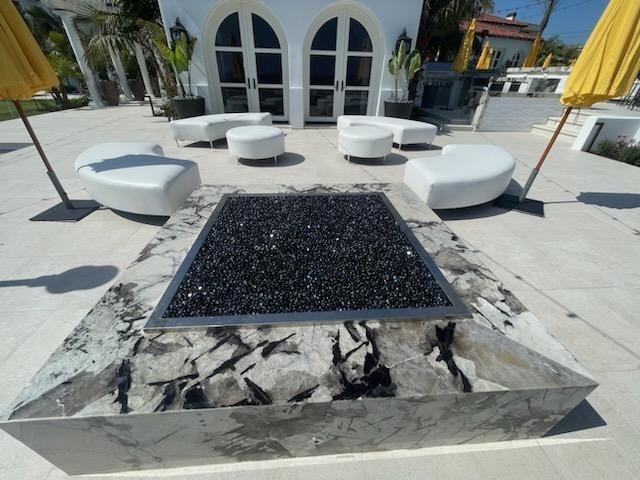
Grade and flow. Resort-style spaces rarely sit flat and square. They step down toward water, wrap around a fire feature, or lift a lounge area just slightly above the pool deck so every seat has a sightline. That kind of movement requires retaining walls, properly engineered drainage, and a grading plan that respects the slope of the lot instead of fighting it.
Material honesty. Santorini, Positano, and the Mediterranean coastline share a material language: white plaster, natural stone, warm wood, and very little visual noise. Recreating that feeling in Orange County means choosing paver and veneer tones that echo those colors, not simply installing whatever is on sale. A washed concrete deck, a limestone-toned paver field, or a hand-selected stone veneer accent wall does more to sell the "vacation" feeling than almost any piece of furniture placed on top of it.
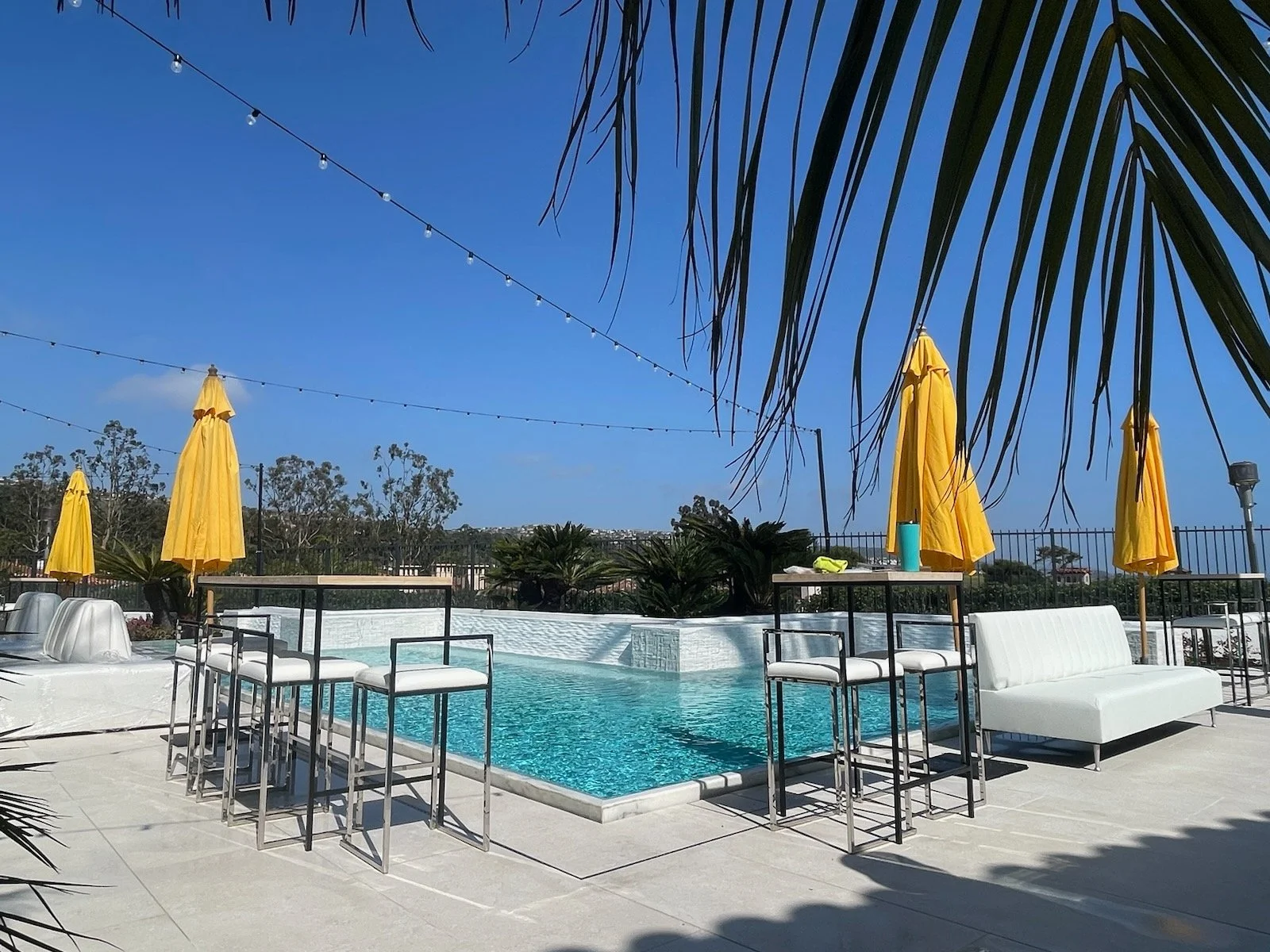
Layering, not sprawl. The best resort backyards feel larger than they are because they are built in zones: a shaded lounge area, an open pool deck, a raised fire feature, a dining area tucked slightly apart. Each zone gets its own hardscape treatment, its own elevation change, and its own reason to walk toward it.
Light as architecture. Uplighting on a stucco wall, low path lighting along a stepped retaining wall, a fire bowl reflecting off a pool's surface at dusk. None of this works without the underlying hardscape already accounting for conduit, drainage, and structure. Lighting is the finishing layer. It cannot fix a space that was not built with intention underneath it.
From Blank Dirt Lot to Something Worth Photographing
Every backyard we build starts somewhere unglamorous. Sometimes it is a builder-grade slab and a strip of sod. Sometimes it is, quite literally, dirt: a fenced-in rectangle behind a new-build home in a Newport Beach or San Juan Capistrano community, waiting for someone to decide what it should become.
The gap between that blank lot and a finished space that reads as a private resort is not primarily a budget gap. It is a design gap. We have seen modest backyards transformed into spaces guests do not want to leave, and we have seen expansive lots left feeling flat and generic because the hardscape never established a sense of arrival, movement, or destination.
This is why the design process matters as much as the installation. Before a single paver is set or a retaining wall is formed, the space needs a plan: where the eye should land first, where shade should fall in the afternoon, where the pool deck should step down to meet a fire lounge, where a stone accent wall should anchor an otherwise open yard. We work closely with landscape design partners on this stage for exactly this reason. A resort-caliber backyard is architecture first and decoration second.
Bringing the Concept to Orange County
The homeowners requesting this style most often are not asking for a themed space. They are not looking for a literal recreation of Greece or the Amalfi Coast. What they want is the feeling: the sense of arriving somewhere calm, curated, and separate from the rest of daily life, without leaving their own property.
That feeling translates well here. The light in coastal Orange County, from Laguna Beach down through Dana Point and San Clemente, already carries a Mediterranean quality: warm, bright, forgiving of white and cream tones in a way that flatter stone and stucco. Combine that natural light with the right hardscape palette, a well-engineered pool deck, and a retaining wall or two doing quiet structural work, and the "vacation" feeling stops being aspirational and starts being architectural.
Where to Start
If you are picturing this kind of backyard for your own home, the conversation should start with the bones, not the finishes: grading, drainage, structural walls, and material selection. Everything else, the furniture, the plants, the lighting design, performs far better once that foundation is right.
We build backyards like this across Newport Beach, Newport Coast, San Juan Capistrano, Dana Point, San Clemente, and Laguna Hills, working alongside design partners to take a space from blank lot, or builder-grade afterthought, to something that genuinely changes how a family uses their home.
If you're ready to talk through what that could look like on your property, reach out to us or call 714-519-5009. We'd be glad to walk the space with you.