
Polished, Poured-in-Place Concrete for a BBQ Countertop: Is This the Right Product for You?
Key Takeaways
• Poured concrete allows for custom shapes, integrated sinks, and seamless runs that slab material can't replicate
• It requires sealing and periodic maintenance to resist staining, similar to natural stone
• Hairline cracking is a known characteristic of the material, not necessarily a defect
• Best suited to homeowners who value a bespoke, architectural look over a flawless, uniform surface
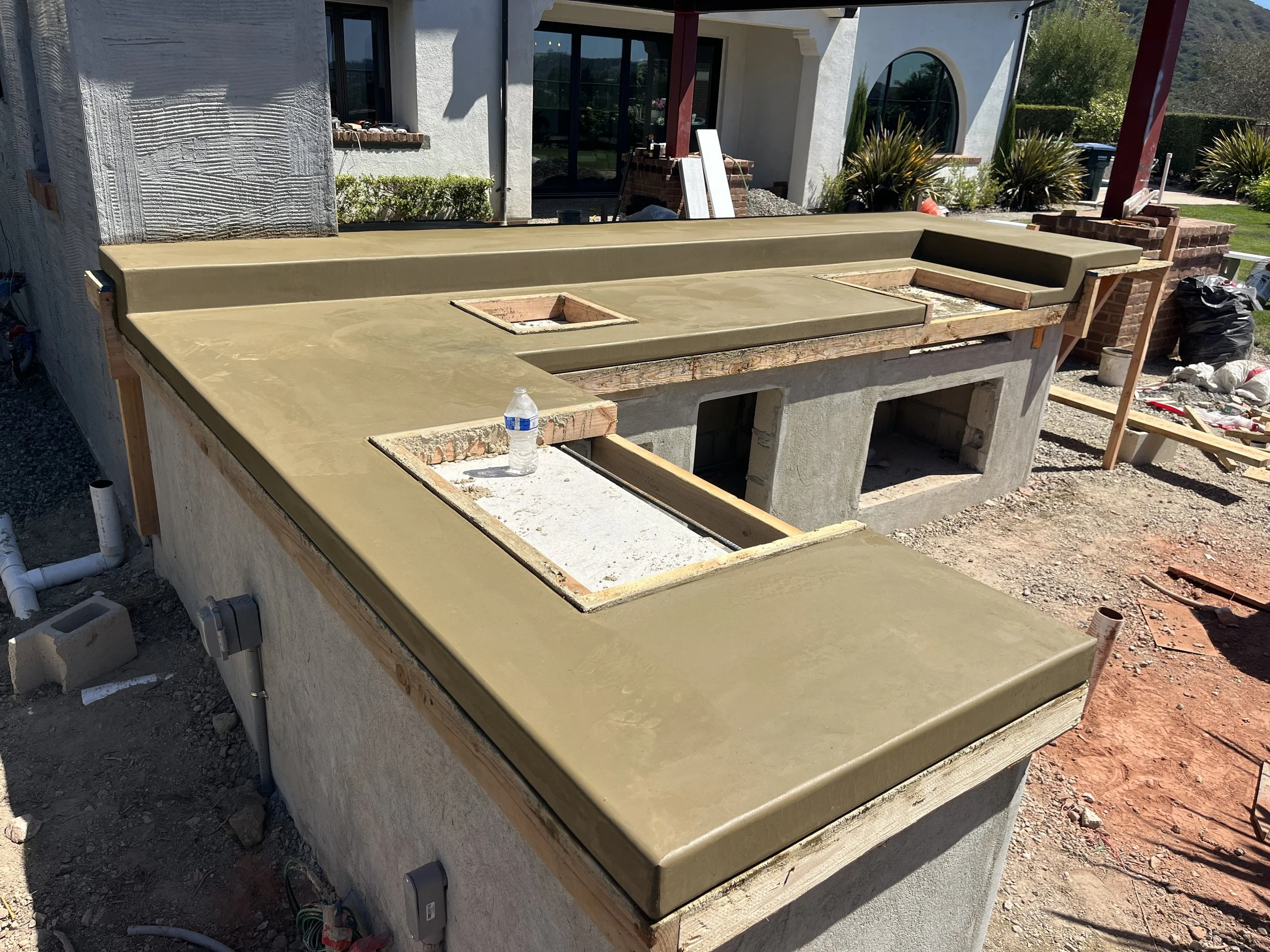
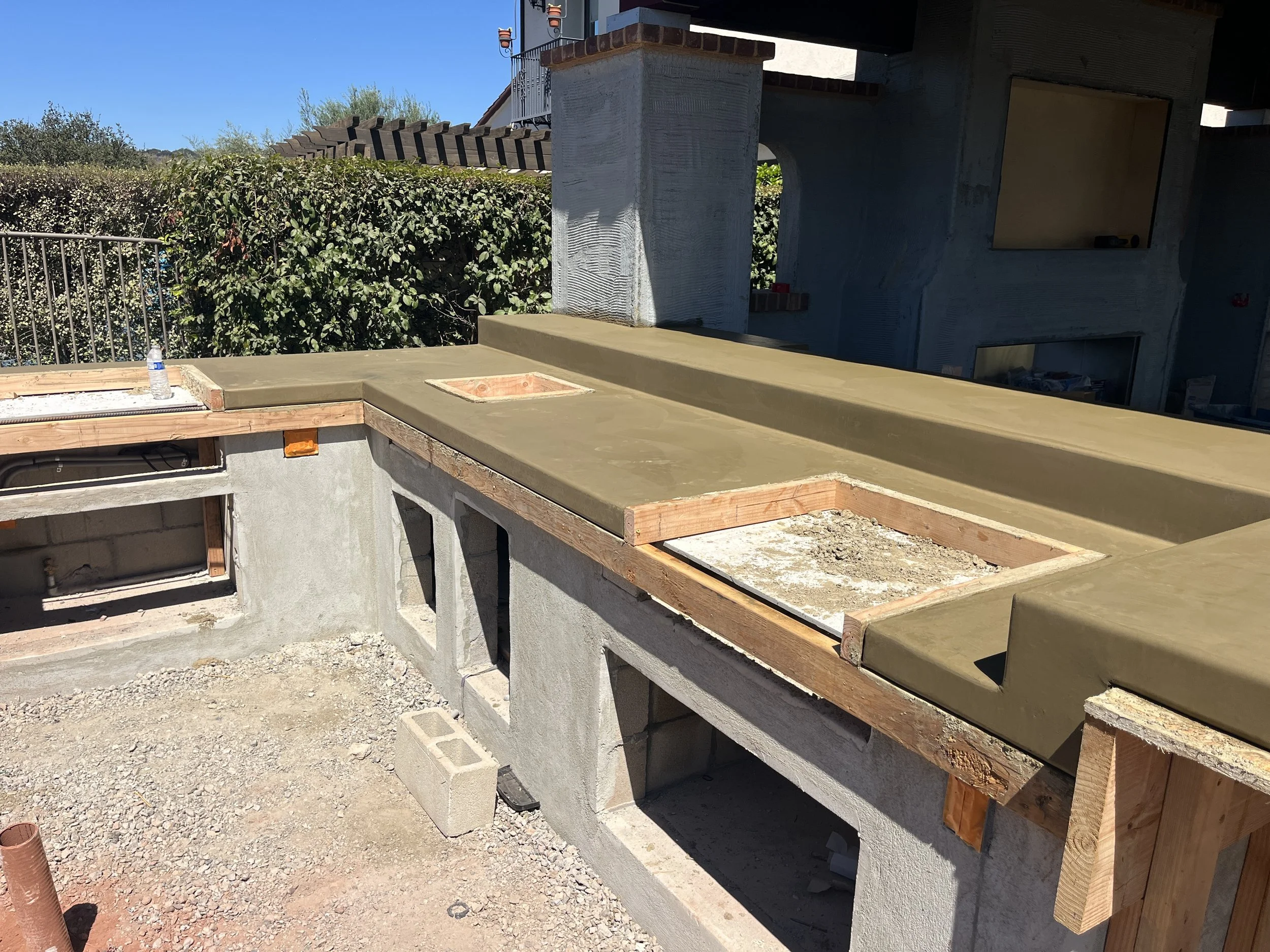
Poured-in-place concrete countertops occupy a different category from slab materials entirely rather than fabricating and setting a pre-cut piece, the countertop is formed and poured on site, which opens design possibilities slab material simply can't offer.
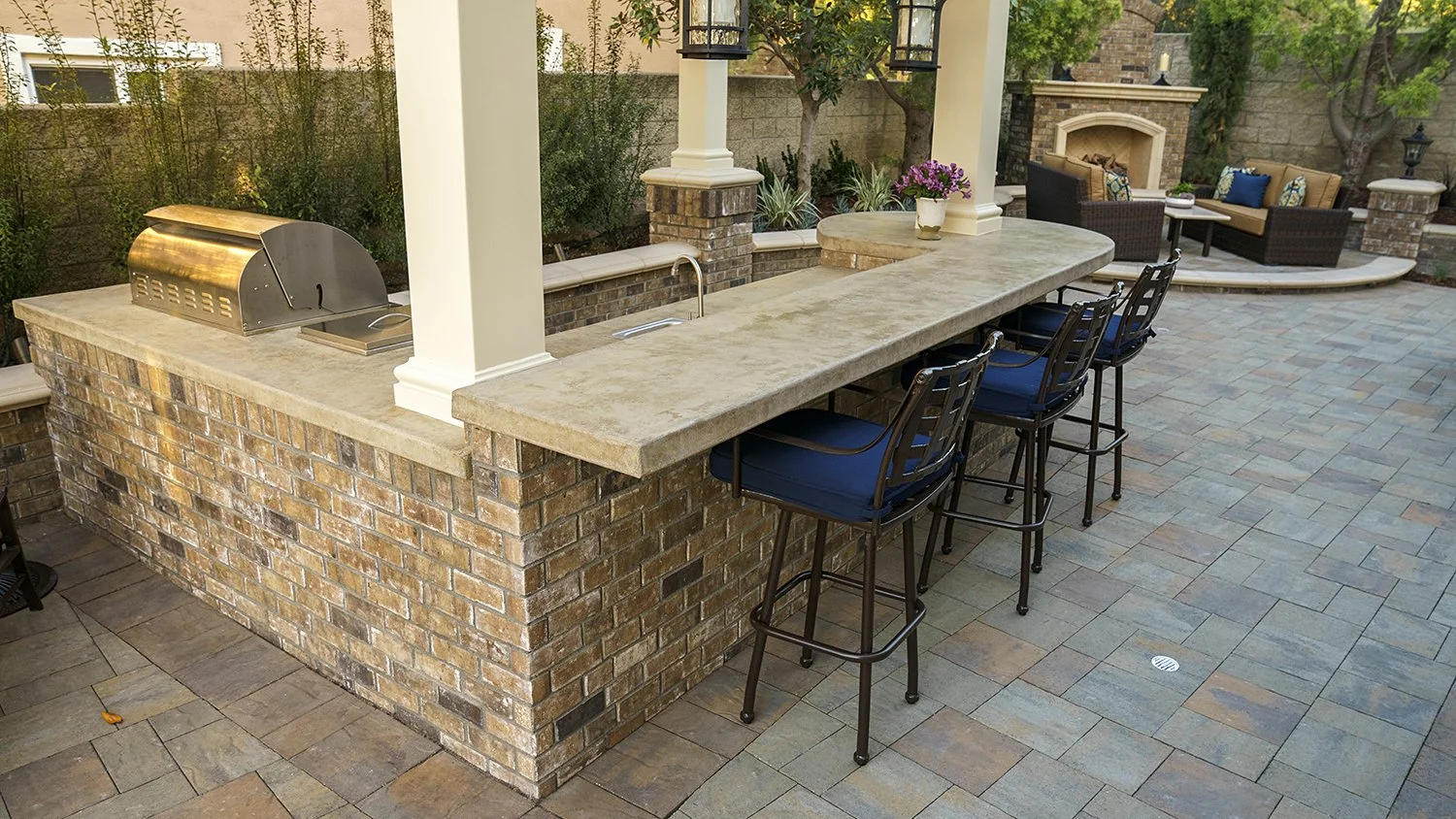
The design case. Because it's poured rather than cut, concrete can wrap corners seamlessly, integrate a sink or ice chest opening without a visible seam, and take on custom edge profiles specific to your outdoor kitchen's footprint. For a custom-built kitchen in Newport Beach or Dana Point designed around a specific layout, that flexibility is often the deciding factor.
What to expect over time. Concrete is a living material, even when polished. Hairline cracks can develop as it cures and settles this is a known characteristic, not a failure, and a skilled installer will account for it with proper reinforcement and control joints. It also needs sealing to resist oil and wine staining, similar to natural stone, and that sealing needs to be maintained.
Who it's for. This is the right choice for a homeowner in San Juan Capistrano or Coto de Caza who wants their outdoor kitchen to feel custom-built and architecturally integrated, and who's comfortable with the character marks that come with a poured material rather than expecting slab-level uniformity.
Finish options within the pour itself. A poured concrete countertop can be finished a number of ways after curing a high-polish grind for a sleek, marble-like sheen, a honed matte finish for a softer, more understated look, or integral color and aggregate exposure for a more textured, artisanal result. Each finish requires a different grinding and polishing process, which is worth discussing up front since it affects both cost and the final feel of the surface.
Why reinforcement isn't optional. Because these countertops are poured on site rather than fabricated in a controlled shop environment, proper internal reinforcement typically a combination of rebar or reinforcing mesh along with fiber additives in the mix is what keeps the inevitable hairline shrinkage cracks cosmetic rather than structural. This is a place where installer experience shows up directly in the final product, since an under-reinforced pour is far more likely to develop cracks wide enough to be a real problem.
The honest answer. If design flexibility and a seamless, bespoke look matter more than a flawless factory finish, poured concrete is worth serious consideration. If you want zero variation and zero maintenance, a slab material will serve you better.
We form and pour custom concrete countertops as part of our outdoor kitchen builds. Reach us at westhillsmasonry.com/contact or 714-519-5009.