
Is Tile Travertine, Porcelain, or Limestone the Right Product for You?
Key Takeaways
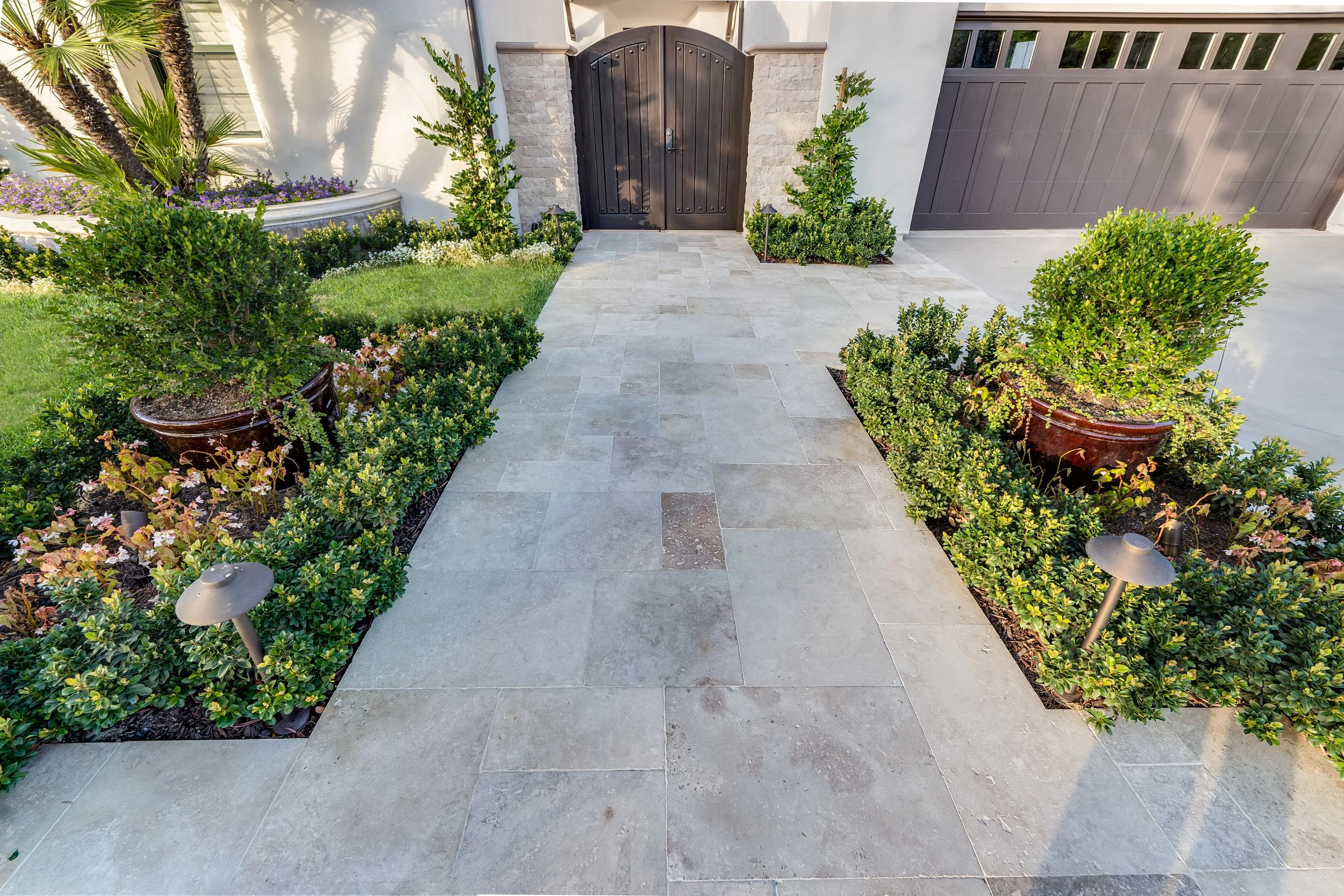
• Travertine offers the warmest, most classic look but is the most porous and requires periodic sealing
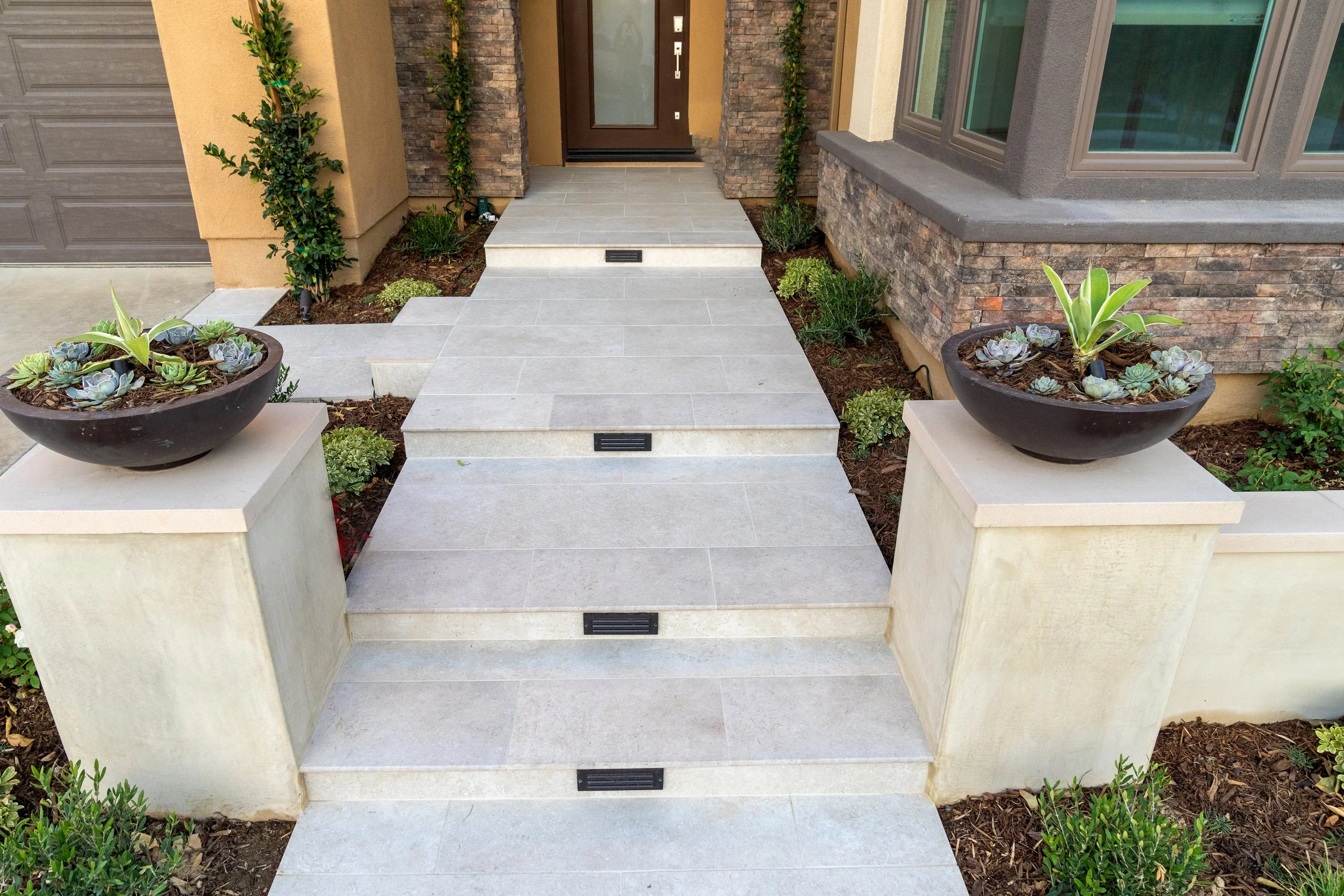
• Porcelain is the most durable and stain-resistant of the three, with the least maintenance over time
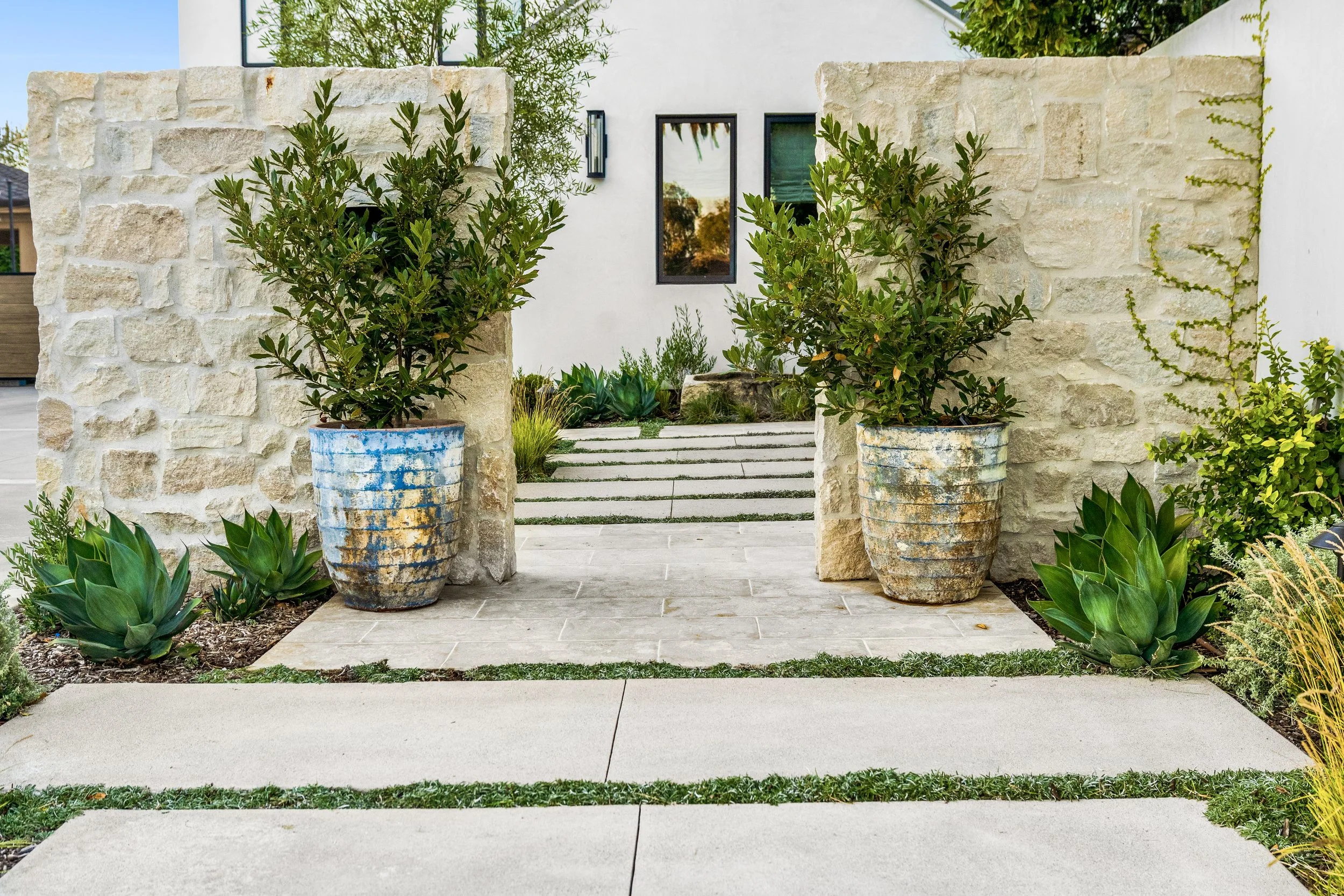
• Limestone reads cooler and more contemporary, popular in newer builds throughout Newport Coast
• The right choice depends less on price and more on maintenance tolerance and the architectural style of the home
Once a project moves into true tile territory, the question isn't "should I upgrade from concrete" it's which premium material fits the home. Travertine, porcelain, and limestone all land in a similar price range, so the decision comes down to look and long-term care, not budget.
Travertine is the material most homeowners picture when they think "high-end Orange County patio." It has natural pitting and warm, earthy tones that pair beautifully with the Mediterranean and Tuscan architecture common in San Juan Capistrano and Coto de Caza. The tradeoff is porosity it will absorb oil, wine, and pool chemicals if left unsealed, so it needs a maintenance routine most other materials don't.
Porcelain pavers have become the practical favorite for busy outdoor kitchens and pool decks in Newport Beach and Dana Point. They're manufactured to be dense and nearly non-porous, which means far less staining and virtually no sealing requirement. The tradeoff is a slightly more uniform, manufactured look porcelain can look a touch "perfect" next to a home with more organic architectural details.
Limestone sits in between a naturally quarried material like travertine, but with a cooler, more monochromatic tone that fits the cleaner-lined contemporary homes we're seeing more of in Newport Coast and Laguna Hills. It shares travertine's porosity concerns, so sealing still matters.
How installation method changes the equation. All three materials can be set one of two ways: mortared over a concrete base for driveways and heavy-traffic areas, or sand-set over a compacted aggregate base for patios and pool decks, which allows for some flexibility and easier future repair. Pool decks add a third consideration entirely pedestal-set porcelain is increasingly popular for elevated deck applications since it allows water to drain freely underneath, an option that isn't practical with travertine or limestone in the same configuration. Thickness matters too: driveway applications generally call for a thicker paver (2cm or greater) than a patio or pool deck application would require.
Cost, honestly. All three materials land in a similar range per square foot once you account for installation method, so price rarely decides this one on its own it comes down to which material's character and maintenance profile actually fits how you live in the space.
The honest answer. If your home leans traditional and you're willing to seal the surface every couple of years, travertine is hard to beat. If low maintenance is the priority, porcelain wins. If your architecture is more contemporary, limestone often reads as the more intentional choice.
We carry sample boards of all three, and we'll help you see them against your actual stucco and roofline before you commit. Reach out at westhillsmasonry.com/contact or 714-519-5009.