
Are Concrete Pavers the Right Product for You?
Key Takeaways
• Concrete pavers sit between poured concrete and natural stone on both cost and visual character
• Individual units can be lifted and reset, making future repairs far less invasive than with a poured slab
• Manufactured pavers now come in travertine- and natural-stone-look finishes at a lower price point than the real material
• The tradeoff is a more uniform, less organic look than genuine natural stone
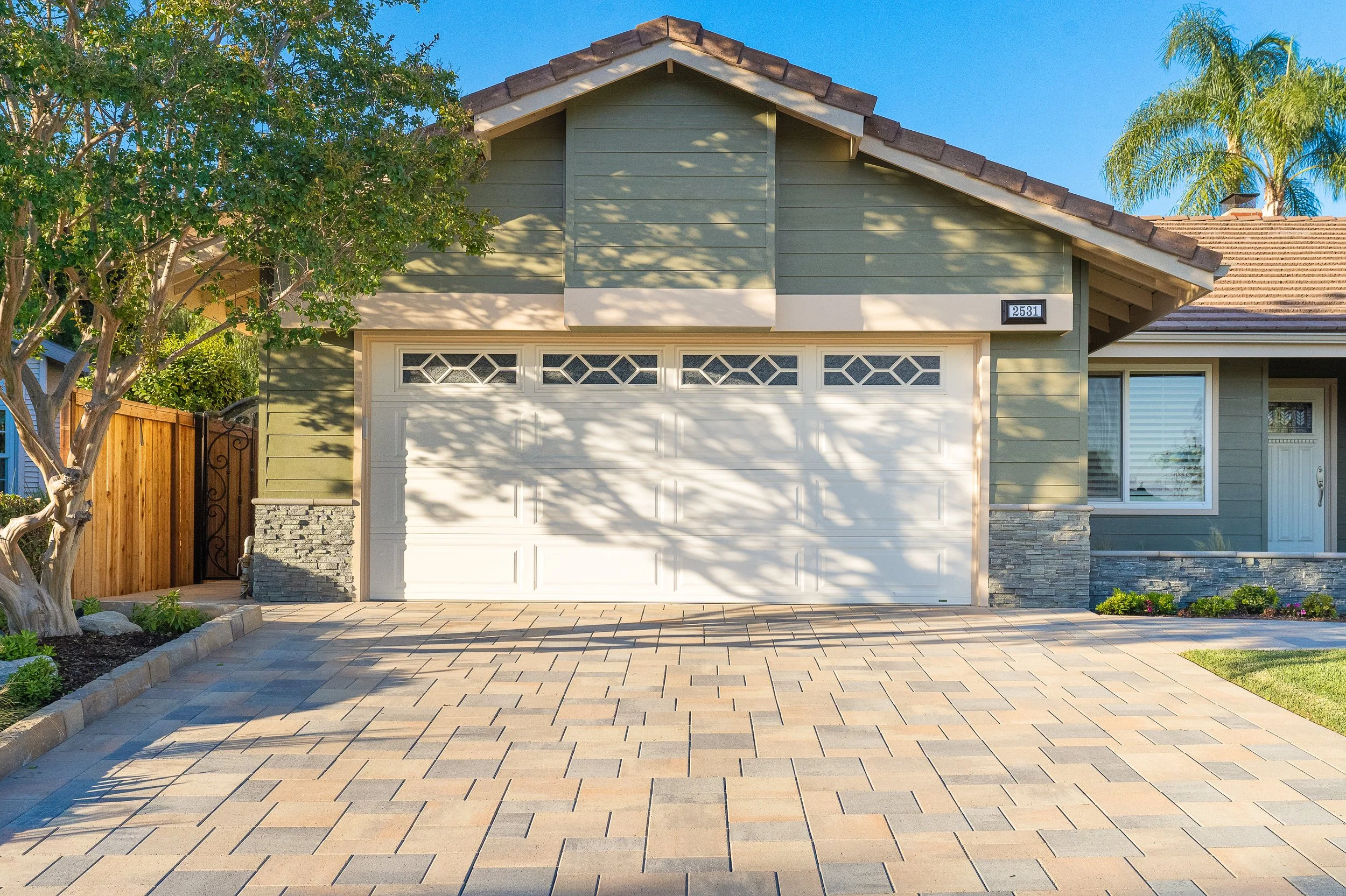
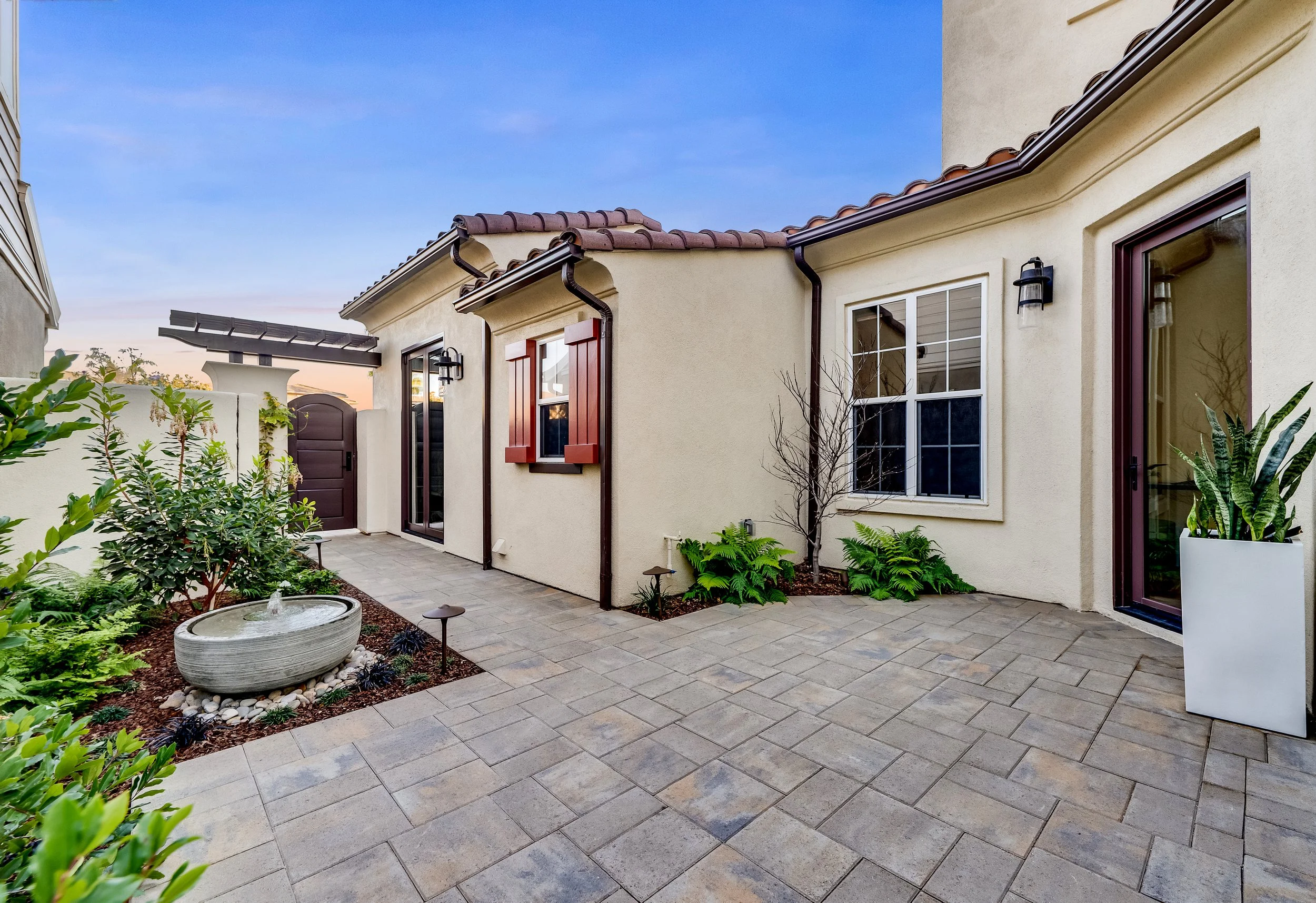
Concrete pavers have earned their place as the workhorse surface for driveways and patios across Orange County, and for good reason: they give you pattern, color, and texture options that poured concrete can't match, while staying well under the cost of genuine travertine or limestone.
The practical advantage. Because pavers are individual units set over a compacted base and bedding layer, they can be lifted, adjusted, and reset if a section settles or if you ever need access underneath for irrigation or drainage work. That's a real advantage over a monolithic slab, particularly on properties in Laguna Hills and San Clemente where mature root systems sometimes shift the base over time.
Where the category has grown. Manufacturers have gotten very good at replicating the look of natural travertine and limestone in a concrete paver, which means homeowners in Newport Coast and Newport Beach can get 80–90% of the high-end look at a meaningfully lower material cost. If your design calls for a large driveway or expansive pool deck, that difference adds up fast.
Where pavers fall short. No matter how good the manufacturing has gotten, a trained eye and often an untrained one, standing close enough can tell a manufactured paver from genuine stone. The color variation in real travertine or limestone comes from the earth, not a mold, and that subtle irregularity is part of what makes natural stone read as more expensive.
What goes on beneath the surface. The long-term performance of any paver installation comes down almost entirely to what's underneath it a properly compacted aggregate base, typically 4 to 8 inches depending on the application and whether it's carrying vehicle traffic, followed by a bedding layer of concrete sand and polymeric sand swept into the joints to lock the pattern in place and resist weed growth. Skipping or under-building this base is the single most common cause of paver settling and shifting we're called to repair, and it's rarely visible until months or years after installation.
Ongoing care. Beyond an occasional joint sand top-up and periodic rinsing, pavers ask relatively little of you. Polymeric sand can wash out over many years of heavy rain and needs refreshing eventually, and efflorescence a white mineral bloom that sometimes appears on new concrete pavers is a cosmetic, temporary condition that fades with normal weathering and cleaning rather than a defect.
The honest answer. Pavers are the right product when you want durability, repairability, and strong material options without a natural-stone budget. If your project is estate-scale and the material itself needs to communicate that scale a motor court entry in Dana Point, for instance real stone may be worth the premium instead.
Curious which paver line fits your home's architecture? We'll bring samples to you. Contact us at westhillsmasonry.com/contact or 714-519-5009.