
Building Before El Niño Returns: What Orange County Homeowners Should Know About Timing a Hardscape Project This Fall
Key Takeaways
• Wet ground and saturated soil directly affect sub-base compaction, concrete curing, and grading accuracy
• Permit and inspection timelines in most Orange County cities don’t shorten just because a storm season is approaching
• Starting excavation and drainage work before heavy rains arrive reduces the risk of schedule delays and rework
• Homeowners in flood-prone or sloped lots, common in areas like Laguna Niguel and Ladera Ranch, should pay particular attention to timing this fall
Southern California’s rainfall patterns have a way of reminding everyone, homeowners and contractors alike, that dry ground is not a permanent condition. When El Niño-influenced winters return, Orange County can see significantly more rainfall than an average year, concentrated in short, intense stretches between December and March.
For a hardscape project, that pattern matters more than most homeowners realize.
Why wet ground changes what’s possible on site
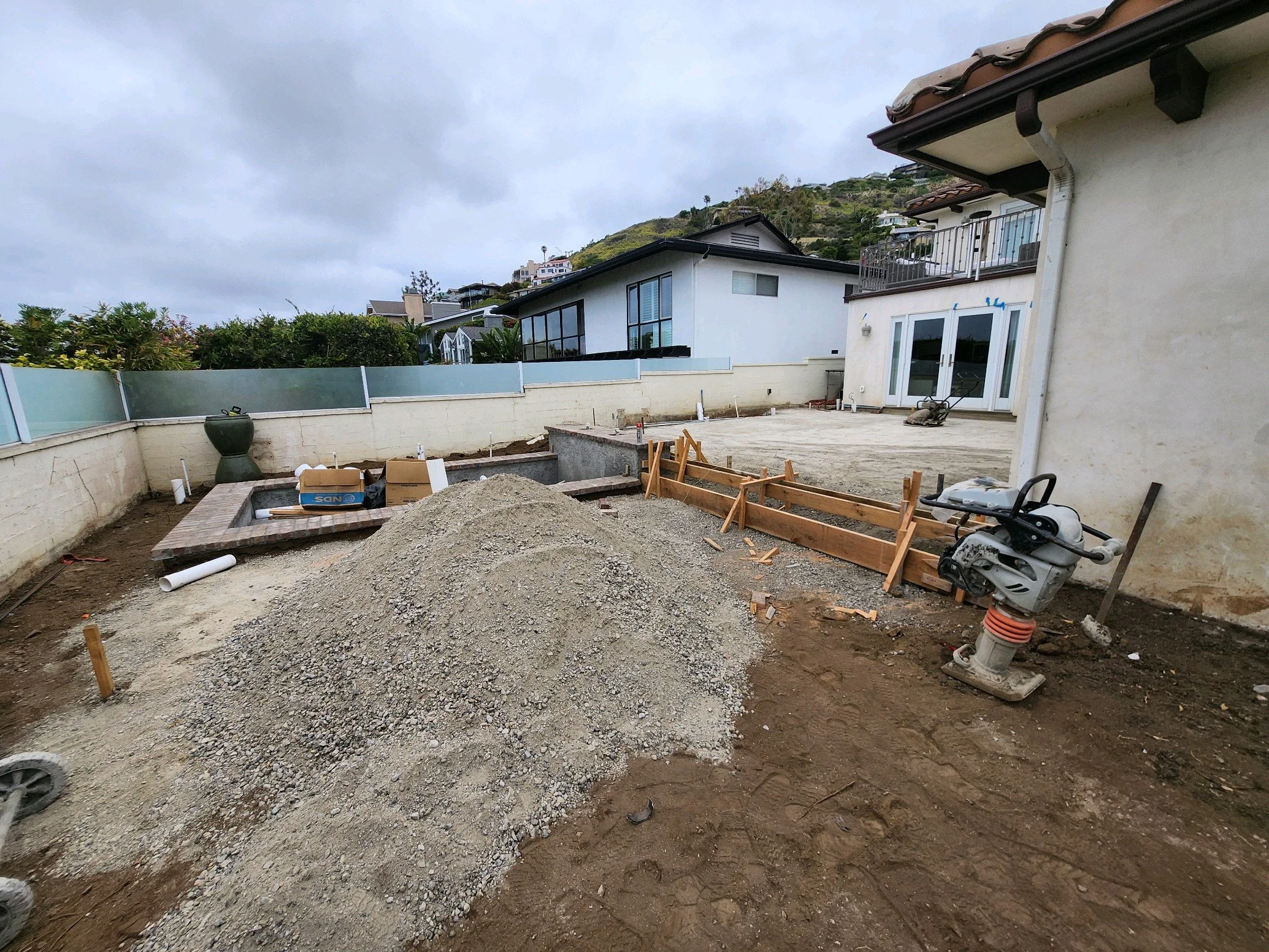
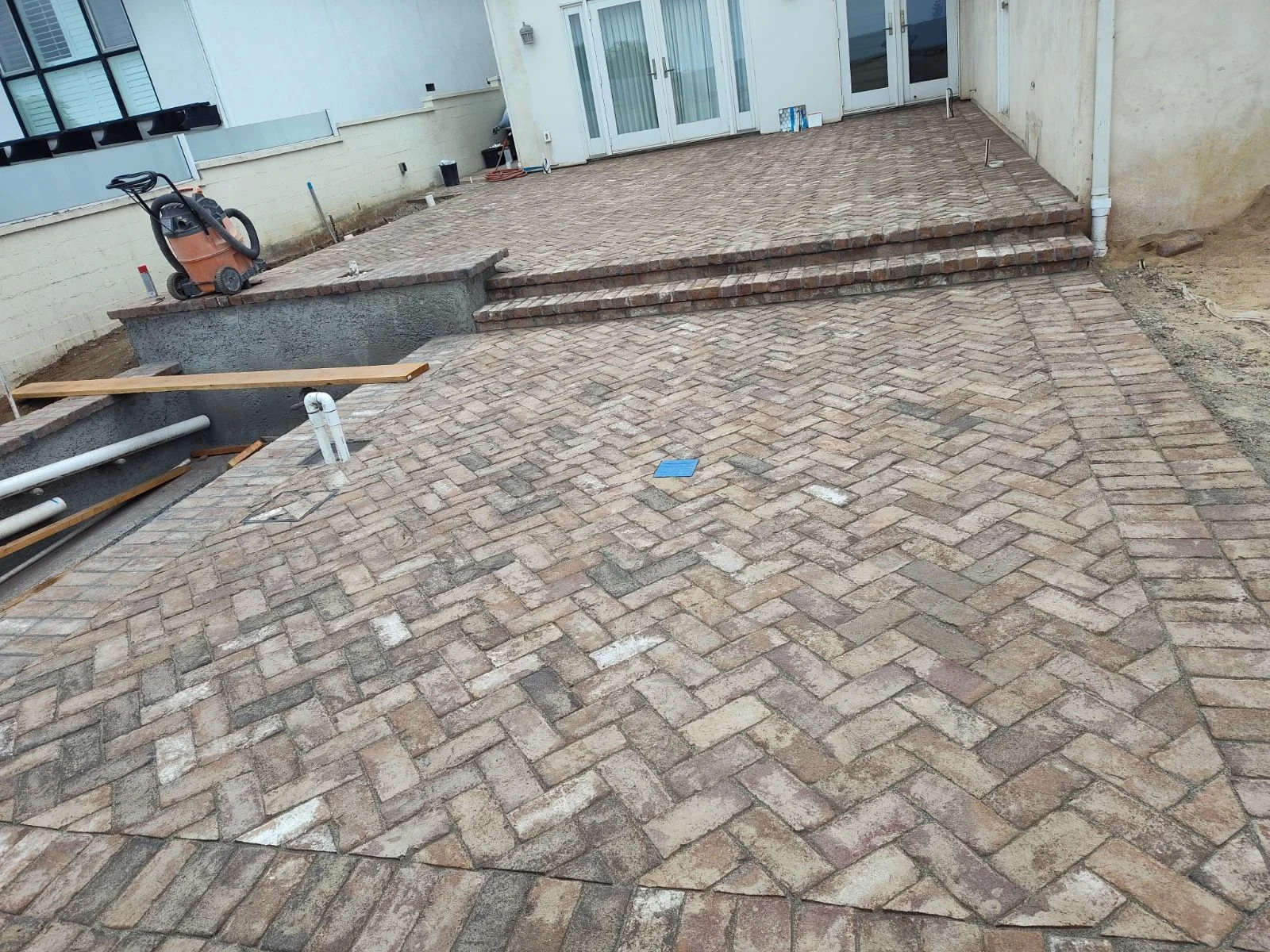
Nearly every element of a quality hardscape build, a paver patio, a retaining wall, a pool deck, depends on what’s happening below the surface before the first paver or block is ever placed. Sub-base compaction, proper grading for drainage, and concrete curing all rely on soil conditions that are workable and predictable.
Saturated soil compacts unevenly. Excavation on a wet site risks slumping and erosion, especially on the sloped lots common in Laguna Niguel, Ladera Ranch, and parts of Anaheim Hills. Concrete poured in cold, wet conditions cures more slowly and requires more careful protection to reach proper strength. None of these problems are unsolvable, but they add time, cost, and risk to a project that could otherwise move smoothly.
The permitting timeline doesn’t move with the weather
One detail that surprises many homeowners: city permit review and inspection scheduling in Orange County doesn’t accelerate to accommodate a coming storm season. A retaining wall permit in Dana Point or a drainage modification in San Juan Capistrano can take several weeks to process regardless of the forecast.
That means the real planning window for a fall project isn’t just “before it rains.” It’s “early enough to clear design, permitting, and material lead times before the ground conditions turn against you.” For most projects in the $100,000 to $300,000 range, that window realistically needs to open in late summer or early fall.
What we do differently when a project starts ahead of the rain
When a project begins with dry, workable soil, we’re able to complete excavation, grading, and drainage installation, the phases most sensitive to moisture, before conditions change. Site drainage in particular deserves attention here: a wall or patio built without proper channel drains or a properly sloped sub-grade can turn a single wet season into a recurring water problem, regardless of how well the surface material was installed.
This is also where the value of an experienced crew becomes clear. Reading a site’s drainage needs correctly, and building for the water that will eventually come, matters more in a wet year than in a dry one.
If you’re weighing timing for a project this fall
If a backyard remodel, retaining wall, or paver driveway has been on your mind for this year, the practical guidance is straightforward: start the design and permitting conversation now, before storm season narrows your options. This is especially true for sloped properties or any project involving significant grading or drainage work.
We can’t control the weather. We can control how well a project is sequenced around it.
Ready to start the conversation?
Visit westhillsmasonry.com/contact or call us at 714-519-5009 to talk through timing for your project before the season turns.