
Why Some Projects Finish in Months, Not Years
Key Takeaways
• A well-run outdoor renovation follows a fixed sequence: demolition, underground utilities, structural masonry, hardscape paving, landscape and irrigation, low-voltage lighting, and last of all artificial turf.
• Projects that should take months sometimes take years, and the cause is almost never the plan. It’s hesitation, poor sequencing, and slow response to the inevitable question or change along the way.
• Change is normal on any custom project. What separates a well-managed one is how quickly a concern gets addressed, walked through, and priced before it becomes a delay.
• Working within a defined local radius isn’t a limitation. It’s what makes same-week site visits and same-day answers possible.
• West Hills Masonry operates on a simple principle: if the project isn’t moving, something is wrong, and it gets fixed immediately, not eventually.
There is a version of a home renovation that most people never see, because it happens behind the scenes, in the space between a signed contract and a finished patio. Some projects move through that space with quiet, almost invisible discipline. Others stall, restart, stall again, and stretch what should have been a season of work into something closer to a year of waiting.
The difference rarely comes down to the design. It comes down to sequencing, and to how a contractor behaves the moment something doesn’t go exactly as drawn.
The Sequence Isn’t a Mystery
Anyone who has spent real time on outdoor construction sites in Newport Beach, San Clemente, or Dana Point knows the order of operations isn’t a trade secret. It follows a logic that hasn’t changed in decades, because the ground itself dictates it.
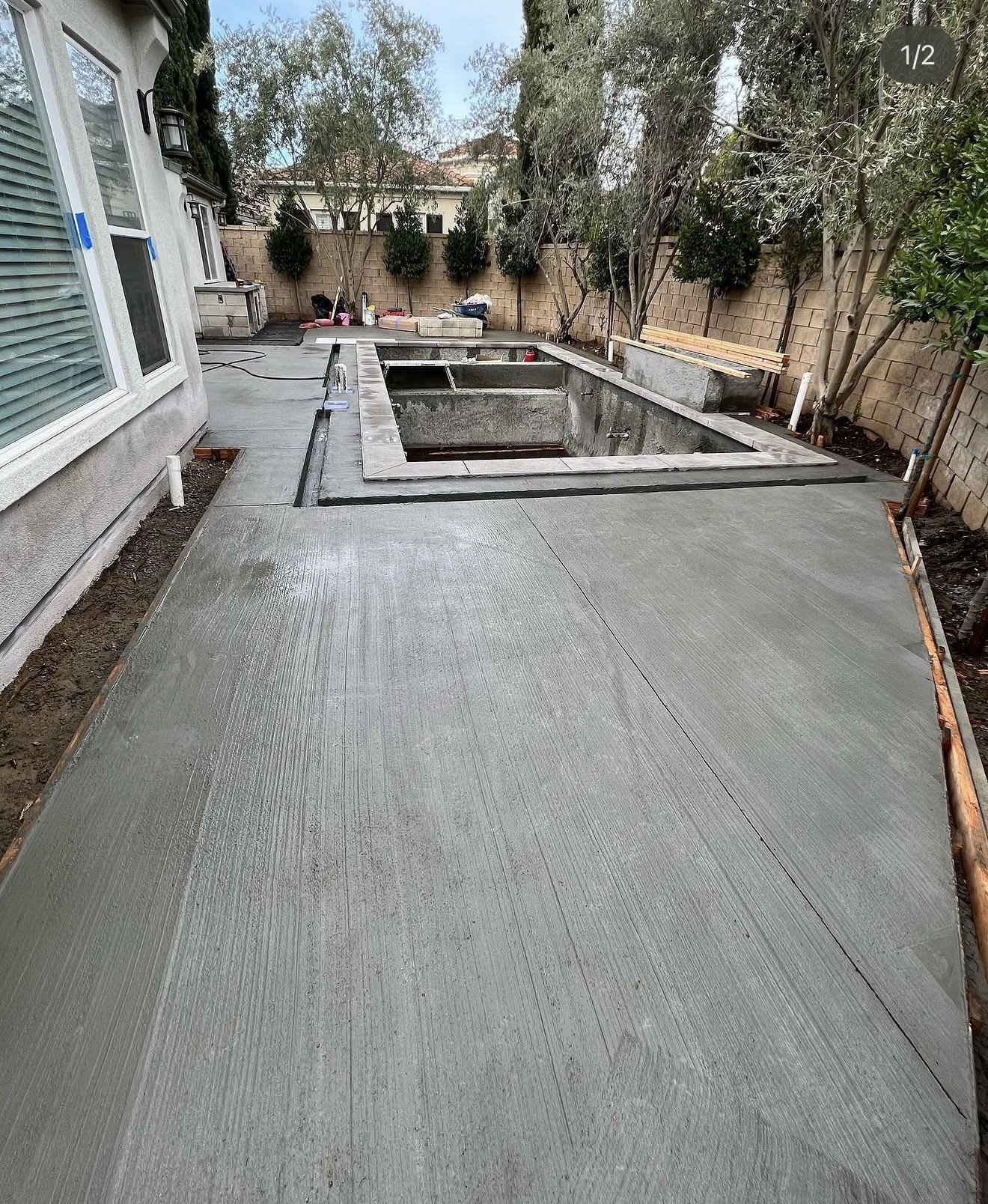
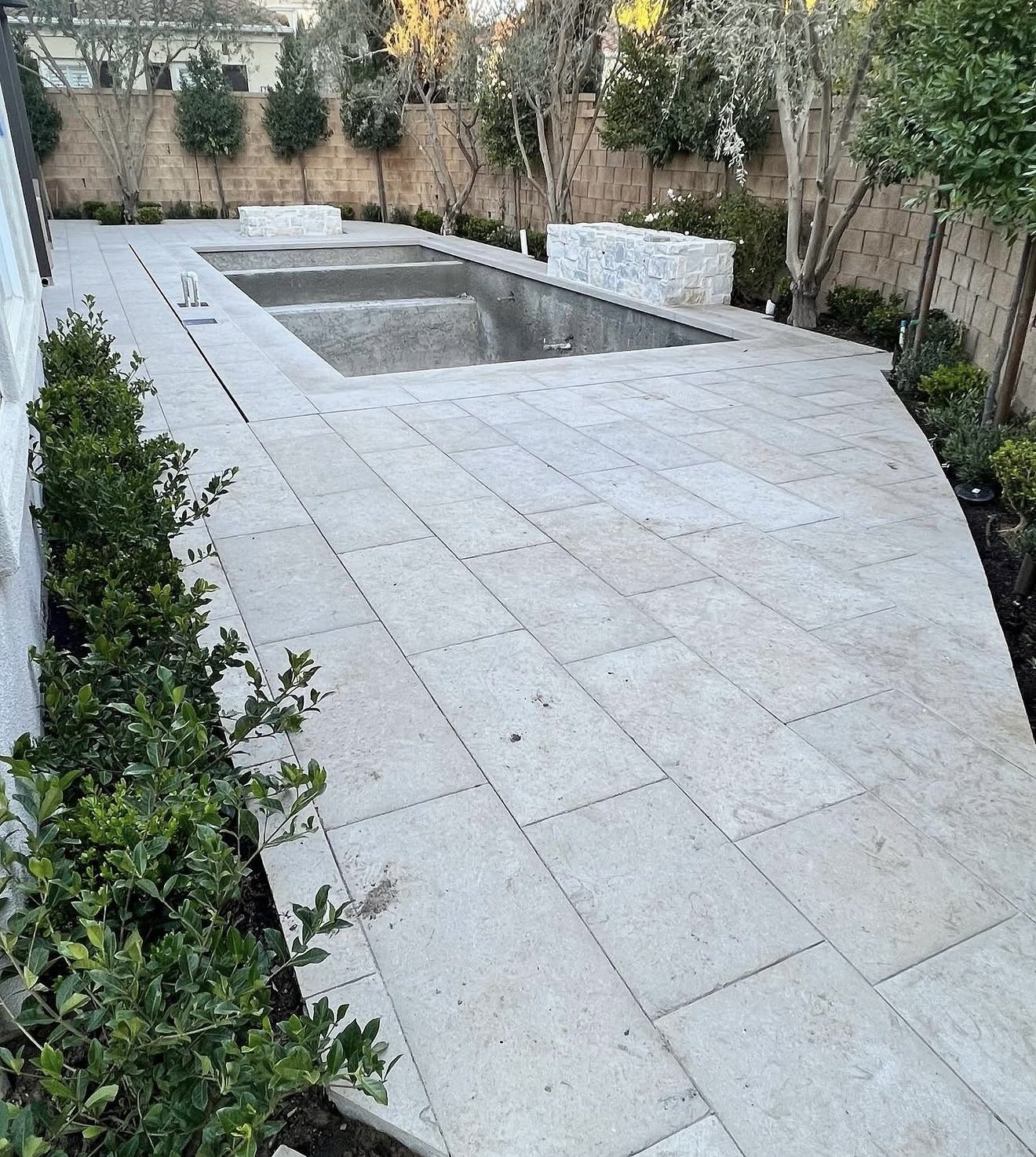
Demolition comes first, clearing the site down to a condition where the next trade can actually work. Underground utilities and drainage follow immediately after, while the ground is still open and accessible, because there is no more expensive mistake in construction than paving over a drain line you forgot to run. Structural masonry retaining walls, fireplaces, seat walls, columns comes next, since everything downstream will be built up to or around it. Hardscape paving follows once the structures are set. Landscape, planting, and irrigation come after the hardscape is down, followed by low-voltage lighting, which needs the planting beds finished to place fixtures correctly. Artificial turf, when it’s part of the scope, is always last, because it is the one material on the job site that construction traffic will damage instantly.
None of this is complicated. A project that respects this order moves. A project that doesn’t tends to double back, which is where months quietly become years.
Where Projects Actually Get Stuck
The homeowners we talk to in Laguna Beach and Coto de Caza rarely ask about sequencing directly. What they describe instead is a feeling: the sense that a project has gone quiet. A wall contractor who finished the structural work but seems reluctant to hand off cleanly to the next trade. A driveway contractor who paved before the irrigation sleeves were run underneath. A subcontractor who disappears for two weeks after a small surprise in the field, because no one on the team felt empowered to price the change and move forward.
To be candid: things do change on real projects. Grade conditions differ from a soil report. A client sees the mockup and wants the coping wider. A drainage issue surfaces only once demolition opens the site. This is normal, and any contractor who tells a client otherwise isn’t being honest with them.
What matters is what happens in the hour after that surprise appears. Does someone walk the site with the client that week, explain what changed and why, and hand over a clear change order with a number attached, so the client can approve it and the crew can keep moving? Or does the question sit unanswered for a month while the client wonders whether anyone is still thinking about their yard?
Why Staying Local Isn’t a Limitation
This is part of the reason West Hills Masonry has deliberately stayed close to home, focusing on Newport Beach, Newport Coast, San Juan Capistrano, Dana Point, San Clemente, and Laguna Hills rather than chasing volume across the county. A contractor spread thin across a wide territory can’t get back to a job site the same week a question comes up. A contractor working a tight radius can be standing in the client’s backyard within days, walking the change through in person, and putting a price in front of them before the delay compounds.
Momentum isn’t really about speed. It’s about removing the excuse for standing still.
The Business Case Nobody Says Out Loud
There’s a simple, unglamorous truth underneath all of this: a project that isn’t progressing isn’t generating revenue, for the contractor or the client’s timeline. Overhead crew, equipment, insurance, the cost of simply staying in business doesn’t pause because a decision is pending. A contractor who lets a project drift is not managing risk. They’re absorbing it silently, and usually passing the cost of that hesitation on to the client in the form of a longer, more expensive build.
It’s an uncomfortable thing to admit about an industry that people trust with hundreds of thousands of dollars and the place they live: plenty of capable contractors still haven’t built the systems to keep a job moving once it leaves the showroom. Not because they lack skill with a trowel or a paver base, but because they lack the operational discipline to sequence a project correctly and respond the moment reality diverges from the plan.
What This Actually Looks Like for a Homeowner
For a client, momentum shows up in small, specific ways rather than grand promises. The retaining wall crew is scheduled before the paver crew, not the other way around. A question raised on a Tuesday gets a site visit by Thursday. A change order arrives as a clear number within days of the issue being identified, not weeks. The project has a rhythm to it, one that a homeowner can feel even without knowing the underlying sequence of demolition, underground, structure, hardscape, landscape, lighting, and turf that makes it possible.
A renovation is stressful enough without wondering whether it will ever end. The projects that finish in months rather than years are, almost without exception, the ones where someone stayed close, stayed responsive, and treated forward motion as the whole job, not an optional extra.
Thinking about a hardscape or masonry project and want to understand what a realistic, well-sequenced timeline looks like for your property? Contact West Hills Masonry or call (714) 519-5009 to schedule a consultation.