
Ice Cream Melts, Concrete Cracks
Key Takeaways
• Hairline cracks are stress cracks caused by natural concrete shrinkage and temperature movement, not a sign of poor workmanship
• Industry-standard residential specs (2" road base for pedestrian areas, 4" for vehicular, a 4" slab, #3 rebar at 18"-24" on center) are proven and sufficient for the vast majority of homes
• Rebar doesn't stop hairline cracking. It ties the slab together as one unit so small cracks don't become large, structural ones
• Custom engineer-stamped specs exist, but they add significant cost for a longevity gain most residential properties don't need
• Setting the right expectation before the pour prevents a false alarm later
Ice cream melts. Concrete cracks. Both are just what the material does.
That second one catches people off guard, especially after they've just invested real money into a new patio, driveway, or walkway. A hairline crack shows up, sometimes the first week, sometimes the first year, and the first instinct is to assume something went wrong. Almost always, nothing did.
What "Over-Engineering" Concrete Actually Looks Like
There's a whole menu of ways to make a concrete slab tougher than it needs to be: a thicker pour, deeper road base compaction, rebar tied closer together. Could any of that help? Sure. Is it standard, or even necessary, for a typical residential patio or driveway? Not at all.
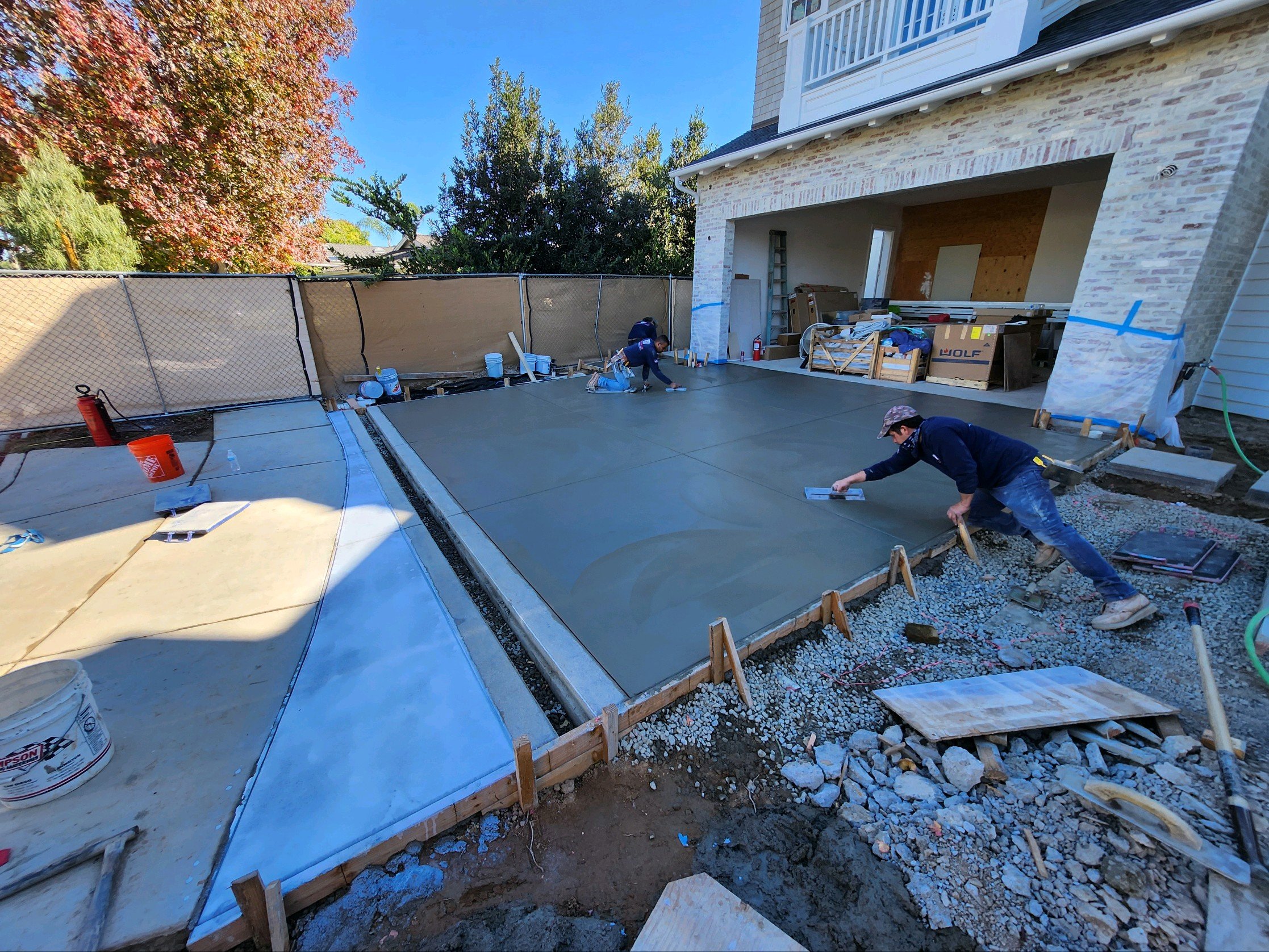
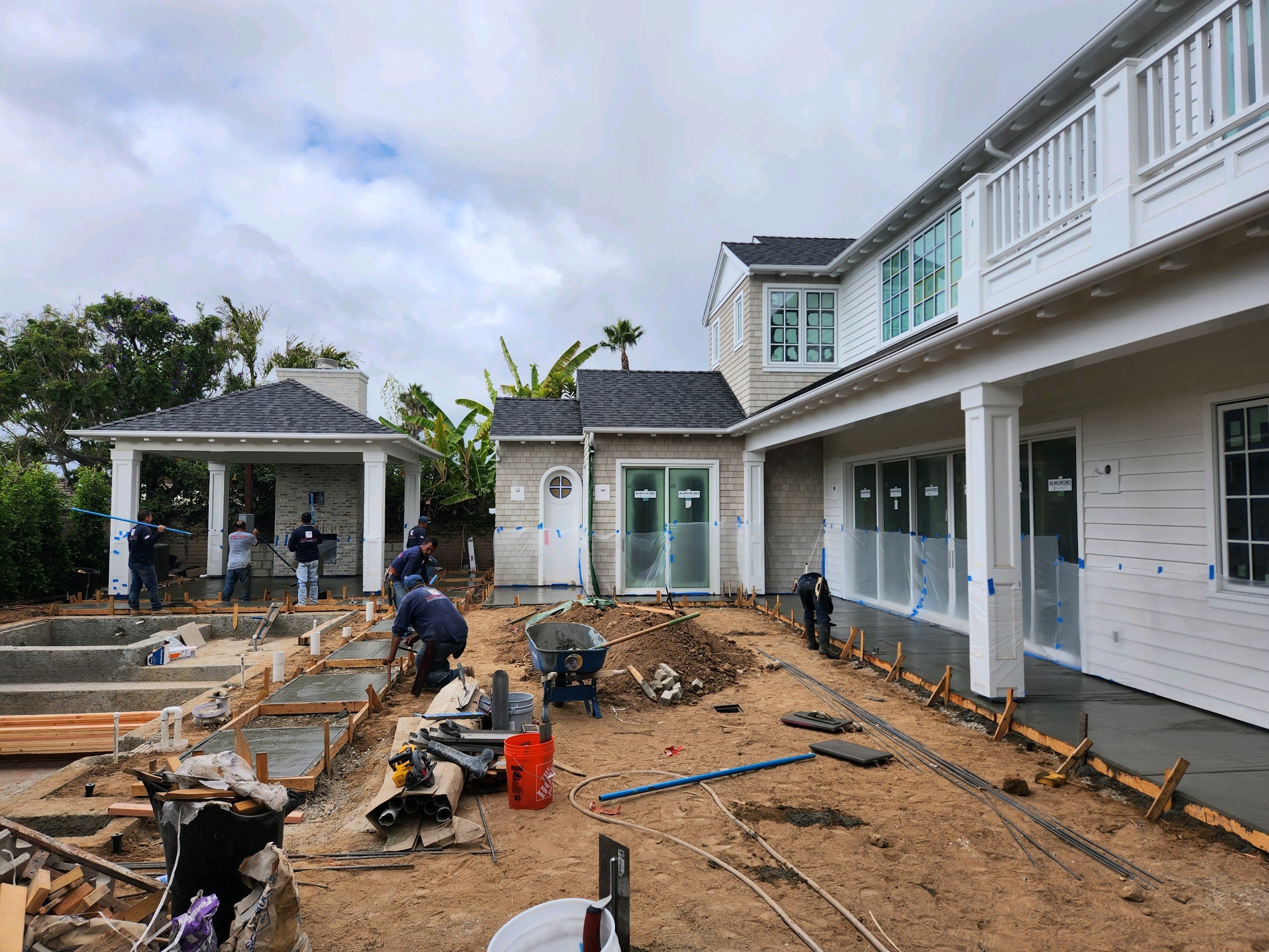
For most homes we work on, whether it's a pool deck in Newport Beach, a courtyard in San Juan Capistrano, or a driveway replacement in Dana Point, the proven, industry-standard spec holds up:
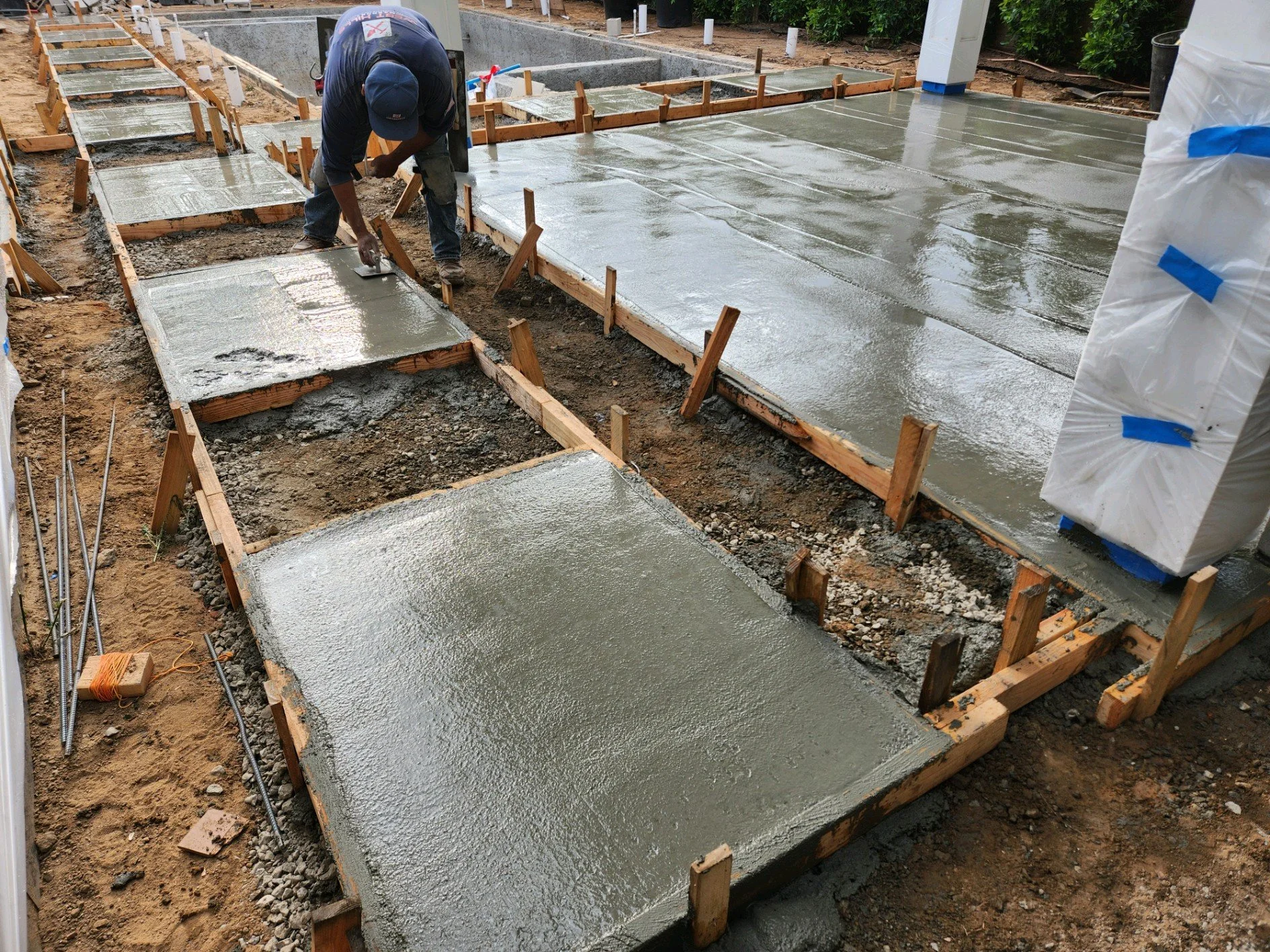
• 2 inches of road base for pedestrian areas (patios, walkways, pool decks)
• 4 inches of road base for vehicular areas (driveways)
• A 4-inch concrete slab
• #3 rebar, spaced 18 to 24 inches on center
That combination has been tested across decades of residential work in Southern California soil and climate conditions. It's not a shortcut. It's the standard for a reason.
When a Custom Engineered Spec Makes Sense (and Why Most Homeowners Skip It)
You can take this further. Hire a civil engineer, and they'll design a spec sheet specific to your property: your soil conditions, your slope, your exact load requirements. That level of customization is real, and it can extend a slab's life or reduce cracking probability even more.
It's also expensive, and for most residential projects, it's not something people choose to do, mainly because the standard spec is going to last either way. A patio built to code-standard specs isn't a lesser product. It's the appropriate product for the application.
Understanding Hairline Cracks: Stress, Not Failure
The cracks that show up in a properly built slab are stress cracks. Most of the time they're hairline: thin, shallow, cosmetic. They happen because concrete shrinks as it cures and continues to move slightly with temperature and moisture changes for the life of the slab. That movement has to go somewhere. A hairline crack is concrete finding the path of least resistance.
There's no predicting exactly when. It could surface the first day, the first week, the first month, or years down the road. That range isn't a red flag. It's just how the material behaves.
The Rebar Analogy: One Unit, Not Individual Pieces
Here's the piece that helps most homeowners make sense of it. The rebar inside your slab isn't there to prevent every crack. It's there to hold the whole thing together as a single unit.
Picture a group of people standing in a line, holding hands. If one person gets pulled off in one direction, the rest move with them instead of getting left behind. That's what rebar does inside concrete. The slab, the reinforcement, and the base prep underneath all act as one connected system. When stress builds and a crack wants to form, that system keeps the crack small and controlled instead of letting it open into a wide, structural failure.
So rebar and proper base prep absolutely matter, just not for the reason people often assume. They're not there to eliminate hairline cracking. They're there to make sure hairline cracking is the worst-case outcome, instead of a slab that heaves, separates, or breaks apart at a joint.
Setting the Right Expectation From Day One
This is the part we try to make clear before a single yard of concrete gets poured. If you're investing in a patio, a driveway, or a walkway, hairline cracking isn't a defect to expect a callback over. It's a known, accepted characteristic of the material itself, the same way you'd expect natural stone to show slight color variation, or wood to expand and contract with the seasons.
The goal of a well-built slab, whether it's a pedestrian patio in Laguna Hills or a full vehicular driveway, isn't a crack-free surface forever. It's a slab that stays structurally sound, stays level, and ages the way it's supposed to, hairlines and all.
Concrete cracks. Ice cream melts. Both are just doing what they were always going to do. The difference is knowing which cracks matter, and building it right so the ones that show up never do.
Thinking about a new patio, driveway, or walkway? We build every slab to last, with base prep and reinforcement specced for how it'll actually be used. Reach out at westhillsmasonry.com/contact or call 714-519-5009 to talk through your project.