The Lighting Plan That’s Designed Alongside the Stone, Not Added After
Key Takeaways
• Lighting decided after construction usually means conduit gets surface-mounted or run through areas that were never planned for it
• Where a light is placed changes how a stone texture, a wall, or a water feature reads after dark, sometimes more than the material choice itself
• Uplighting, downlighting, and path lighting each solve a different problem and are chosen based on the specific feature, not applied uniformly across a property
• A yard should be designed to look intentional at 9 PM, not just during a daytime photo
• We test every lighting plan on-site at night before calling a project finished, because a plan that looks right on paper doesn’t always look right in the dark.
Most landscape lighting gets decided in the last few weeks of a project, after the stone is set, the concrete has cured, and the client is already thinking about furniture. At that point, the lighting plan is working around decisions that have already been made instead of working with them. Conduit ends up surface-mounted along a wall it was never meant to run through, or fixtures get placed wherever there happens to be room left, not where they’d actually do the most for the design.
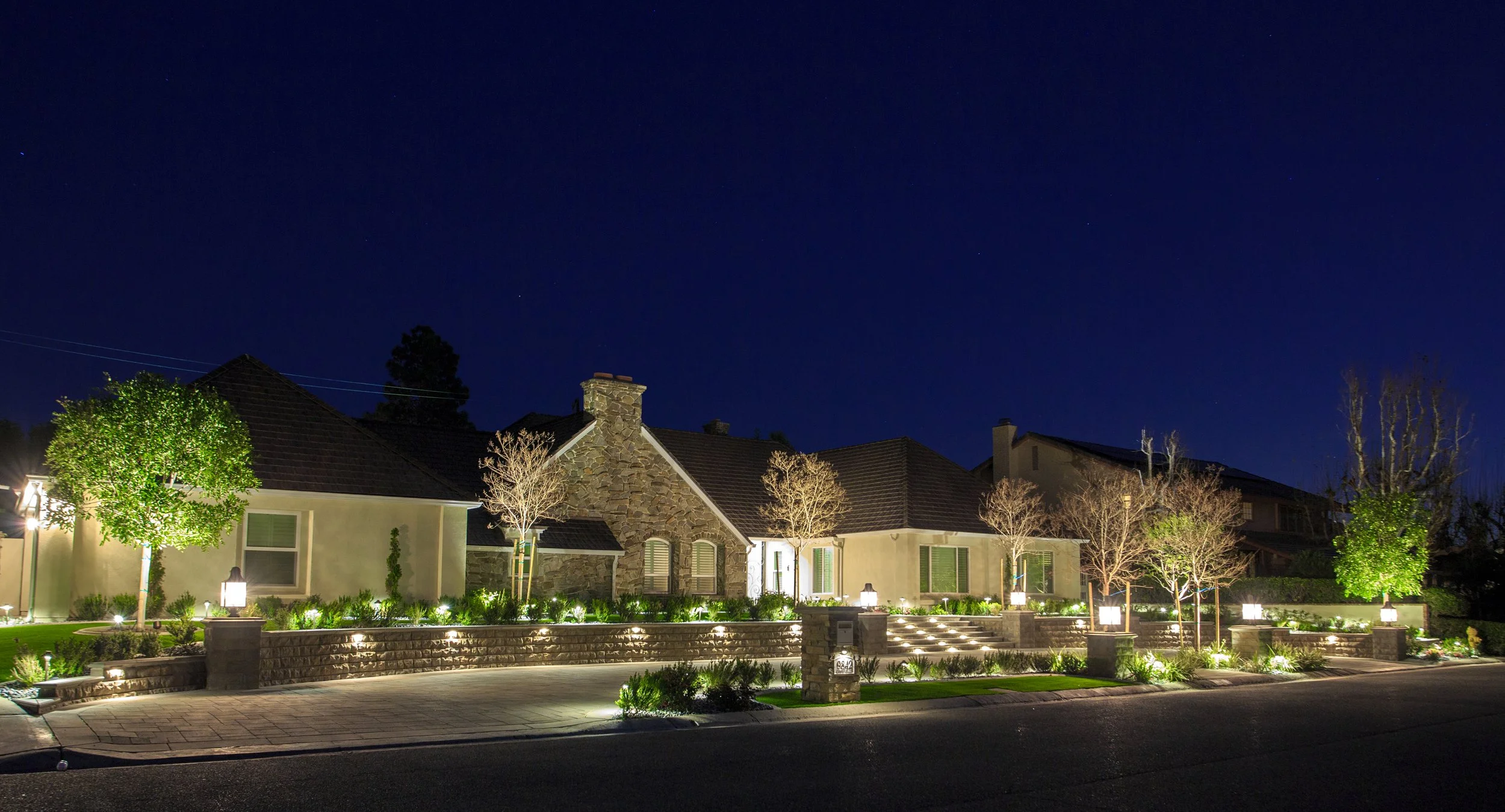
We build the lighting plan at the same time we build the hardscape plan, because a lot of what makes lighting work well has to be decided before anything is poured. It’s the same approach whether the project is a courtyard entry in Newport Beach or a full backyard remodel in Newport Coast.
Uplighting a wall changes completely after sunset
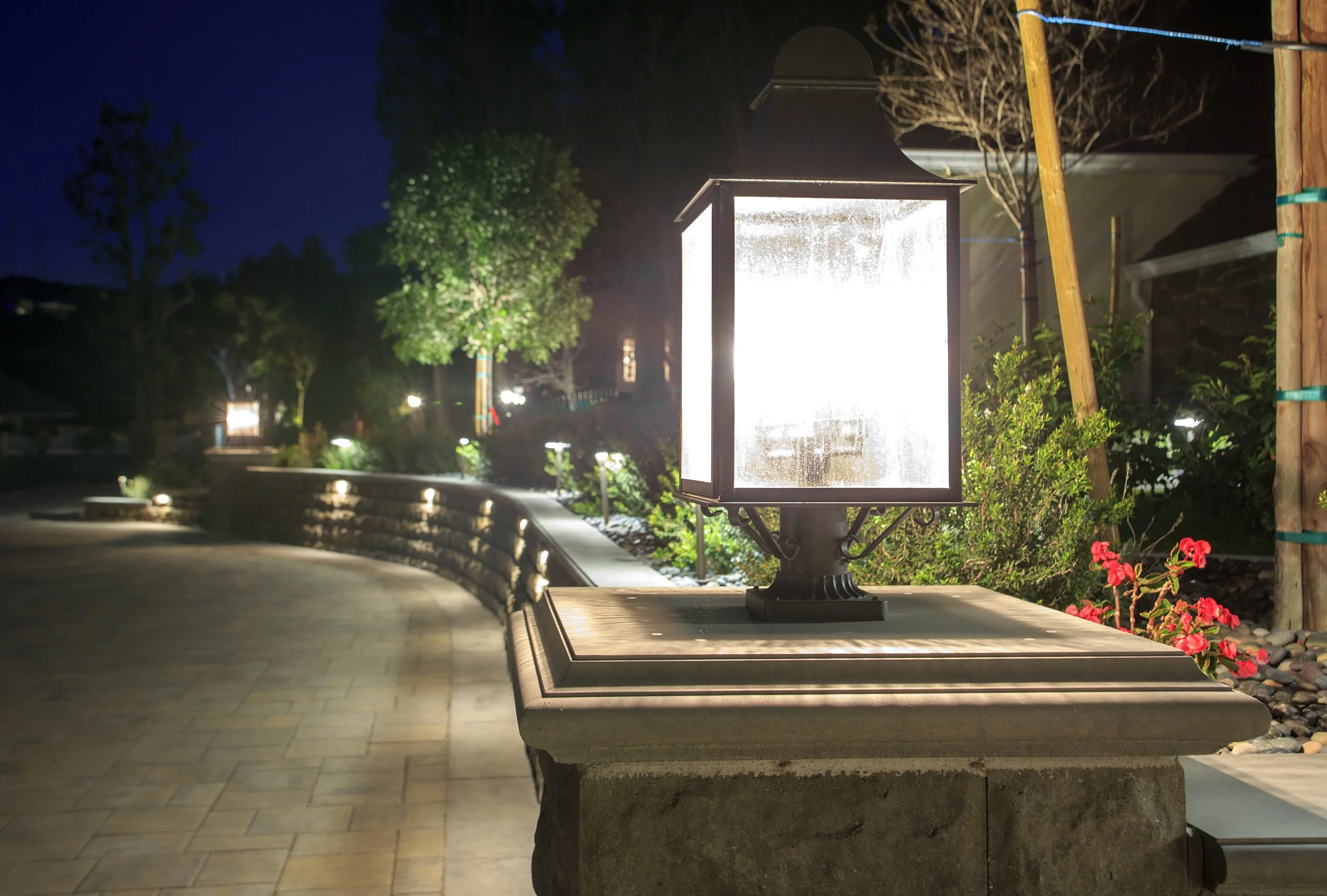
A stone or veneer wall that reads as a flat surface during the day can become the most dramatic feature on the property once it’s lit correctly at night. Uplighting from a low angle catches the texture of natural stone in a way that overhead or ambient light never will, throwing shadow into the joints and grooves that daylight tends to flatten out. But the fixture location and conduit run for that effect need to be planned before the wall is built, not chiseled in as an afterthought once it’s finished.
Path lighting is a safety decision before it’s a design decision
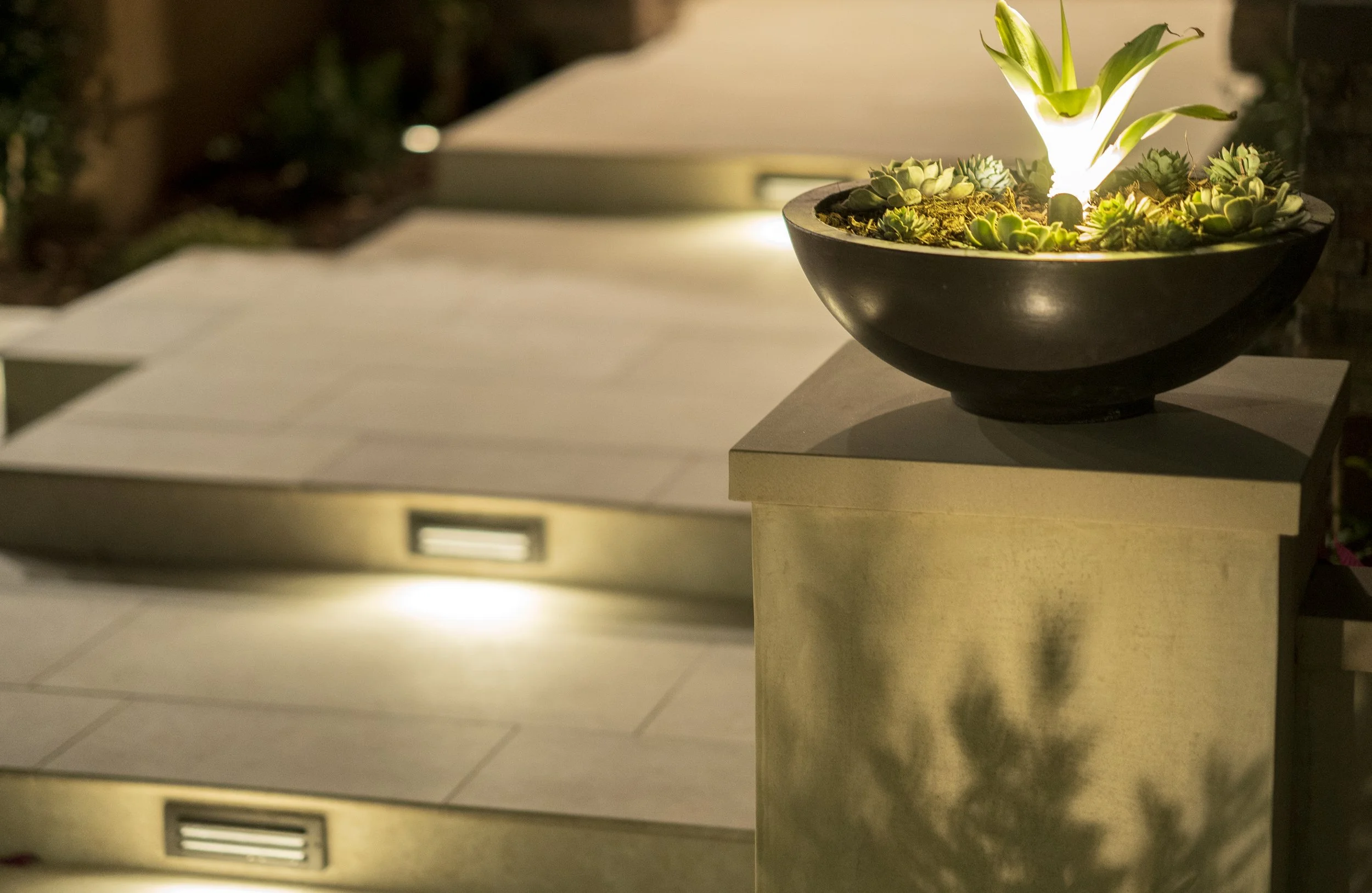
Steps, walkways, and grade changes need lighting placed so that the transition itself, not just the surrounding area, is visible at night. We think about this the same way we think about step depth and railing height: it’s a safety requirement first, and a design opportunity second. Done well, path lighting makes a set of stairs or a curved walkway disappear into the landscape after dark instead of becoming a hazard someone has to feel their way through. On sloped lots, the kind we see often in San Clemente and Laguna Hills, this matters even more.
Water features and fire features both need their own lighting logic
A water feature that looks and sounds impressive during the day can go completely flat once the sun goes down if it wasn’t lit with intention. The same is true in reverse for a fire feature, where the glow of the flame itself can be either the whole show or a small, forgettable detail depending on what’s lighting the surrounding stone and hardscape. We treat these as two different lighting problems, not one blanket approach applied to both.
A backyard should be designed for 9 PM, not just for the listing photos
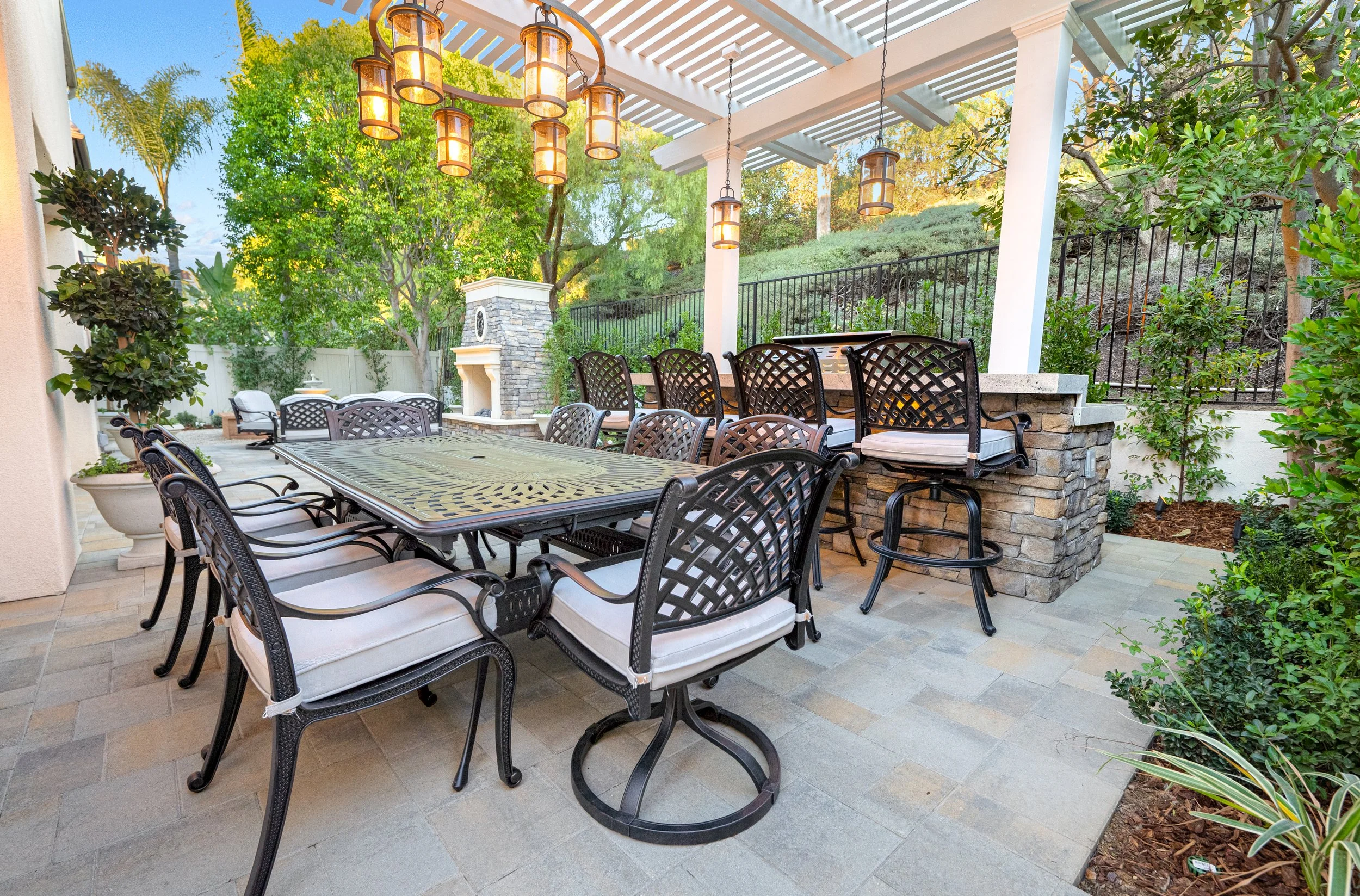
Most backyard renovations get photographed the day construction wraps, in the middle of the afternoon, in perfect light. But that’s rarely the time of day the space actually gets used. Evenings and weekend nights are when a patio, an outdoor kitchen, or a fire feature earns its keep, which means the lighting plan is doing more real work for how the space is actually experienced than almost anything else in the project.
We test it at night before we call it finished
A lighting layout that looks correct on a drawing doesn’t always translate once fixtures are actually in the ground and it’s dark outside. Shadows fall differently than expected, a fixture that seemed perfectly placed on paper turns out to be too close to a path, or a wall that was supposed to glow ends up washed out by a nearby light that’s too bright. Before we consider a project complete, we walk the property after dark and adjust anything that isn’t doing what it was designed to do. That step doesn’t happen on a lot of projects, because it means coming back to the site on a separate evening instead of wrapping everything up during the day.
The last 5% is often what people actually remember
Guests rarely comment on a paver pattern or a mortar joint. They comment on how a backyard feels at night, whether it’s inviting, whether the water feature catches their eye from across the yard, whether the path to the fire pit is easy to find without looking down at their feet the whole way. That feeling is built by decisions made months earlier, at the same time the stone itself was being planned, not tacked on with a box of fixtures after the fact whether the project is in San Juan Capistrano, Dana Point, or anywhere else across Orange County.