The Kind of Masonry You Can’t Order by the Pallet.
Key Takeaways
• Modular stone panel systems have made stone cladding faster and more affordable, and for many projects, that’s exactly the right call.
• True hand-set masonry, stone fit and stacked piece by piece, is a different category entirely: slower, far more labor-intensive, and priced accordingly.
• What panels can’t replicate is the irregularity, depth, and shadow line of stone selected and set by hand, the look of a wall or column that appears to have grown out of the ground rather than been applied to it.
• Fewer contractors are willing to take on this kind of work, because it demands time, skilled labor, and patience that modular systems were designed to eliminate.
• For a specific type of client, ultra-discreet, unconcerned with speed, focused entirely on the result, that trade-off is the entire point.
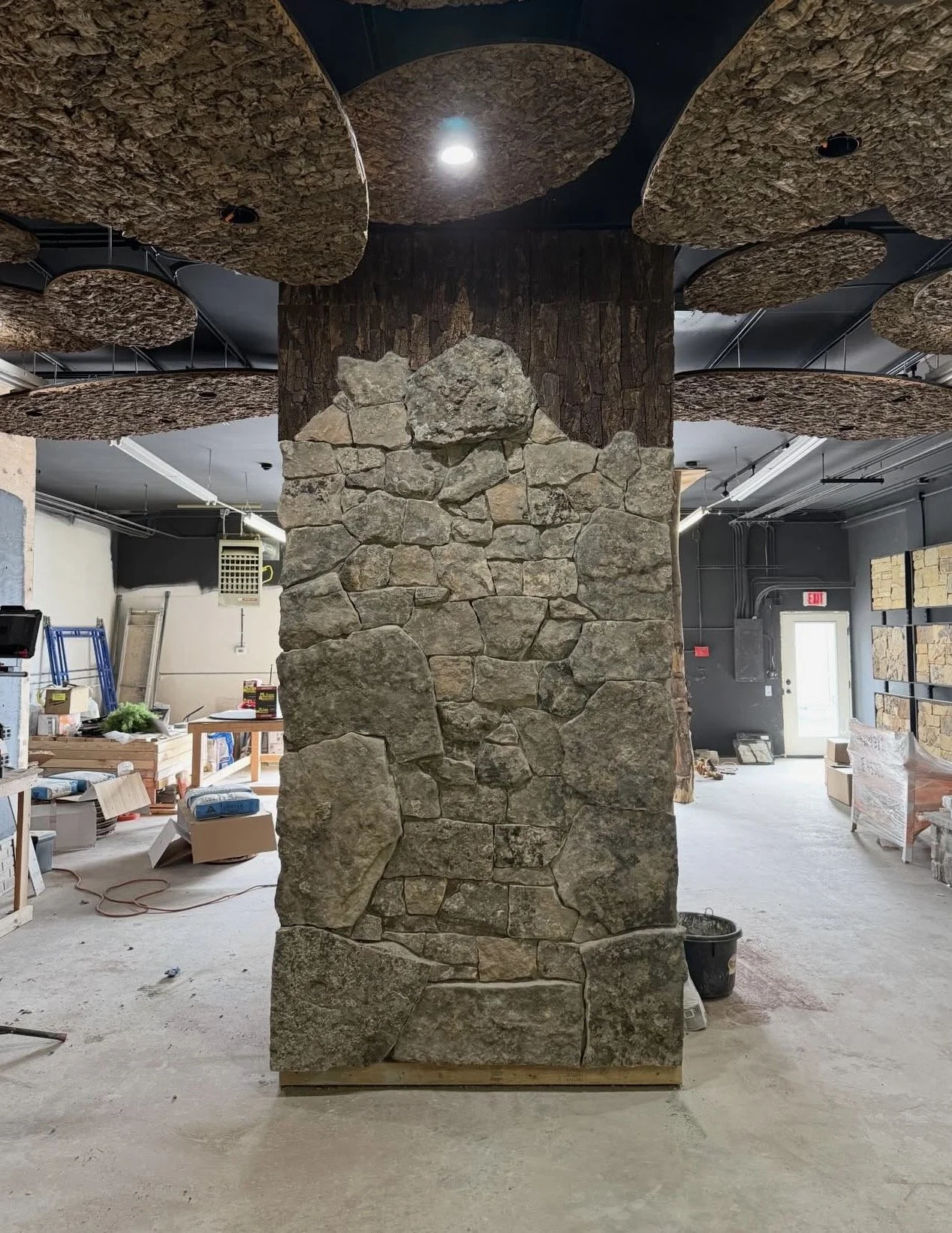
We came across a photograph recently, posted by the team at West Avalon Stone showcasing a Montana Moss Rock mosaic column installed by Eric Sheldon of Sheldon Masonry, still under construction, built from a mosaic of moss-toned fieldstone fit together the way a mason would have done it a century ago: no repeating pattern, no factory edge, just hand-selected stone set piece by piece until the column looked less like something built and more like something that had simply always been there. It stopped us, in the way certain work in this trade still does.
It’s worth saying plainly: that’s not where most of the industry is headed, and there are good reasons for that. Modular stone veneer panels exist because hand-set masonry is slow, and slow is expensive. A panel system can clad a wall in a fraction of the time, at a fraction of the labor cost, with a consistency that hand-laid stone will never offer. For a huge range of projects, that’s a perfectly reasonable trade. Panels get the job done, and they get it done well.
But there’s a category of work that panels were never built to replace, and it’s the category we think about every time we put our name on a project.
What Hand-Set Stone Actually Costs You (and Buys You)
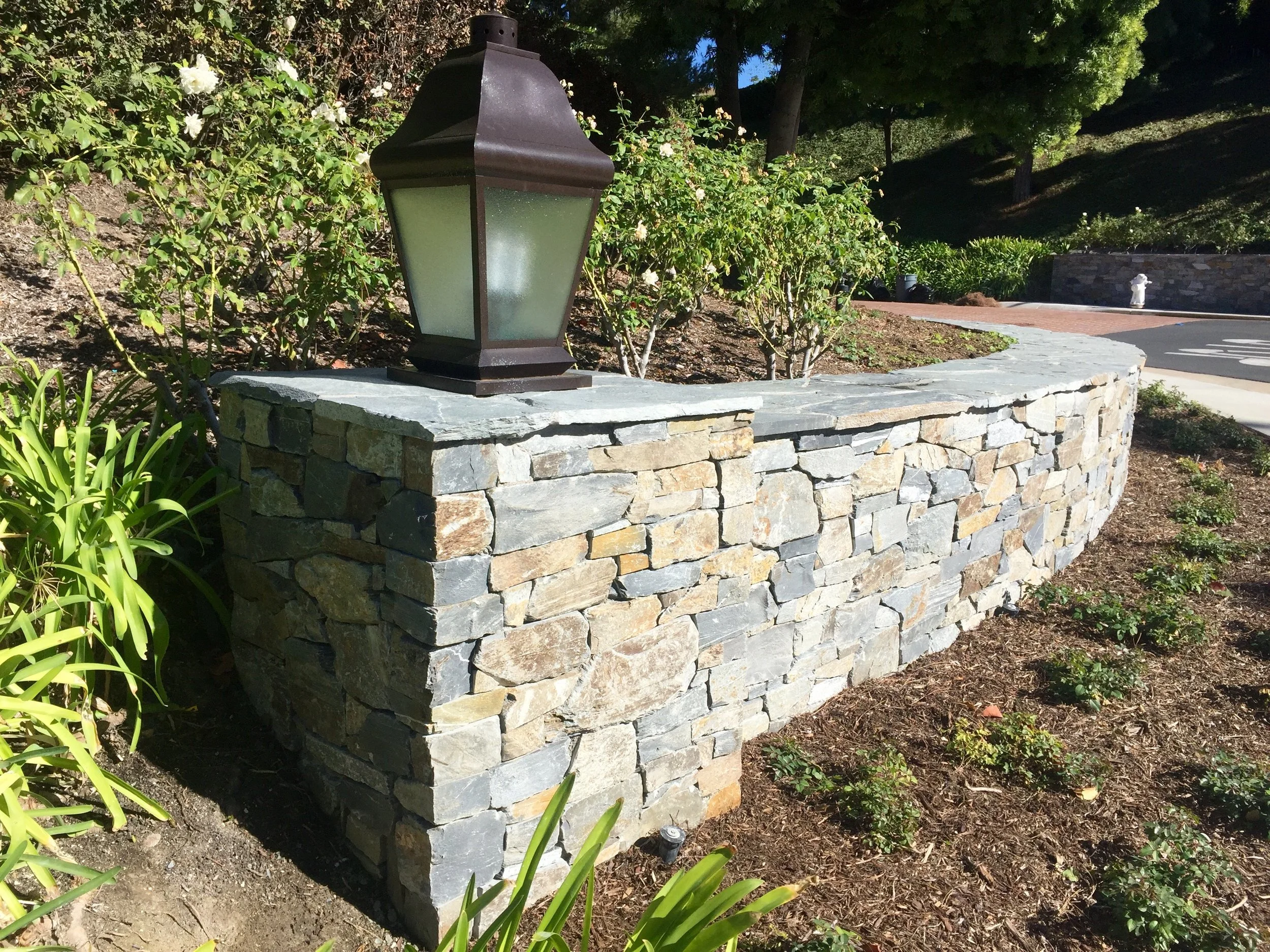
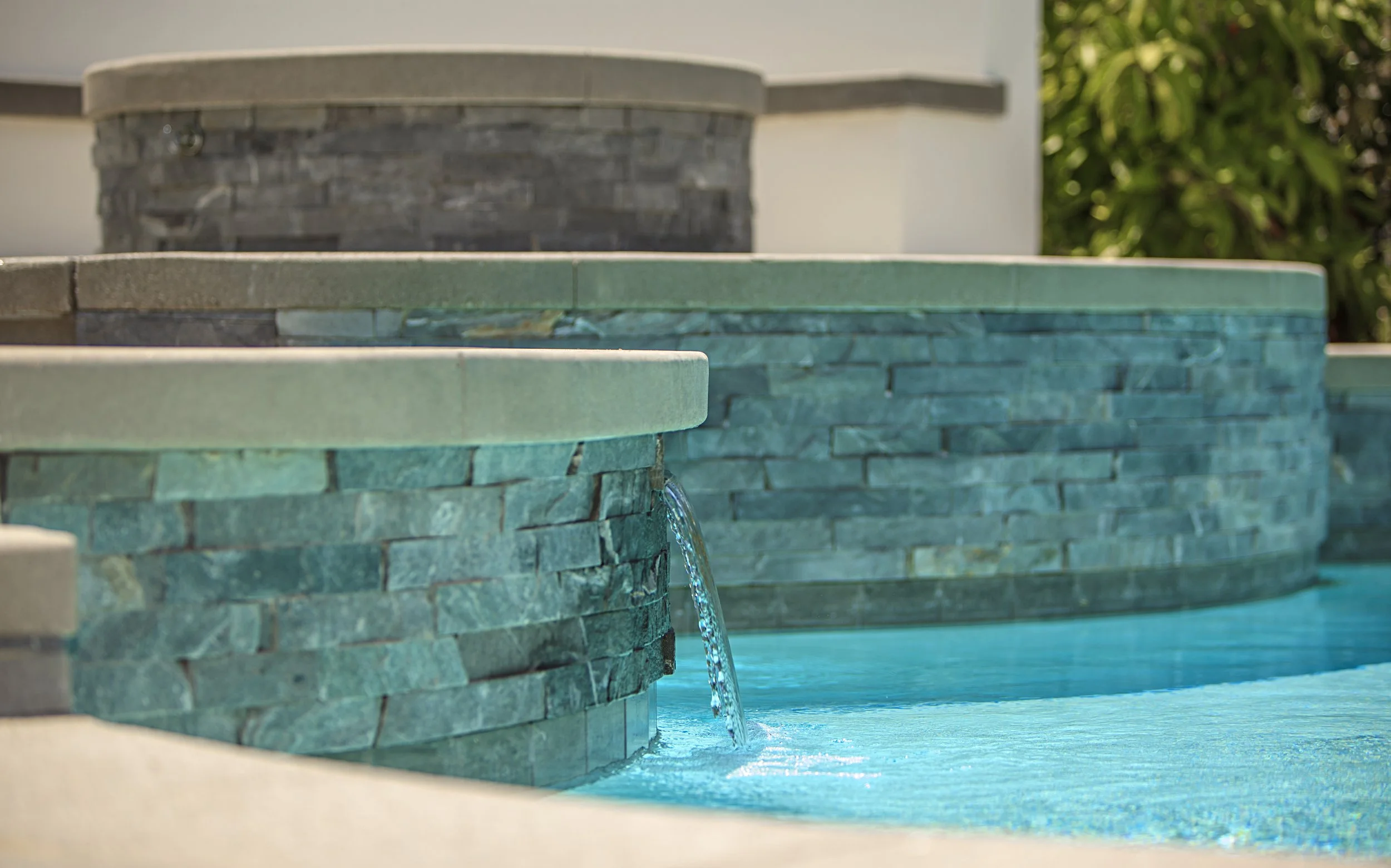
A modular panel system is manufactured to a repeating profile, then installed in sections. Hand-set masonry cladding, the kind in that photograph, is built stone by stone, with each piece selected, oriented, and fit against its neighbors before it’s ever set in mortar. There’s no repeating module to hide behind. Every joint is a decision. On a project of any real scale, that difference in labor shows up directly in the bid: hand-set natural stone veneer typically runs meaningfully higher per square foot than panel systems, often by a significant multiple depending on the stone and the complexity of the pattern.
What that labor buys is something a panel, no matter how well manufactured, can’t fully replicate: irregularity that reads as natural rather than repeated, a depth of shadow line that comes from real stone thickness rather than a molded profile, and a surface that looks like it was quarried and stacked by hand, because it was. It’s the same distinction between a well-made reproduction and an original. Both can be beautiful. Only one is irreplaceable.
Why Fewer Companies Do This Work Anymore
It’s not that hand-set masonry is a lost skill. It’s that fewer companies are willing to price it, staff it, and stand behind it, because it asks more of a crew than most projects are budgeted to allow. It requires masons who can read stone the way a woodworker reads grain, who can look at a pile of irregular fieldstone and see how it fits together before a single piece is set. That’s a slower hire, a slower training process, and a slower job site than a panel install will ever be.
We keep the word “masonry” in our name deliberately. It’s not a branding choice so much as a commitment to keep doing the kind of work that photograph represents, even as more of the industry moves toward faster, panelized systems. When a client in Newport Coast or San Juan Capistrano asks for cladding that looks like it grew out of the hillside rather than was applied to it, that’s a hand-set masonry conversation, not a panel conversation, and we want to still be one of the companies capable of having it.
Who This Work Is Actually For
This isn’t the right approach for every project, and we’d say so directly to a client considering it. But for the homeowner in Dana Point or San Clemente building a property meant to last generations, or the discreet, ultra-exclusive client in Laguna Hills who has no interest in a look that a hundred other houses share, hand-set masonry is often exactly what they’re after. It’s the same instinct behind choosing a bespoke piece over something mass-produced: the value isn’t only in how it looks, it’s in knowing what went into making it look that way.
Stone that Mother Nature could have set herself doesn’t come from a pallet. It comes from a mason willing to take the slow road, and a client willing to let them. www.westhillsmasonry.com