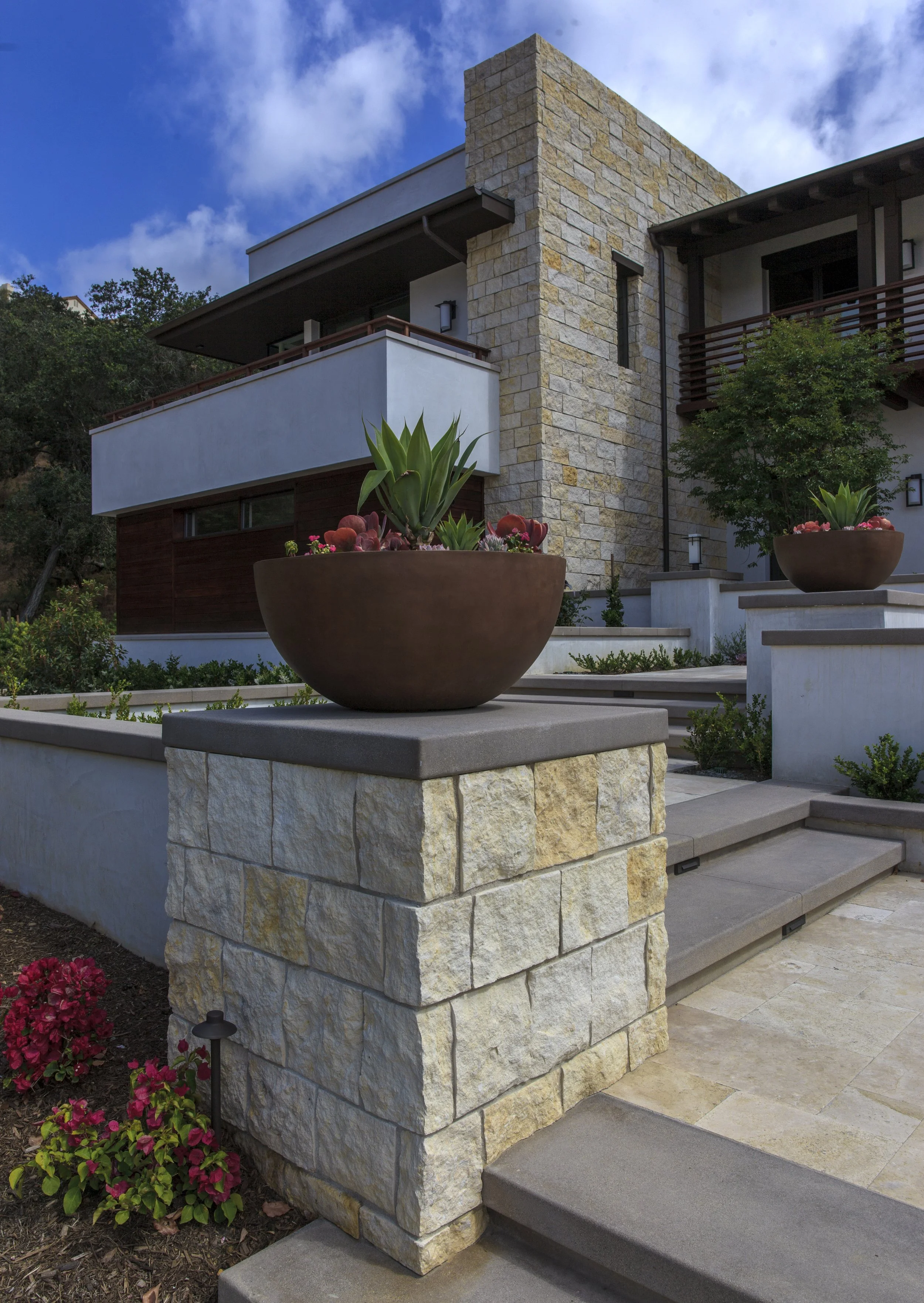
The Stone Wall: Orange County’s Most Underrated Luxury Feature
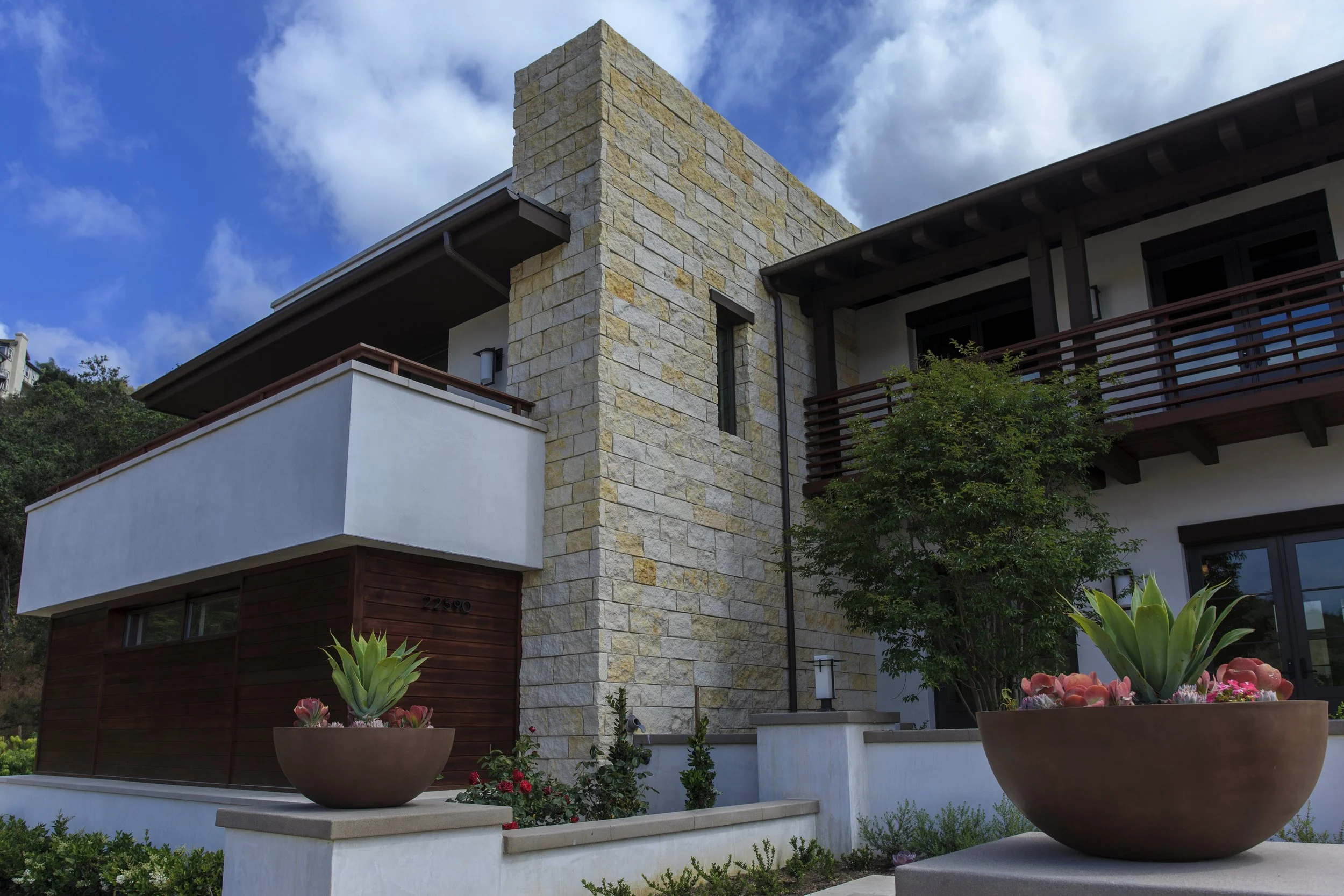
A great stone wall doesn’t announce itself. It simply looks like it’s always been there, like the hillside decided, on its own, to hold this particular shape. That’s the paradox of the material: stone is the most permanent thing you can put in a landscape, and yet the best stonework reads as effortless.
For homeowners in San Juan Capistrano,Newport Coast, Dana Point and San Clemente, a stone wall is rarely just a wall. It’s a retaining structure that turns a sloped, unusable side yard into a level lawn. It’s a seat wall that quietly defines an outdoor living room. It’s the facade detail that makes a fire feature or entry monument feel architectural rather than assembled. Done well, it’s one of the few hardscape elements that actually appreciates in character as it ages.
Done poorly, it’s a maintenance problem waiting for a rainy season.
Not All “Stone” Is Stone
The word gets used loosely, and it’s worth untangling before you spend anywhere near six figures on a project.
Natural stone, flagstone, slate, fieldstone, quartzite, is quarried and cut, and no two pieces are identical. It carries genuine color depth and mineral variation that manufactured products spend a lot of engineering trying to replicate. It’s also heavier, pricier, and less forgiving to install correctly.
Stone veneer is a thin-cut or manufactured facing applied over a structural substrate, typically a CMU block or poured concrete core. This is how most high-end walls are actually built today: the veneer gives you the visual weight of solid stone at a fraction of the material cost and structural load, while the substrate underneath does the engineering work.
Manufactured stone is a cast concrete product colored and textured to mimic natural stone. Quality varies enormously here. The best products are genuinely difficult to distinguish from the real thing at ten feet; the weak ones look exactly like what they are.
The right choice depends on the wall’s job. A freestanding garden wall under three feet might reasonably be built from natural stone throughout. A six-foot retaining wall holding back a graded slope almost always wants engineered block or poured concrete behind a veneer face. The retained soil load isn’t something to gamble on aesthetics alone.
What Actually Makes a Stone Wall Last
Most stone wall failures aren’t failures of the stone. They’re failures of what’s behind it.
Drainage is the single most common point of failure we see when we’re called in to fix someone else’s wall. Retained soil holds water, water creates hydrostatic pressure, and pressure pushes walls forward or cracks them from the inside out. A properly built retaining wall needs a compacted gravel backfill, a perforated drain line at the base, and weep holes or a drainage mat behind the face. None of which are visible once the project is finished, which is exactly why they’re the details corners get cut on.
Footing matters just as much. A wall is only as stable as what it’s standing on. In Orange County’s expansive clay soils, a footing that isn’t sized and reinforced for the specific soil conditions and wall height will move. Sometimes that shows up visibly within a season; sometimes it’s slow enough that the crack doesn’t appear until year three.
Interlock, for true dry-stacked or natural stone construction, is the placement of each stone so its weight bears down and back into the wall rather than out. This is the part that separates a mason from someone stacking rocks. It’s slower, and it’s the reason experienced hands cost what they cost.
What This Actually Costs
For an Orange County stone or veneer wall project, homeowners are generally looking at:
• Seat walls / low garden walls (under 24”): roughly $150–$250 per linear foot, depending on stone selection and cap detail
• Retaining walls (3–6 ft, engineered block with stone veneer face): roughly $200–$400 per linear foot, including drainage and footing
• Natural stone veneer facades (fireplaces, entry monuments, accent walls): roughly $45–$90 per square foot installed, depending on stone type and pattern complexity
• Taller engineered retaining walls (6 ft+, requiring permits and engineering): priced individually, typically starting in the $400+ per linear foot range once structural design, permitting, and surcharge loading are factored in
Stone type is the biggest swing factor. A project using a mid-range manufactured veneer and a project using imported natural quartzite can differ by 40% or more on material cost alone, even at identical dimensions.
When to Bring in a Professional
A low, freestanding garden wall on flat ground is a reasonable weekend project for a capable homeowner. Anything retaining a slope, anything over roughly three feet, and anything tying into an existing structure or drainage system is a different category of project, one where an engineering miscalculation shows up as a five-figure repair, not a redo.
This is also where design matters as much as structure. We work closely with landscape architect Lance on higher-end projects to make sure stone selection, cap details, and wall lines are drawn before a single block goes in the ground, because a retaining wall that’s structurally sound but visually an afterthought is still a missed opportunity on a property at this level.
Build It Once, Build It Right
Stone is a material you live with for decades. The wall you build this year is the wall your landscape gets photographed against for every event, every listing photo, and every quiet Tuesday evening on the patio after. It’s worth getting the substrate, the drainage, and the stone selection right the first time.
If you’re planning a retaining wall, seat wall, or stone facade in Orange County, West Hills Masonry can walk you through material selection, engineering requirements, and a real cost estimate for your specific site.
Contact West Hills Masonry: 714-519-5009