
Holidays in the Yard: Thanksgiving Through New Year's, Outdoors in Orange County
Key Takeaways
In coastal Orange County, November and December afternoons often reach the 60s, making the holiday season one of the best times to host outdoors.
A holiday-ready yard is built on four elements: fire, warmth, a long table, and low, warm light.
Guest flow, kitchen proximity, and step lighting matter more than decoration.
Masonry fire features and integrated heating create real warmth, not the appearance of it.
Planning this kind of yard typically represents an investment of $100,000 to $300,000, depending on scope.
There is a moment on Thanksgiving afternoon, right after the meal, when everyone drifts. Someone heads for the couch. Someone else hovers by the kitchen. The house, suddenly, feels smaller than it did at noon.
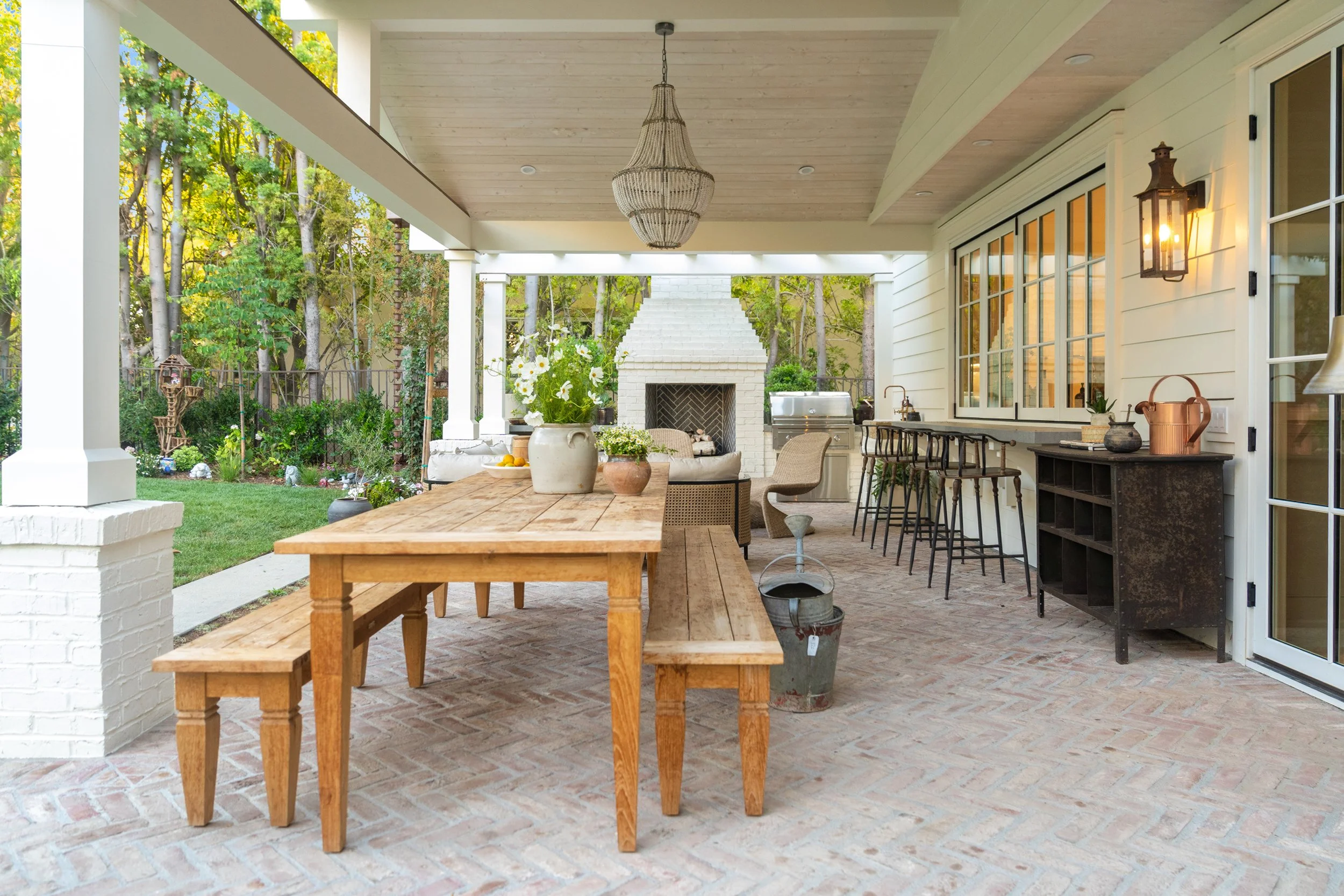
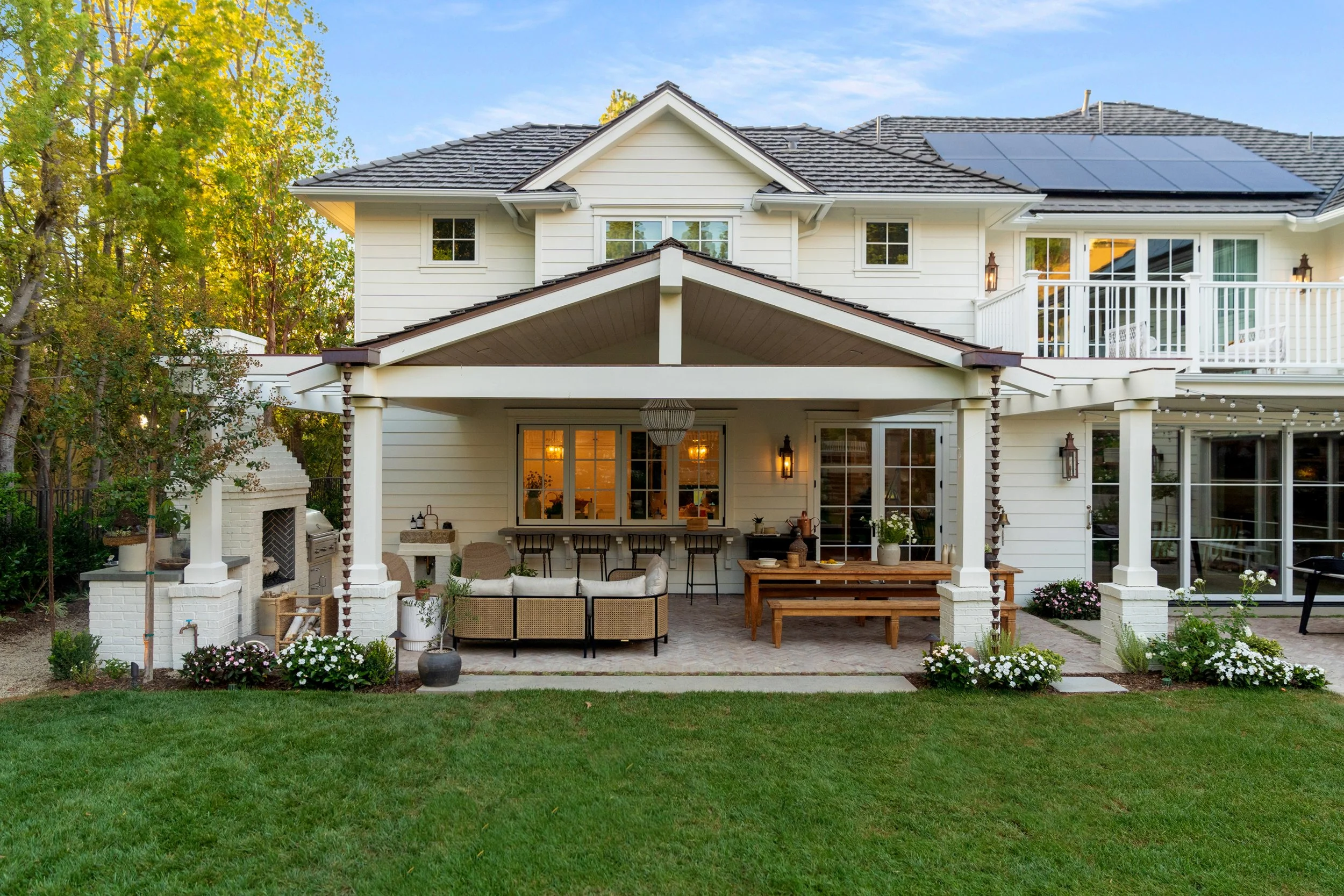
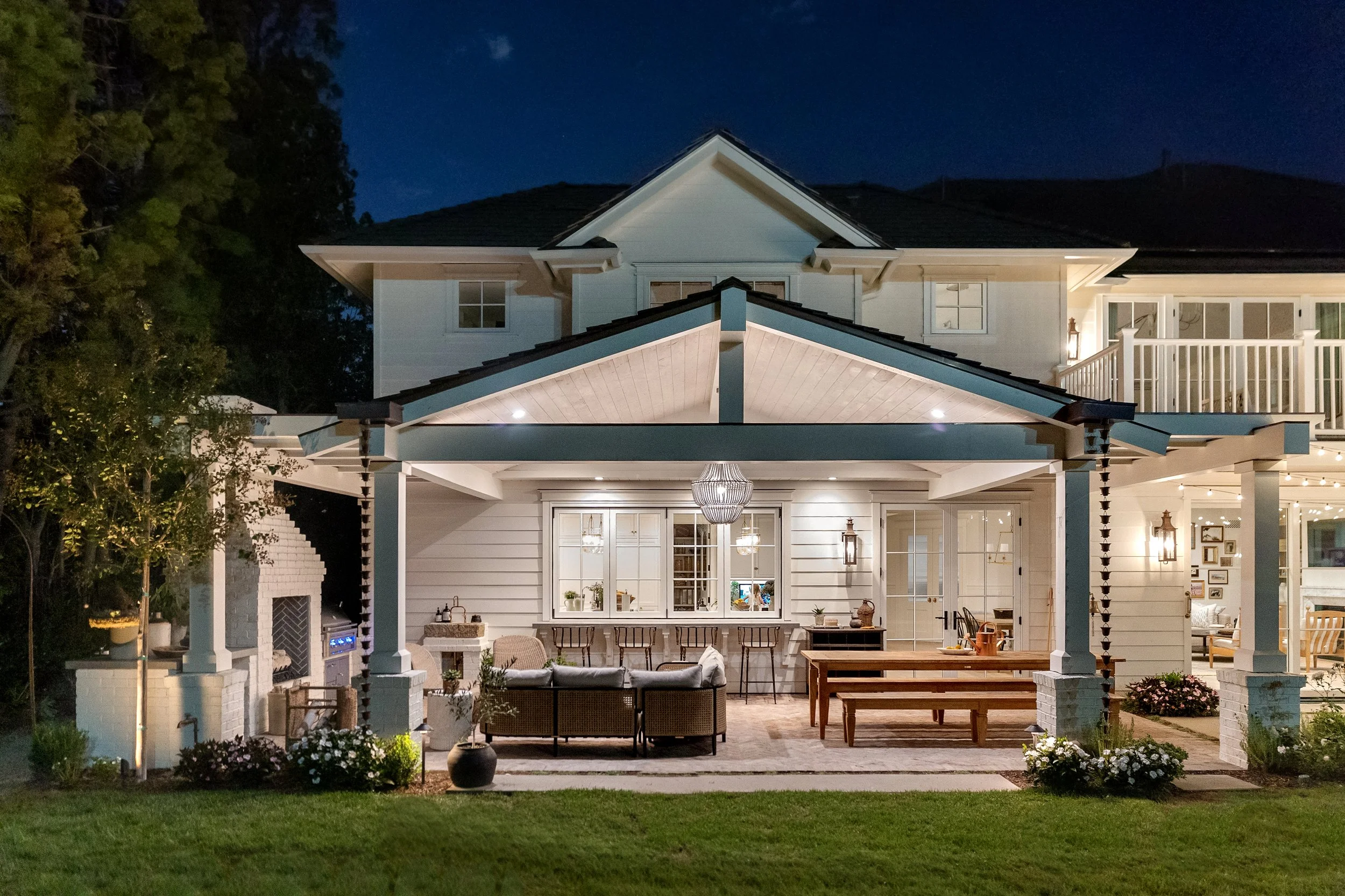
Now imagine the same moment in a yard built for it. The table is set under a warm string of light, long enough for twenty. A stone fireplace is already burning at the far end of the terrace. The air is crisp, the sky is clear, and the drifting guests are drawn outside instead of scattered through the house.
In coastal Orange County, this is not a fantasy. It is simply what the season is for.
The Season Southern California Built Its Yards For
While much of the country retreats indoors after Halloween, Southern California moves the other way. Daytime highs commonly settle in the 60s, evenings cool into the 40s and 50s, and the light is low, golden, and forgiving from midafternoon on. From San Clemente to Newport Coast, some of the most beautiful hours of the year arrive between Thanksgiving and New Year's.
Most yards are not designed for them. They were planned around summer: shade, splash, sun. The holiday yard is a different room entirely, and it asks for different decisions.
Four Elements of a Holiday-Ready Yard
1. Fire, as the anchor. A masonry fireplace or fire feature gives the evening a center of gravity. It should be positioned so that seating forms a natural arc around it, with enough distance for comfort and enough enclosure to feel like a room. We build fire features as architecture, with proper proportions, stone selected to complement the home, and hearth and seat heights that invite people to stay.
2. Warmth, beyond the flame. A fire warms people who sit near it. A great holiday yard warms everyone. Discreetly integrated heating, recessed into a structure or wall, extends the dining area's comfort without cluttering the table with freestanding units. Add stone that retains some of the day's warmth, and the whole terrace feels inviting well after sunset.
3. The long table. Holiday hosting means numbers. A patio that seats six on an ordinary Sunday should stretch to eighteen or twenty on a holiday. That means paving that is generous, level, and tight-jointed, with room around the table for chairs to pull out and servers to pass. It also means a clear path to the kitchen, so the cook does not disappear for forty minutes.
4. Low, warm light. The holiday yard lives in the evening, and evening lives on lighting. We place light at the stone, the planting, and the steps, and never aimed at guests. Wall niches can hold lanterns. Trees can carry light overhead. The goal is a glow that flatters everything and calls no attention to its source.
The Flow of a Full House
A holiday gathering is not one event. It is several, overlapping. There is the arrival, the drinks, the meal, the after-meal drift, and the late conversation. A well-designed yard gives each its own place.
Near the entrance, an easy landing zone where guests can gather, set down coats, and receive a drink. A bar or serving counter within a few steps of the kitchen door. A dining area with its own gravity. And a lounge zone by the fire, for the slow, unstructured part of the night that everyone actually remembers.
Children need their place too. A section of the yard at the edge of the gathering, with open room to run and full view from the adults' seats, keeps everyone easy. We plan sight lines just as carefully as we plan surfaces.
In Coto de Caza and Laguna Hills, where lots are often generous and guests numerous, this zoning is the difference between a yard that hosts and a yard that overflows.
Safety Is a Form of Hospitality
Holiday evenings mean dusk arrives early, guests carry plates, and half the party is unfamiliar with your yard. Steps need to be consistent and visible. Edges need light. Surfaces should be textured enough to stay secure if the evening turns damp. And every fire feature must be built with correct clearances and proper materials, so the beauty never becomes a worry.
This is where the craft matters most. A guest should never think about the stairs. They should simply walk to the table, warm and unhurried.
The Work Behind the Warmth
Masonry fire features are built for years of use. Structural stone is set on properly engineered footings. Hearths, chimneys, and surrounds are constructed to handle heat and weather and to look composed while doing it. The joints are deliberate. The proportions are studied.
We take the same approach to everything that supports the moment: sound base preparation under the terrace, careful drainage away from the home, and precise elevations so that every surface meets the next without a lip or a wobble.
From the crew: Ask any mason about the best day on a job and you will hear about the first evening a client lights the fire. We build hearths knowing someone will sit beside them for decades. That knowledge shows up in the stone.
A Yard That Improves With Every Season
A yard planned for the holidays is not seasonal. It works in March as well as in December, and it grows richer with time. Stone darkens and settles. The hearth develops its own soft history of firelight. Family traditions take root in the space, until the terrace is inseparable from how your family celebrates.
This is why we recommend planning for the holidays even if summer is when the yard will be used most. The holiday season asks the most of a yard, and a yard that meets it meets every other season with ease.
The Investment
Outdoor living spaces designed for year-round hosting, including a fire feature, generous dining terrace, integrated lighting, and heating, typically represent an investment of $100,000 to $300,000, depending on scope, materials, and site. Fall and winter are excellent times to begin, as design and permitting can move forward while the holiday season is still ahead.
Begin the Conversation
Imagine next Thanksgiving with everyone outside, and no one wanting to leave. Schedule a design consultation at westhillsmasonry.com/contact or call us at 714-519-5009.