
Built-In Outdoor Storage & Cabinetry | Orange County Hardscape
Key Takeaways
• Built-in cabinetry and storage have become one of the fastest-growing features in outdoor living projects nationally.
• Storage solves the most common complaint about outdoor kitchens: everything ends up carried back and forth from indoors.
• Material selection for outdoor cabinetry matters as much as it does for indoor kitchens, arguably more, given sun and moisture exposure.
• Storage should be planned into the hardscape design from the start, not added as an afterthought once the patio is finished.
Ask any homeowner who's had an outdoor kitchen for a few years what they'd change, and a surprising number will mention the same thing: not the grill, not the countertop material, but storage. Serving platters, cushions, extra propane tanks, pool toys, the accumulated stuff of actually living outdoors tends to end up crammed into a garage or hauled back and forth from the house every time the space gets used. National design research backs this up directly: built-in storage and cabinetry has become one of the fastest-growing features in outdoor renovation projects, now included in well over a third of projects, up sharply from just a couple of years ago.
Why Storage Gets Overlooked in the Design Phase
It's an easy feature to underestimate during initial planning, because storage doesn't photograph the way a stone fireplace or a striking paver pattern does. Homeowners naturally gravitate toward the visible, dramatic elements of a design during the concept phase, and storage often gets treated as a detail to figure out later, if it gets discussed at all. The result, months after completion, is a beautiful outdoor kitchen with nowhere to put the extra utensils, the cushions that need to come in before a storm, or the serving pieces that only get used for entertaining but still need a home somewhere.
Retrofitting storage into an already-finished hardscape is possible but rarely as clean or well-integrated as storage that was part of the original design. A cabinet added after the fact often ends up as a mismatched box bolted onto an otherwise cohesive stone or masonry structure, rather than a built-in element that reads as part of the design.
Where Built-In Storage Actually Works Best
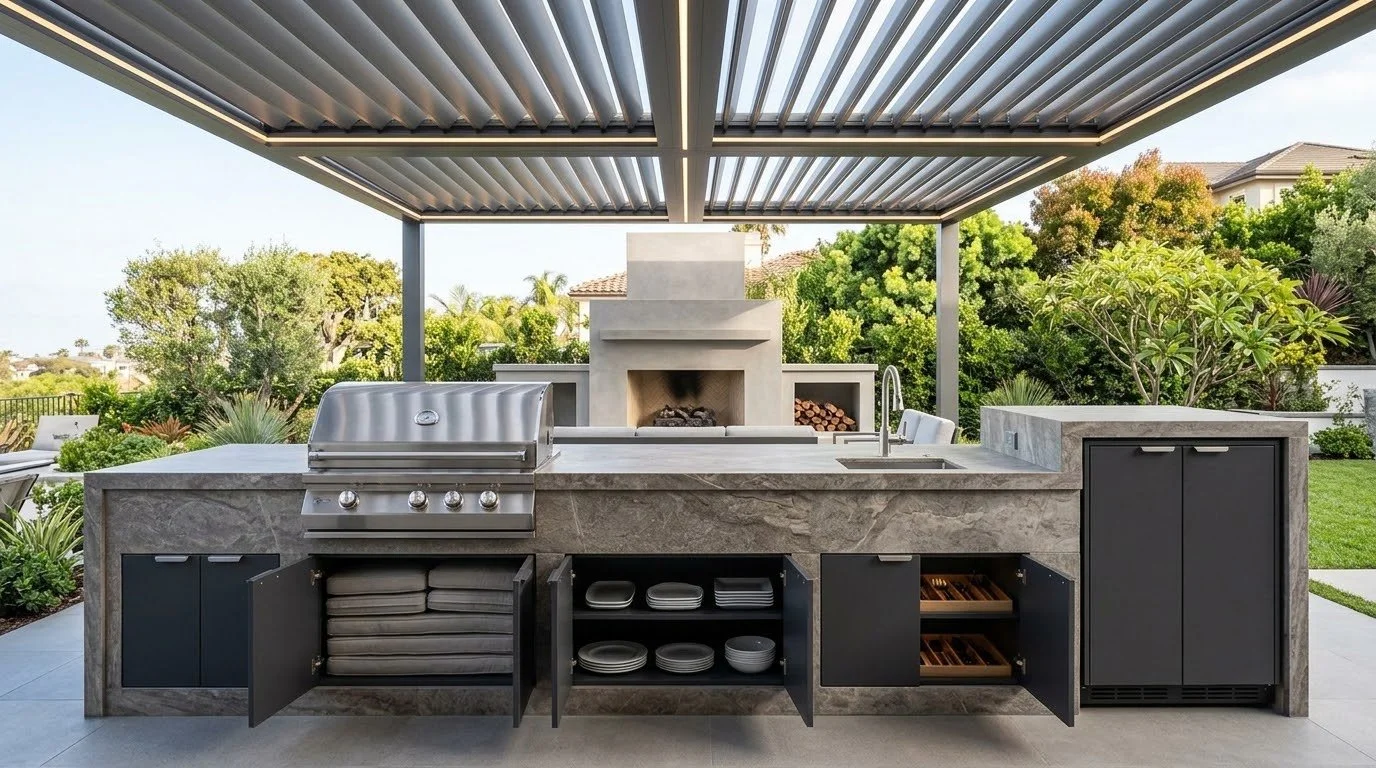
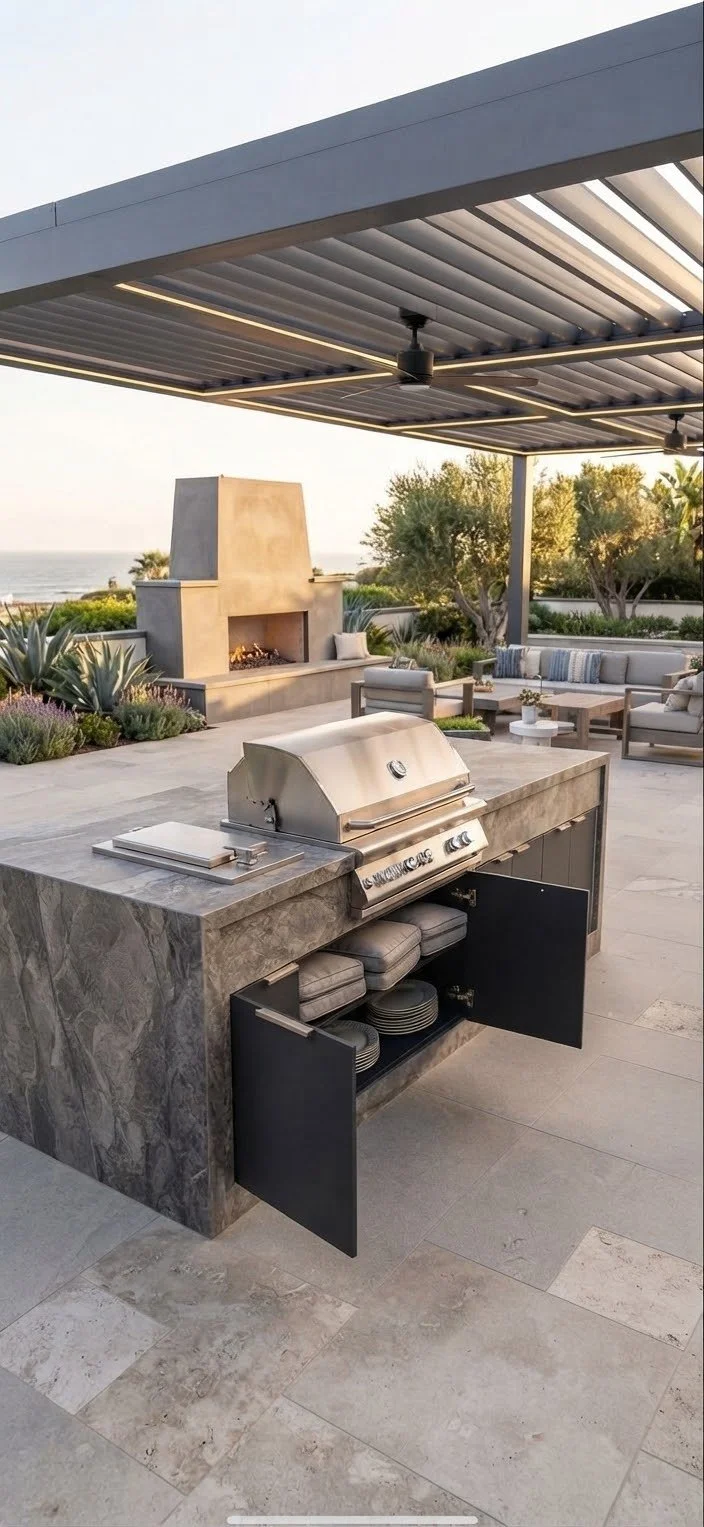
The most successful outdoor storage integrates directly into structures the design already needs. An outdoor kitchen island built with stone or masonry veneer can incorporate weatherproof cabinet doors within its base, hidden in plain sight below the counter. A seat wall bordering a lounge or dining zone can be built with a hollow core and an access panel, turning what would otherwise be solid masonry into functional storage for cushions or firewood. Even a fire feature surround can sometimes accommodate a small storage compartment for tools or extra fuel, depending on the design.
The principle underlying all of these is the same: storage works best when it's disguised as structure rather than added as furniture. A cabinet that looks like a cabinet, sitting separately on the patio, reads as an afterthought no matter how well built it is. A storage compartment built into a wall or island that was already part of the plan reads as intentional, because it is.
Material Matters More Outside Than In
Outdoor cabinetry faces a harsher environment than anything in a kitchen indoors: direct sun, temperature swings, occasional rain even in Southern California's relatively mild climate, and in coastal areas like Newport Beach and Dana Point, salt air that accelerates corrosion on the wrong materials. Marine-grade stainless steel, weather-rated polymer cabinetry, or masonry-integrated storage with proper waterproof door seals all hold up considerably better than materials borrowed from an indoor kitchen catalog. This is a place where cutting costs on materials shows up quickly, usually within a single summer of sun exposure, in the form of fading, warping, or hardware that seizes up from corrosion.
Planning Storage Into Your Project From Day One
If you're planning a new outdoor kitchen, patio, or lounge area, the right time to think about storage is during the initial design conversation, not after the layout is finalized. Questions worth answering early: where will cushions and pillows go when they need to come inside, where will serving pieces and extra dishware live if you entertain often, where do pool or yard maintenance items need a home, and does a fire feature or grill area need dedicated space for fuel or tools nearby.
Answering these questions early lets us build storage directly into the walls, islands, and seating elements the design already calls for, rather than treating it as a separate line item competing for space after everything else is finalized.
We've integrated built-in storage into recent projects across Laguna Niguel and San Clemente, and it's consistently one of the features homeowners mention as most valuable once they've lived with the space for a season or two, even though it was rarely the feature they were most excited about during the design phase.
If you're planning an outdoor kitchen or patio renovation and want storage built in rather than bolted on, that's a conversation worth having before the design is finalized.
Reach out through westhillsmasonry.com/contact or call 714-519-5009.