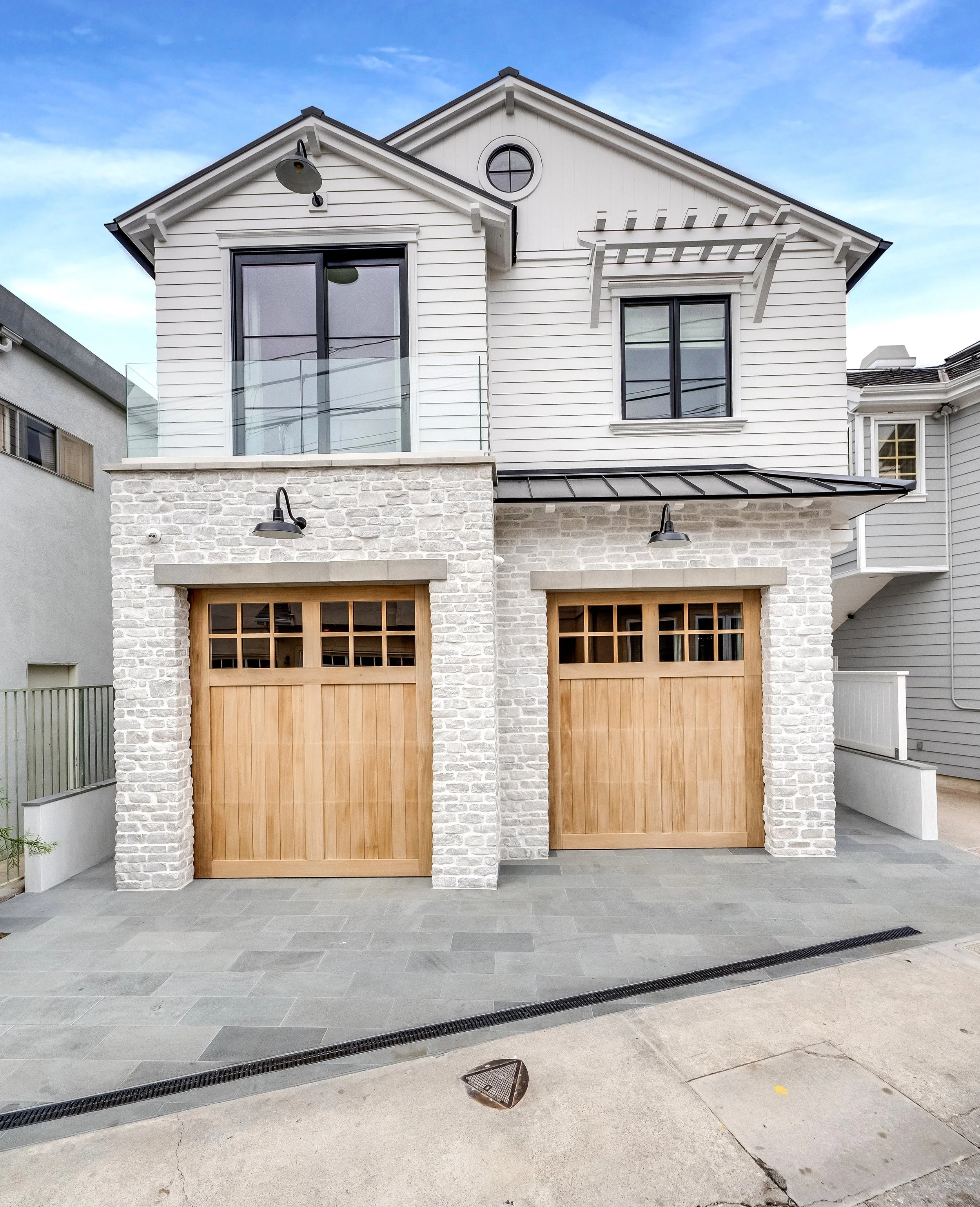
What Does a Stone or Brick Facade Cost in Orange County? (2026 Pricing Guide)
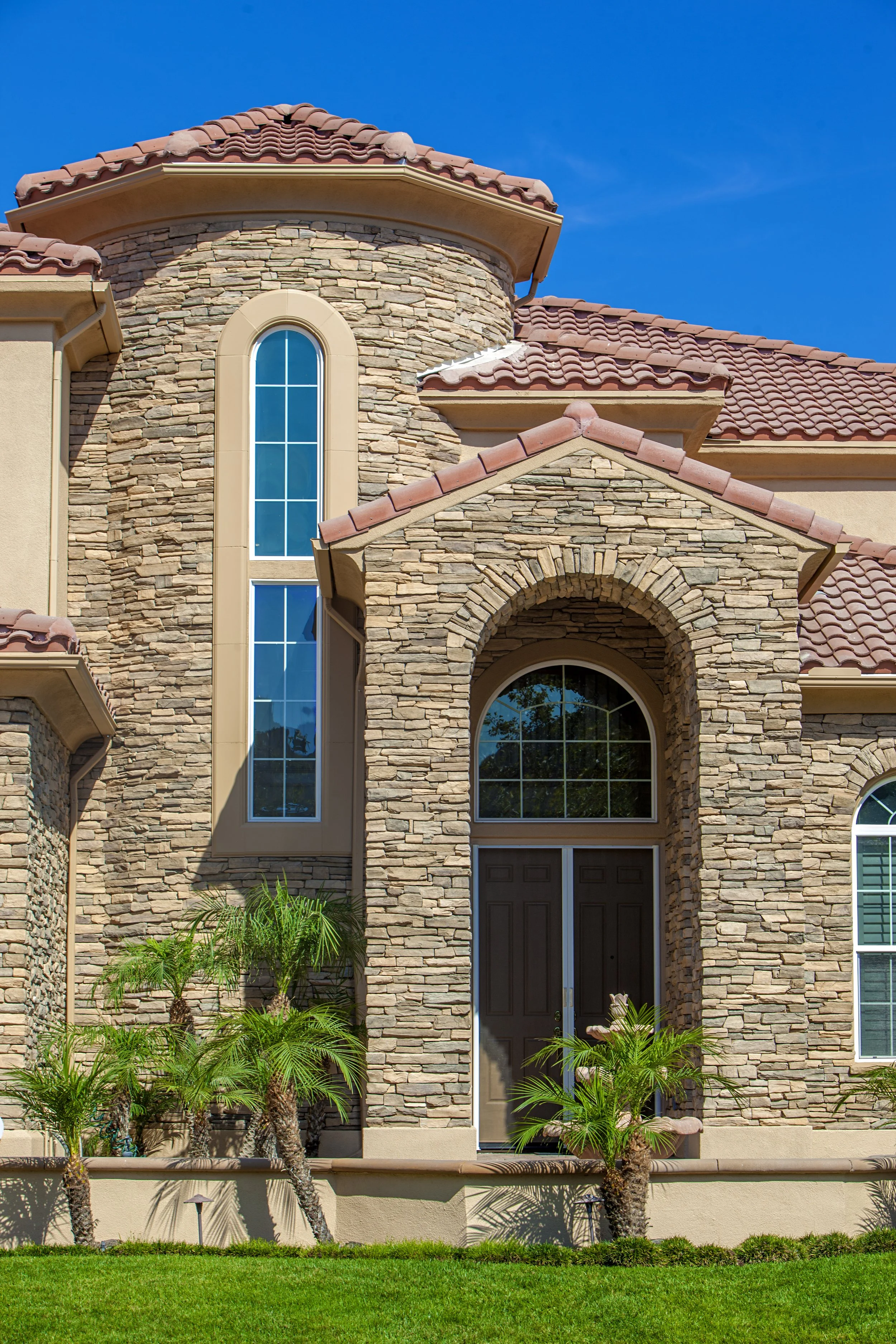
A facade is the first impression your home makes, before anyone walks through the door. Whether it’s a Coto De Caza estate, a beach home in Newport Beach, or a remodel in Laguna Niguel or Dana Point, it’s one of the highest-return exterior upgrades a homeowner can make, and one of the most misunderstood when it comes to price.
Here’s what shapes the number, and what a real range looks like in Orange County in 2026.
The Short Answer
A partial stone or brick facade, an accent wall, an entry surround, a section beneath the eaves, typically runs $50,000 to $75,000 depending on coverage and material.
A full-elevation facade on the front of the home generally lands between $75,000 to $100,000. Wrapping the entire exterior of a larger estate home in natural stone can move well past $100,000, depending on stone selection and structural requirements.
Why the Range Is So Wide
Material is the single biggest factor. Manufactured stone veneer, thin-cut natural stone, and brick veneer all carry different price points, and natural stone can run several times the cost of manufactured veneer for the same square footage.
Weight and application still matter. Thin-cut natural stone is lighter and more workable than the old full-bed stone that used to dominate the market, but it still installs differently than manufactured veneer, and getting the substrate and attachment method right is what determines how the facade performs over time.
Coverage and complexity. A straight run of wall is one project. A facade with window surrounds, corner returns, arches, or a mix of materials is another. Complex layouts add labor time that a flat elevation doesn’t require.
Substrate condition. Installing over existing brick or an older facade adds prep work. Confirming the substrate is sound and properly prepared is what keeps a beautiful facade from becoming a moisture problem five years later.
What’s Included in a Real Estimate
A facade quote that’s worth trusting accounts for more than stone and labor:
• Moisture barrier and weather-resistant sealant behind the veneer
• Wire lath and scratch coat for traditional mortar-set applications
• Proper substrate prep and attachment method for the stone selected
Leave any of these out and the number looks better on paper and worse on the house in a few years.
Manufactured Veneer vs. Natural Stone
Both have a place. Manufactured stone veneer is more consistent in color and shape and typically the more efficient path to a high-end look. Thin-cut natural stone carries a texture and depth that manufactured product can approach but not fully replicate, and it comes with a materials premium to match.
Which one is right depends on the home, the architectural style, and what you’re trying to achieve, not just the budget line.
How We Approach It
A facade is permanent and it’s visible from the street every single day, so we treat the estimate the same way we treat the installation: specific to your home, not pulled from a generic range.
If you’re considering a stone or brick facade and want to know what it looks like on your home, reach out and we’ll walk the property with you.