
The Investment You Never See: Why Engineered Drainage Protects Everything You Build
Key Takeaways
• SDR 35 is a simple, rigid PVC pipe. Installed correctly, it protects walls, paving, and foundations for decades.
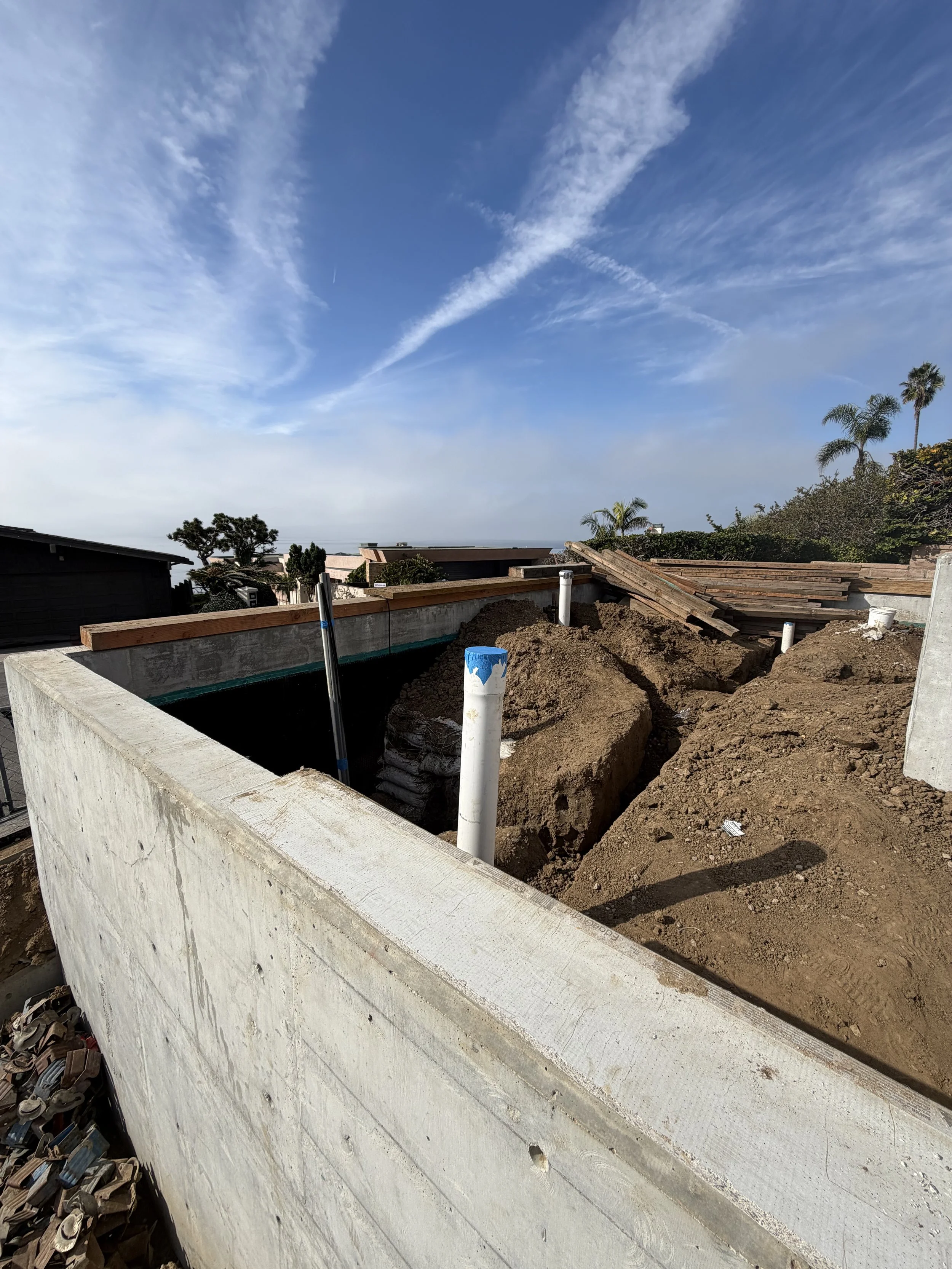
• Most of the value is in the labor: trenching and excavating with a continuous, accurate pitch from the high point of the property to a proper outlet.
• Drainage belongs behind retaining walls, in planter beds, beneath hardscape, and at channel drains wherever steep grades send water back toward the home.
• A basic system typically runs $10,000 to $15,000. A higher-tier engineered drainage plan can reach $50,000 to $75,000.
• With a very strong El Niño forecast for winter 2026-27, the time to plan drainage is before your project begins, not after the first storm.
Nobody hosts a dinner party to show off their drainage. Guests notice the fireplace, the travertine, the way the patio steps down toward the view. They never see the network underneath, which does its hardest work on nights when no one is outside at all.
On the finest properties in Newport Coast and Dana Point, drainage is often where the most careful thinking happens. The stone and the lighting are what make an outdoor space beautiful. The drainage is what keeps it beautiful for thirty years.
A Simple Material With a Remarkable Lifespan
SDR 35 pipe is about as unglamorous as building materials get. "SDR" stands for standard dimension ratio, the relationship between a pipe's diameter and its wall thickness. In practice, SDR 35 is a rigid PVC pipe with a smooth interior that holds its shape underground.
That rigidity matters. Corrugated flex pipe can sag, crush under soil load, and trap sediment in its ridges. SDR 35 stays straight and keeps its pitch. It moves water quickly, and when needed it can be cleaned and snaked years later. Paired with NDS catch basins, fittings, and channel drains, it forms a system that is simple, serviceable, and very durable.
The Material Is Simple. The Labor Is Not.
Water only moves one direction, and it needs a reason to. Every drainage line starts at a certain height at the back of the property and has to end measurably lower at the outlet, usually at the front of the yard or the street.
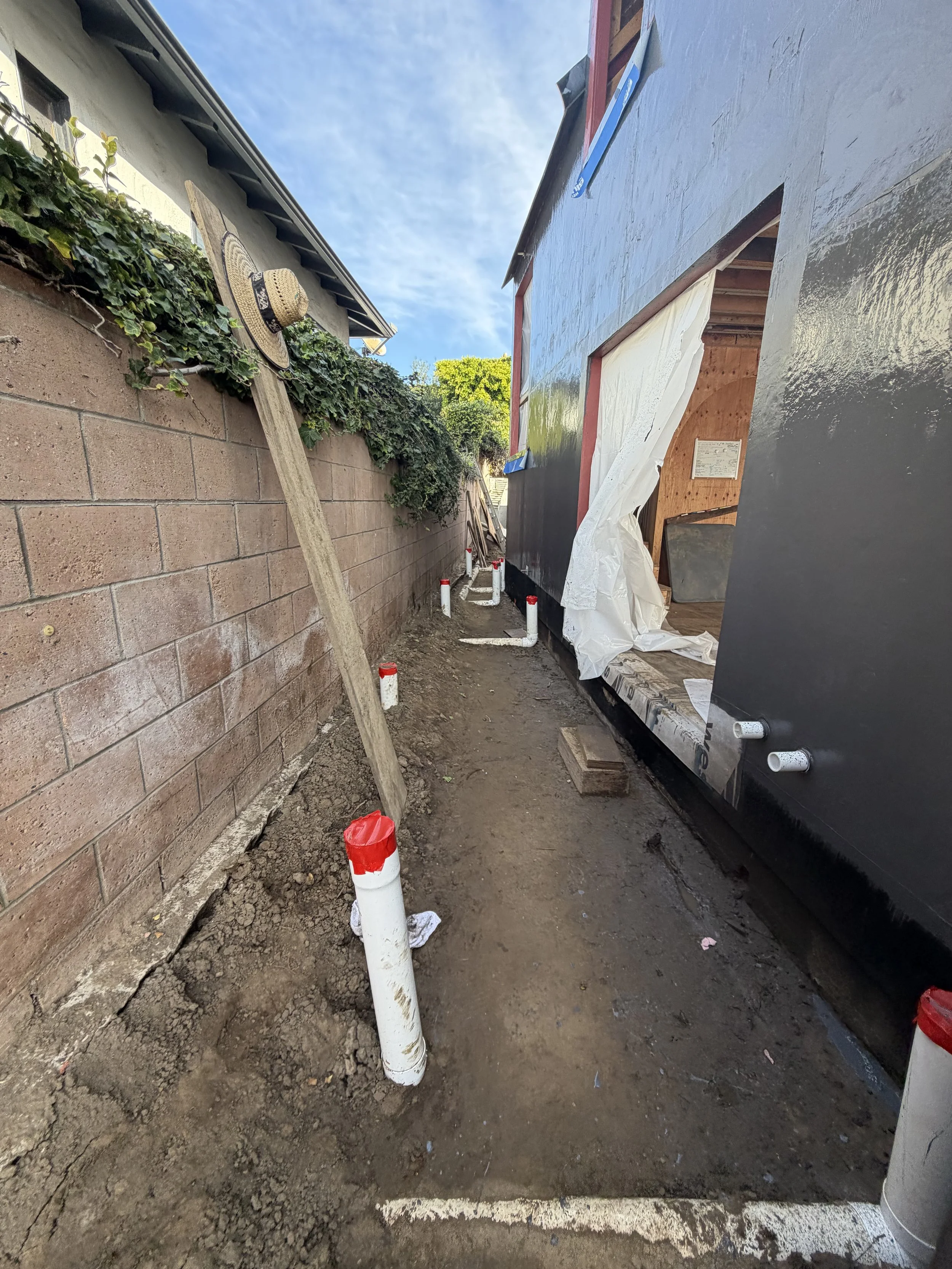
That fall has to be consistent across the entire run. At a common target of an eighth of an inch per foot, a 120-foot line drops 15 inches from start to finish. Every foot of trench has to be excavated to the right depth, checked with a laser level, and bedded so the pipe has no low spots. A single dip, or "belly," holds standing water and sediment, and over time it becomes the weak point in the whole system.
On larger properties, that can mean hundreds of linear feet of trench, often dug around mature trees, existing utilities, and tight side yards. This is where your investment actually goes: skilled excavation and precise grading on work that disappears under soil and stone once it's done.
Where Drainage Belongs on a Well-Planned Property
Behind retaining walls. We never rely on weep holes. Our standard is perforated pipe set in a 12-by-12-inch bed of three-quarter-inch rock, wrapped in filter fabric, and tied into a solid SDR 35 line that runs to a proper outlet. This relieves the water pressure that builds up behind a wall and is one of the most common causes of cracking, leaning, and failure.
In planter beds. Saturated soil pressed against a wall or foundation is a slow, quiet problem. Drains in planters give irrigation and rainwater somewhere to go.
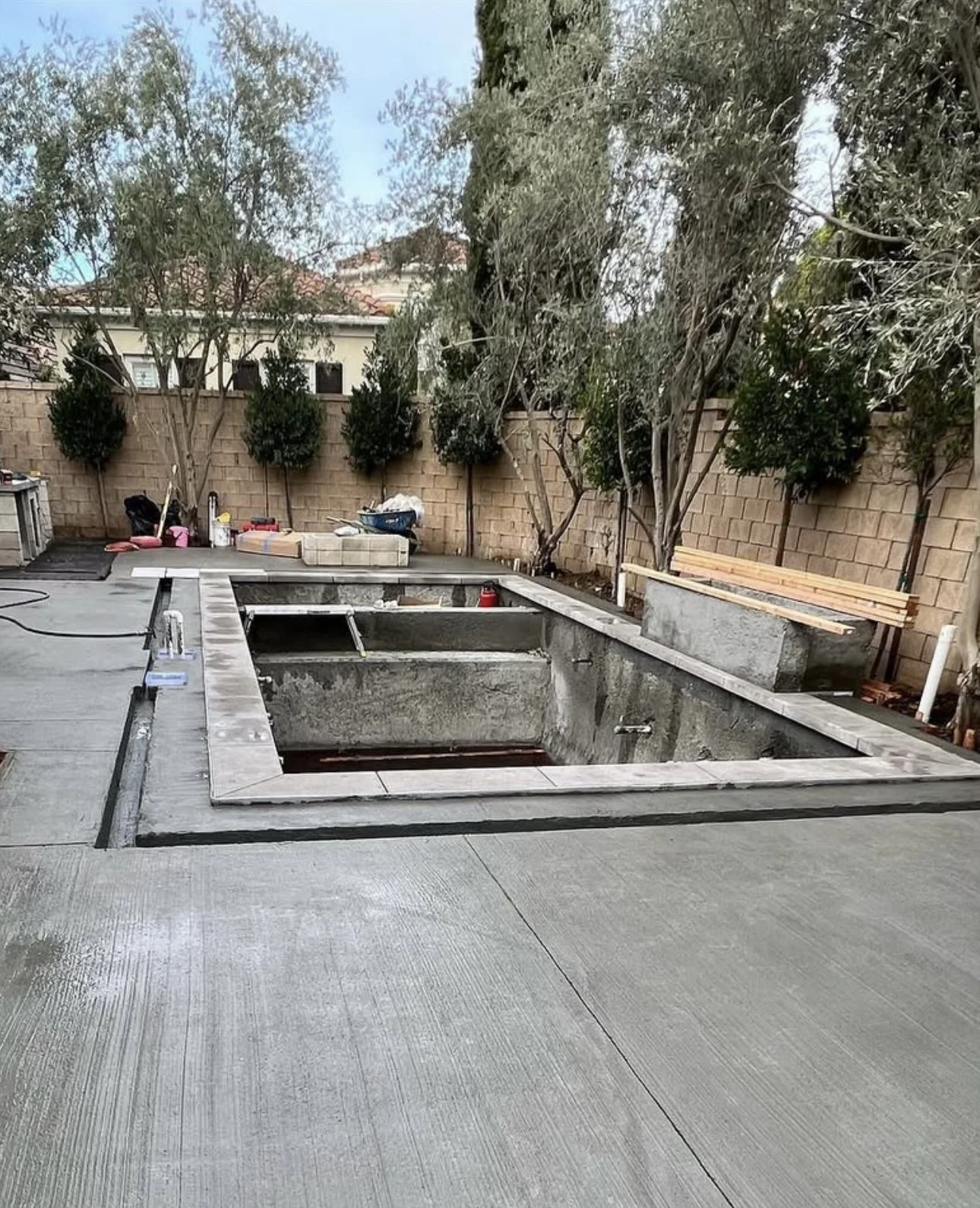
Beneath hardscape paving. Catch basins tied into the system let patios, pool decks, and walkways shed water instead of pooling it.
Along steep grades. Where the grade pitches sharply toward the house, slot or channel drains catch water before it reaches the home. On hillside properties in Anaheim Hills and San Clemente, concrete V-ditches redirect water running down the slope before it gains speed.
On larger estates, a well-engineered plan combines all of these: several pipe sizes, specialty drains, and careful routing designed around the property's own topography.
Why This Winter Changes the Conversation
As we covered in our Super El Niño post, this is not a typical rainy season. NOAA's Climate Prediction Center reports that El Niño is strengthening, with a greater than 90% chance of a very strong event during fall and winter 2026-27. NOAA expects it to peak between October 2026 and January 2027 and to last into spring 2027.
The concern is not only how much rain falls, but how it arrives. Research led by UC climate scientist Daniel Swain shows California's swings between wet and dry are growing more extreme, and a strong El Niño on top of that trend could raise the risk of flash floods and landslides.
Properties with well-engineered drainage will not be the ones worrying during these storms. When a heavy storm stalls over the coast, the difference between a system that was planned and one that was improvised shows up overnight.
Planned, Not Patched
Drainage is most effective when it's designed into new construction or a major remodel. Retrofitting a system beneath finished pavers, mature planting, or a completed wall means tearing out work you've already paid for. If your patio, pool deck, or retaining wall is already coming out, that is the moment to get the drainage right.
Engineering plans and lot sizes vary widely, and your drainage plan should reflect your property, not a template.
What Should You Expect to Invest?
Basic systems: roughly $10,000 to $15,000. Typically covers downspout tie-ins, a handful of catch basins, and a primary line to a proper outlet on a standard lot with modest grade changes.
Higher-tier engineered systems: roughly $50,000 to $75,000. Designed for larger or hillside properties: multiple pipe sizes, full retaining wall drainage, channel drains, V-ditches, and coordination with engineered plans.
What moves the number: lot size, slope, total linear feet of trench, outlet options, site access, soil conditions, and how much finished hardscape the system has to work around. Every property is quoted after a site visit.
The Quiet Return on Your Investment
The best drainage systems never get talked about, because nothing goes wrong. The walls stay plumb, the paving stays level, and the storm stays outside. That kind of calm is what you're really paying for.
Planning a new build or remodel? Let's design the drainage before the first storm tests it. Schedule a consultation at westhillsmasonry.com/contact or call 714-519-5009.