
Key Takeaways
A general contractor's value lies in coordinating many specialized trades, a role suited to complex, multi-trade builds
A full exterior renovation (hardscape, landscape, and pool-adjacent elements) often calls for a different kind of partner
Working directly with a company that captures the full scope in-house preserves both the budget and the integrity of the timeline
The right structure for your project depends on its complexity, not on convention
There's an assumption many homeowners carry into a full exterior renovation: that a project of this scale requires a general contractor to oversee it. For many builds, that's true. For a full hardscape, landscape, and pool-adjacent renovation, it's worth examining more closely.
The structure you choose at the start shapes almost everything that follows. It decides who designs the space, who answers your questions, who stands behind the work, and how much of your budget goes into the finished result versus the layers around it. Getting that decision right is one of the most valuable things you can do before a single bid comes in.
What a General Contractor Is Built to Do
A general contractor's real value is coordination across many distinct, specialized trades: framing, electrical, plumbing, roofing, and more, on a project where sequencing between them is genuinely complex. On a full home build, that coordination is indispensable.
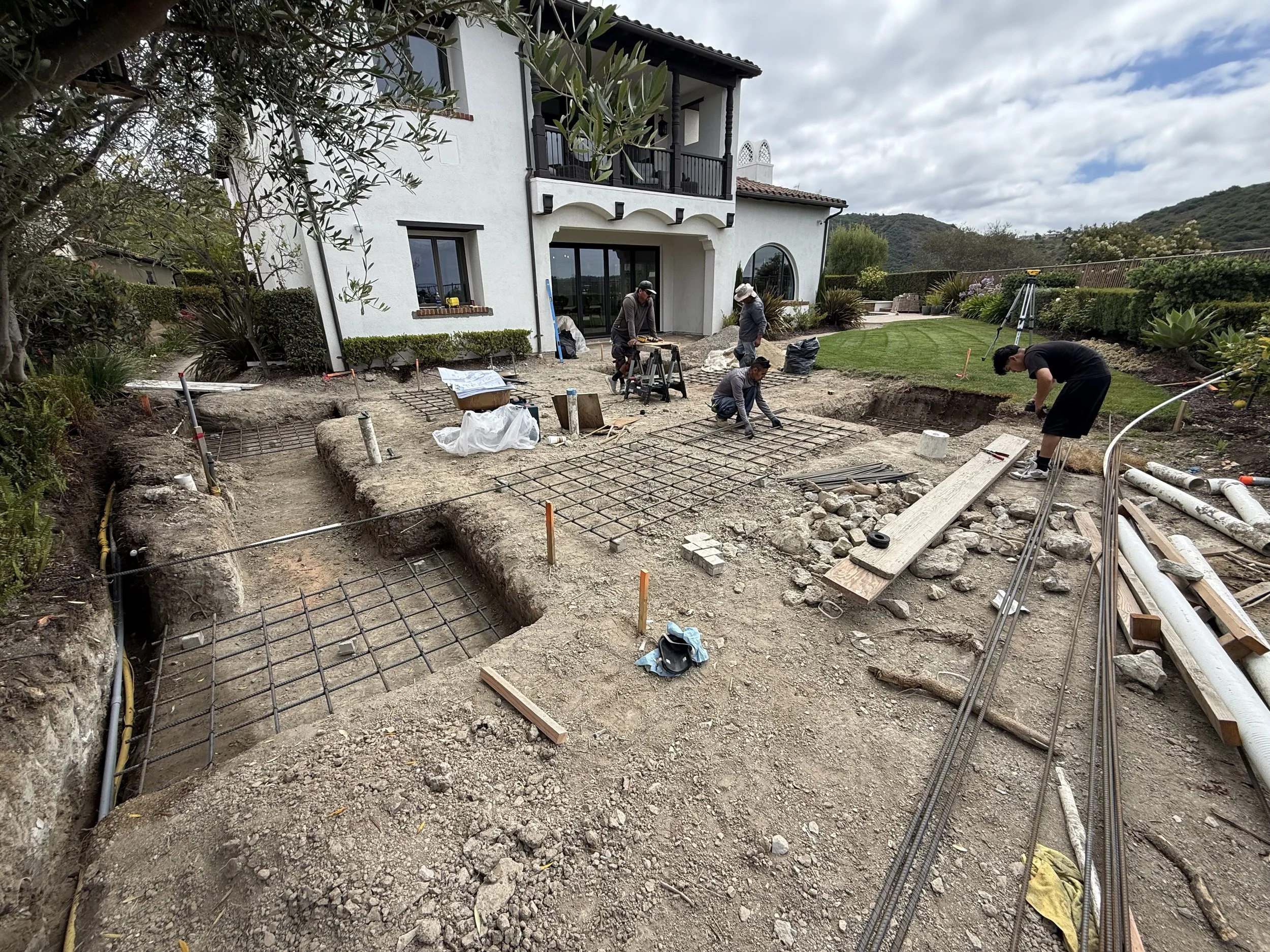
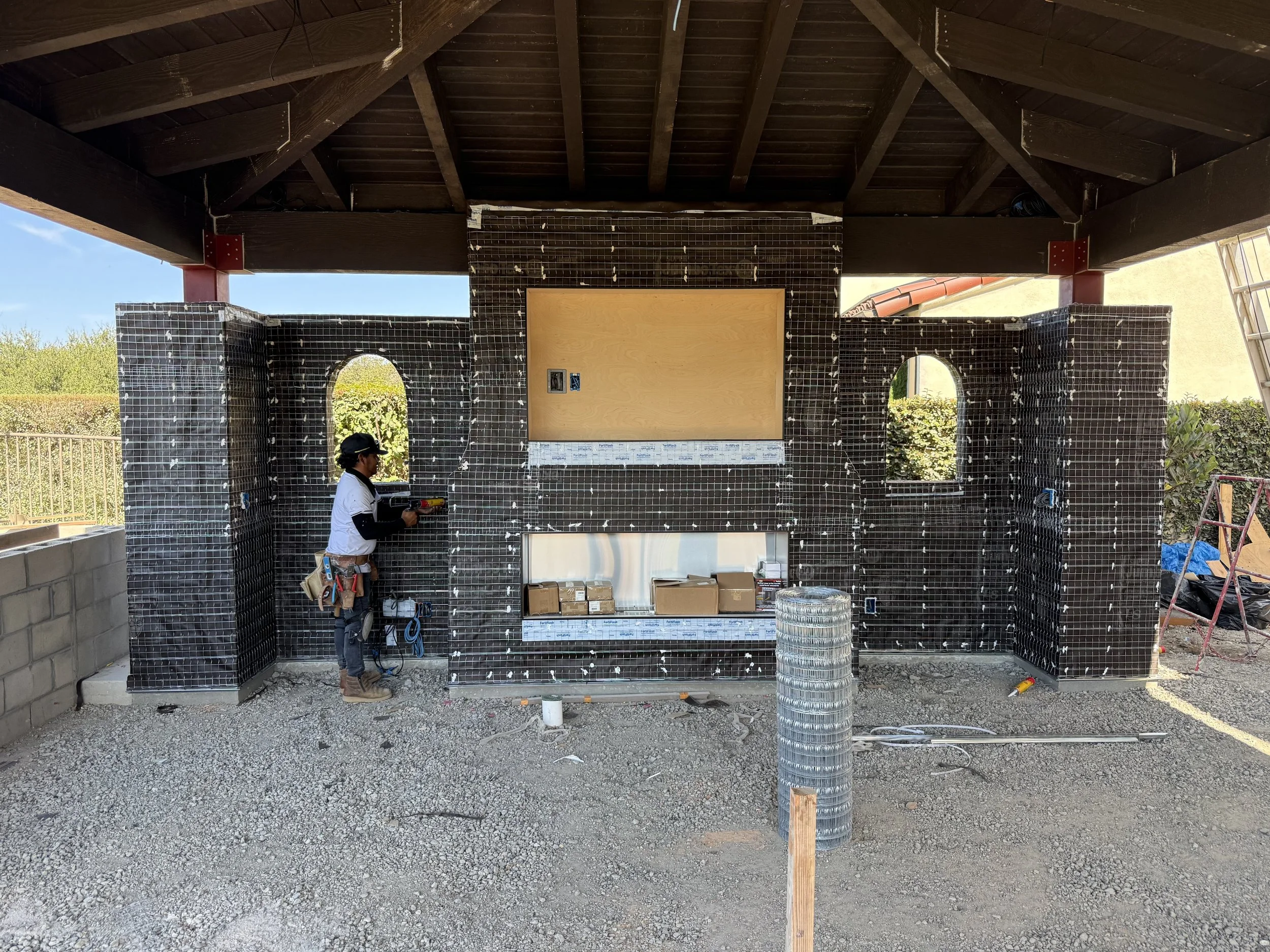
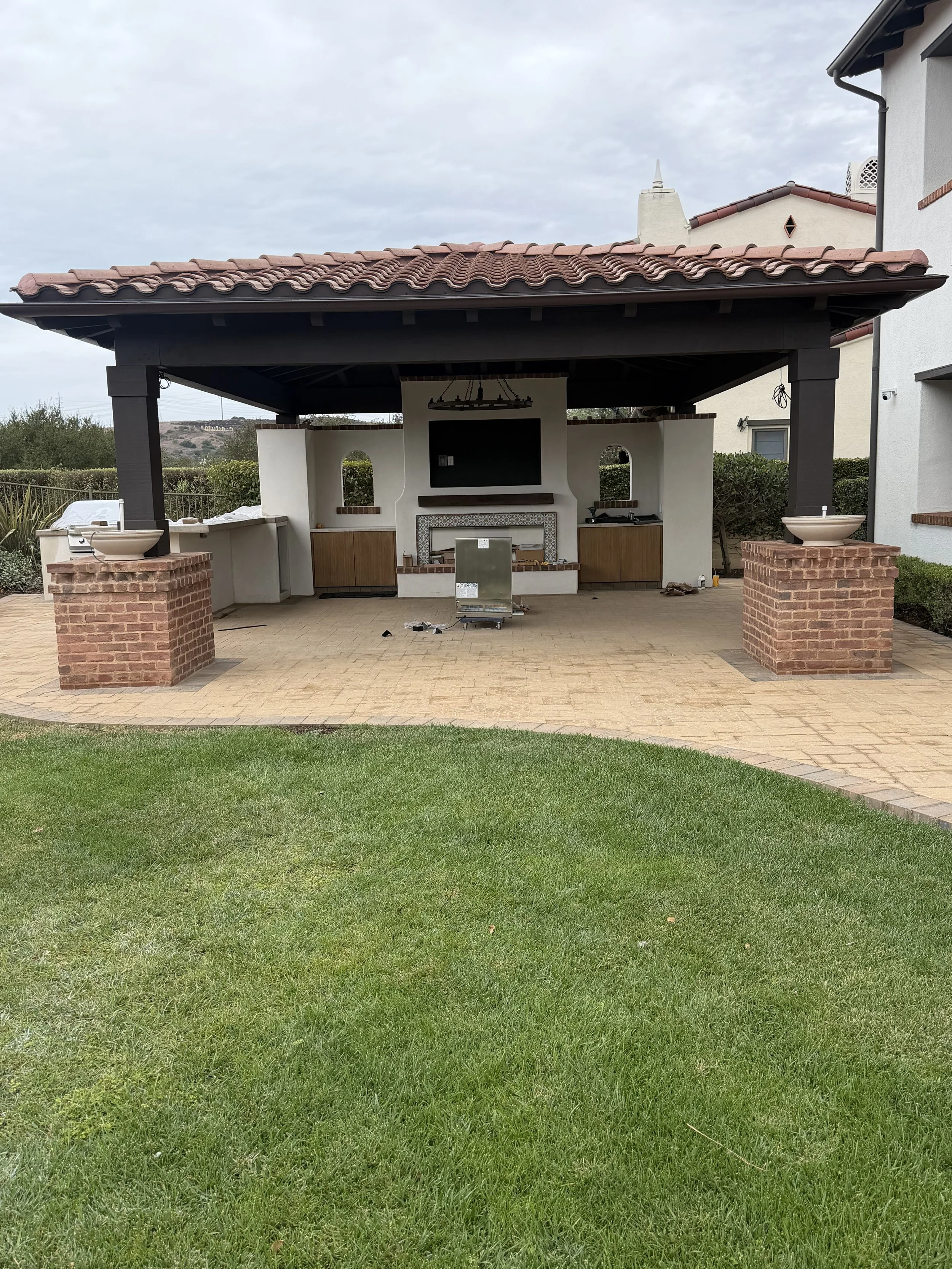
An exterior renovation (patios, retaining walls, pool decks, outdoor kitchens, fire features, and landscape) is often a more contained scope. When a single company holds the expertise to execute that full range directly, the coordination a GC provides isn't solving a problem that exists.
That isn't a knock on general contractors. It's simply a question of fit. A GC's markup and management time are fair compensation for juggling a dozen trades. When the project only involves the trades one specialist already performs, you end up paying for coordination of work that was never scattered in the first place.
What Changes When You Go Direct
Working directly with a company that captures the full scope in-house preserves the integrity of both the budget and the timeline. There's no additional management layer priced into every trade, and no schedule shaped by the coordination needs of trades that were never part of the project to begin with.
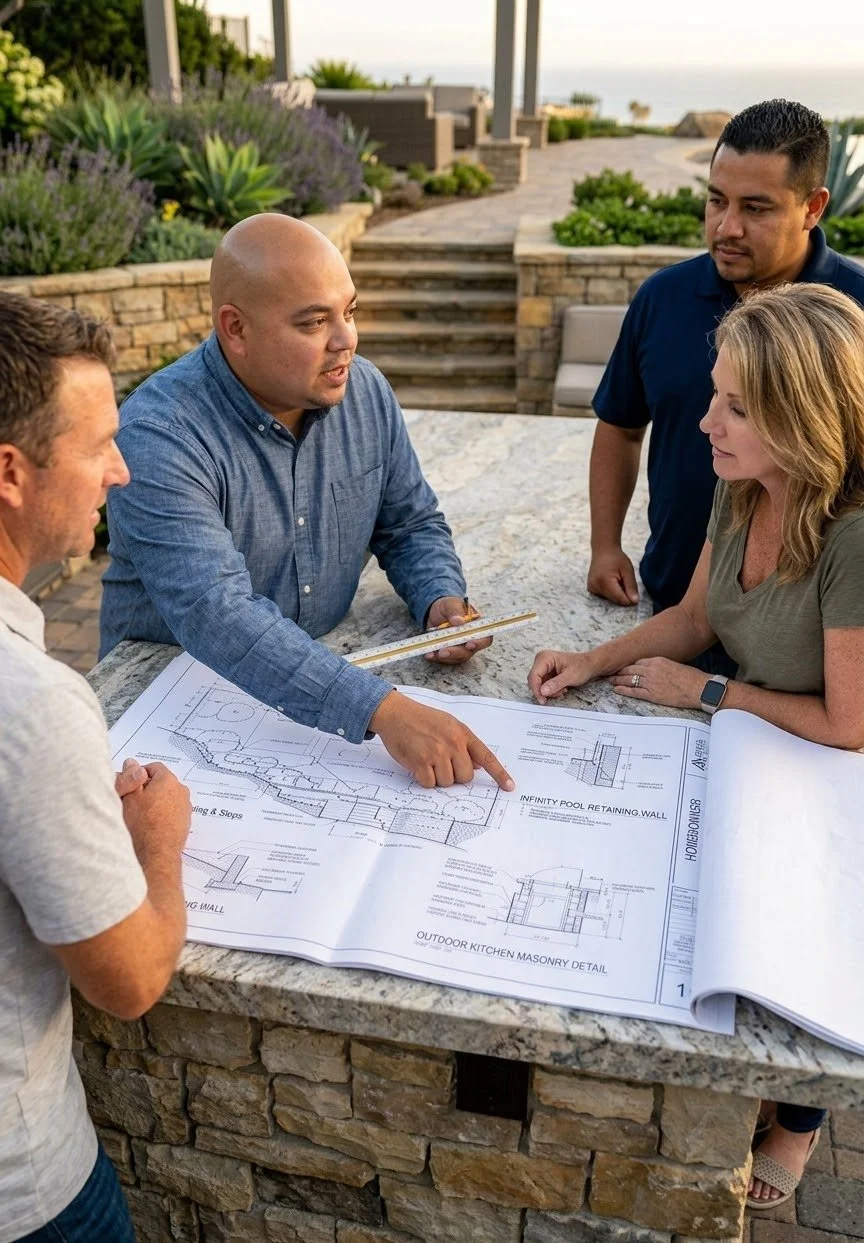
Communication changes too. When the people designing your patio are the same people building it, a question about drainage or a change to a seat wall height goes straight to someone who can answer it, not through a chain of relayed messages. Decisions get made faster, and details are far less likely to get lost between the plan and the finished work.
The result is a process that moves with the same clarity and pace as the vision itself, exactly the experience a homeowner in Newport Coast or Coto de Caza should expect from an investment at this level.
Who Is Actually Building Your Project
One of the most overlooked questions in any renovation is simple: who will physically be on your property doing the work? On many GC-led exterior projects, the answer is a subcontractor the homeowner never met during the bidding process. The GC may be excellent, but the hands laying your pavers or setting your stone belong to someone else.
That matters most in the details. Paver base compaction, wall drainage behind a retaining wall, and the way stone is cut and fitted around a fire feature are the things that decide whether a project still looks right in ten years. Those details are easiest to protect when the company that designed the work, priced the work, and warranties the work is also the company doing it.
The West Hills Masonry Approach
We've built our capabilities specifically to capture hardscape, landscape, and pool-adjacent elements directly: patios, retaining walls, pavers, fireplaces, outdoor kitchens, and the design coordination that ties them together. For a homeowner in Laguna Niguel or Yorba Linda, that means working with the company actually shaping and building the vision, not a layer managing it on someone else's behalf.
That capability is backed by a track record you can verify. West Hills Masonry has been designing and building outdoor spaces across Orange County since 2008. We hold both a C-29 masonry contractor license and a C-27 landscaping contractor license, which lets us carry the masonry, hardscape, and landscape portions of a project under the same roof. We're an authorized Belgard contractor and hold Belgard's Master Craftsman recognition, one of the highest distinctions the company awards to installers. And every project we build is backed by a 10-year workmanship warranty.
This isn't the right structure for every project. A build involving structural changes to the home, a full ADU, or genuinely complex coordination across interior and exterior trades is exactly where a general contractor's role remains essential, and valuable.
Questions to Ask Before You Hire
Whether you're interviewing a general contractor or a specialty firm, a few direct questions will tell you a lot about how your project will actually run:
Who will be on site each day? Ask whether the crew is in-house or subcontracted, and who supervises them.
Which licenses cover which parts of the work? Hardscape, masonry, and landscape can fall under different classifications, so confirm each scope is covered.
Who handles design, and when? A clear design phase before construction prevents costly changes once crews are mobilized.
Who pulls the permits and manages inspections? This should be spelled out in the agreement, not assumed.
What does the warranty cover, and who stands behind it? A warranty means the most when it comes from the company that did the work.
The answers often make the right structure obvious.
Choosing the Right Structure for Your Vision
The question worth asking early isn't whether a general contractor is standard practice. It's whether your specific project calls for the kind of multi-trade coordination a GC exists to provide, or whether it's a self-contained exterior renovation best served by a single, full-capability partner who can execute the entire vision directly.
For homeowners in Dana Point or San Clemente planning a project of this nature, that distinction is worth exploring before the first bid is ever requested.
Frequently Asked Questions
Do I need a general contractor for a backyard remodel? Not always. If the scope is hardscape, masonry, and landscape, a licensed specialty contractor who performs that work in-house can often manage the full project directly. If the work touches the structure of the home, a GC is usually the better fit.
Can one company handle both the design and the build? Yes. A design-build approach keeps the same team accountable from the first sketch to the final walkthrough, which reduces miscommunication and change orders.
What if my project includes a pool? Pool-adjacent work such as decking, coping surrounds, fire features, and retaining walls fits naturally within a hardscape scope. We're happy to coordinate with your pool builder so the surrounding space comes together as one design.
To discuss the right structure for your vision, reach out here or call 714-519-5009.