Super El Niño Is Coming: How to Protect Your Yard from Flooding and Drainage Failure in California
Key Takeaways
• Meteorologists are calling this year’s El Niño one of the strongest on record, with elevated flooding and erosion risk along the California coast
• Most drainage failures aren’t new problems, they’re old systems (curbs, swales, walls) that quietly stopped working
• Three things actually stop water: a retaining wall built to redirect it, hardscape with real pitch, and drainage with somewhere for the water to go
• Waiting until after a storm to check your drainage is the most expensive way to find a problem
Water always wins. It doesn’t care about your landscaping, your patio, or your budget. It just goes downhill, and if nothing is there to redirect it, it picks the easiest path. Sometimes that path is straight into the wall of your house.
You’ve probably seen the flooding footage out of Northern California this week; streets underwater, docks submerged, cars pushing through knee-deep water. Meteorologists are calling this year’s El Niño one of the strongest on record, with the potential for record sea levels and heavier rainfall along the California coast.
Here’s the uncomfortable truth: most yards don’t fail because nobody thought about drainage. They fail because whatever was installed years ago (an old curb, a swale that’s lost its pitch, a wall that was never sealed right) quietly stopped being enough. Nobody finds out until the wrong storm hits.
Three Things That Actually Stop Water
A retaining wall that redirects water, not just holds soil.
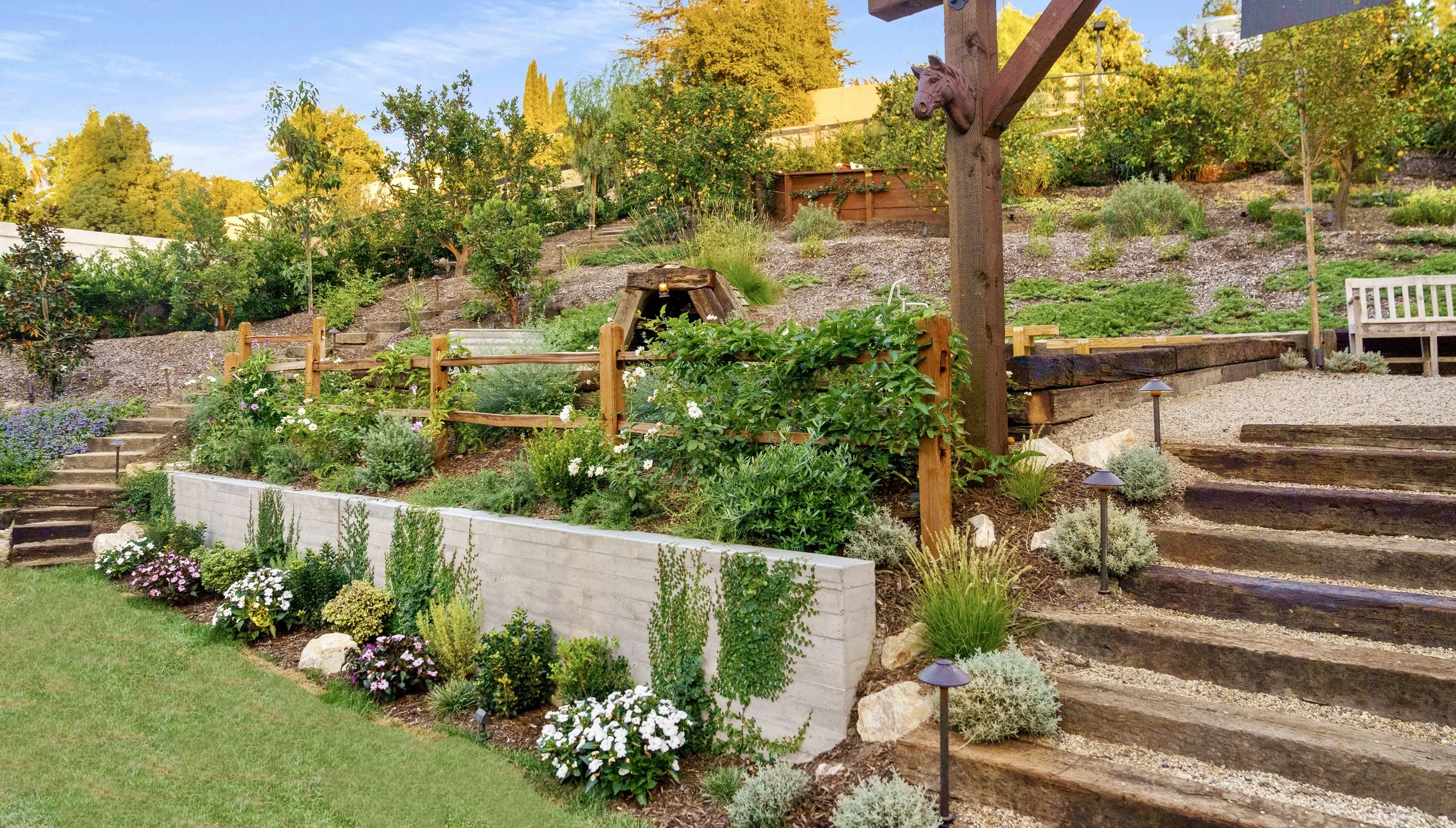
Most people think a retaining wall’s only job is to keep a slope from sliding. That’s half the job. A properly built wall also manages water pressure and sends runoff somewhere safe, away from your foundation. A wall without that is just a slower version of the same problem.
Hardscape with real pitch, not just a flat surface.
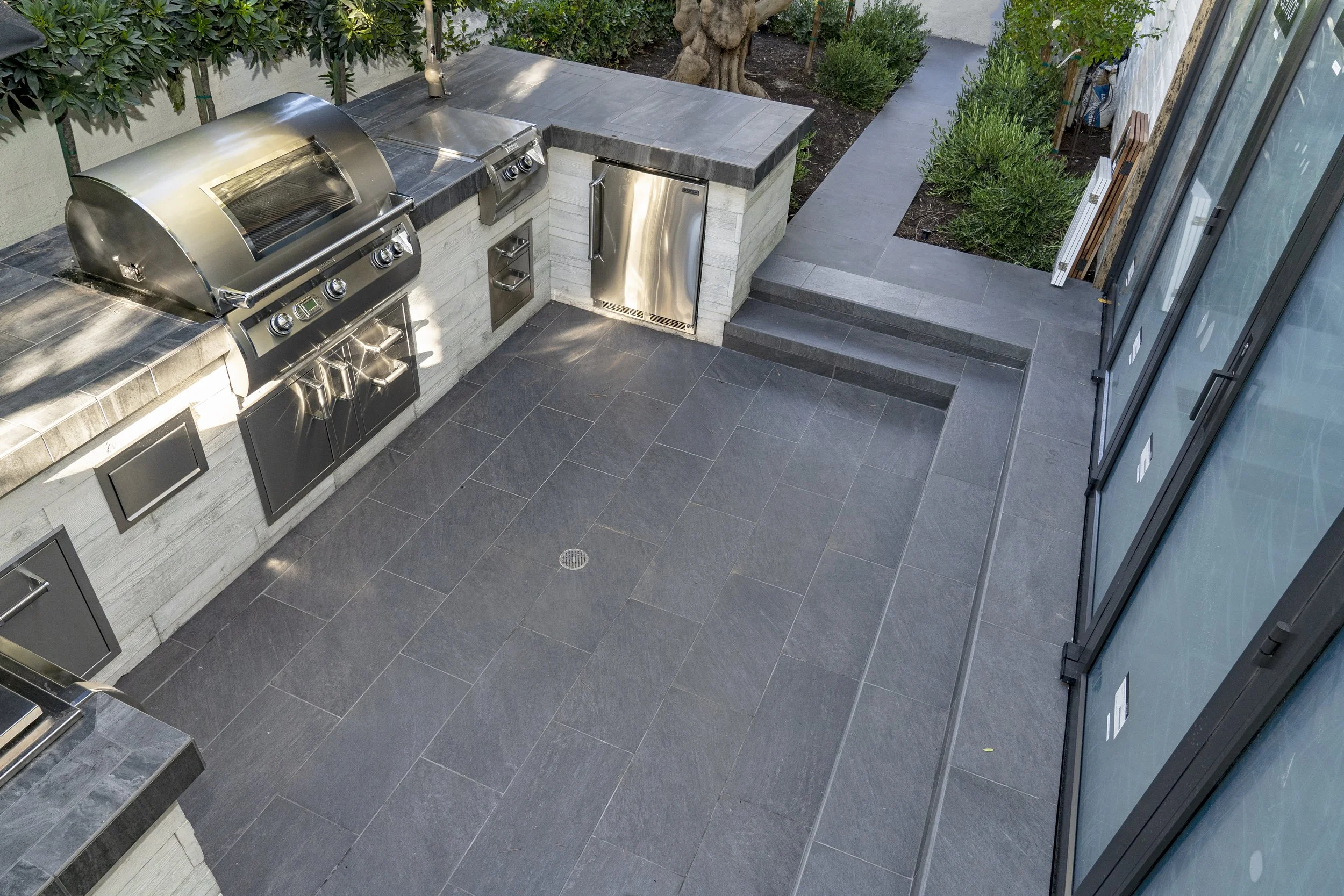
A patio or walkway that looks level but isn’t pitched correctly will pool water exactly where you don’t want it, against your house, under your pavers, into your foundation. You can’t see pitch from a finished photo. You can only see it the first time it rains hard.
A drainage system that has somewhere for the water to actually go.
A swale or curb that isn’t tied into real drainage is just a suggestion. Water needs a destination, not a detour. This is the part that’s invisible when it’s working and catastrophic when it’s not.
Why This Fails Quietly, Then All at Once
Water damage doesn’t announce itself. A curb loses its pitch a little at a time. A wall’s drainage clogs slowly, over years. None of it looks urgent on a dry day. Then one storm puts real pressure on all of it at once, and what was “probably fine” turns into a repair bill and a wet wall.
The Time to Find Out Is Before the Storm
Every winter, the calls come in right after the first big storm; homeowners seeing water where it’s never been before. The properties that don’t call are the ones where someone checked the drainage before the storm decided to check it for them.
If you’ve got a sloped yard, an old curb or swale you haven’t thought about in years, or a spot where water tends to sit, that’s worth a look now, while it’s still dry.