
Naturalist Hardscaping: Building Wild, Layered Backyards in Orange County
Key Takeaways
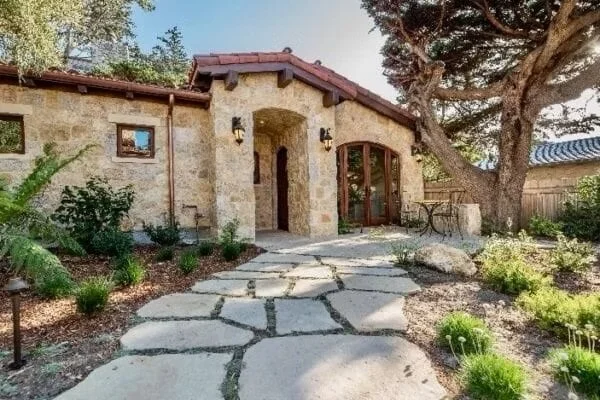
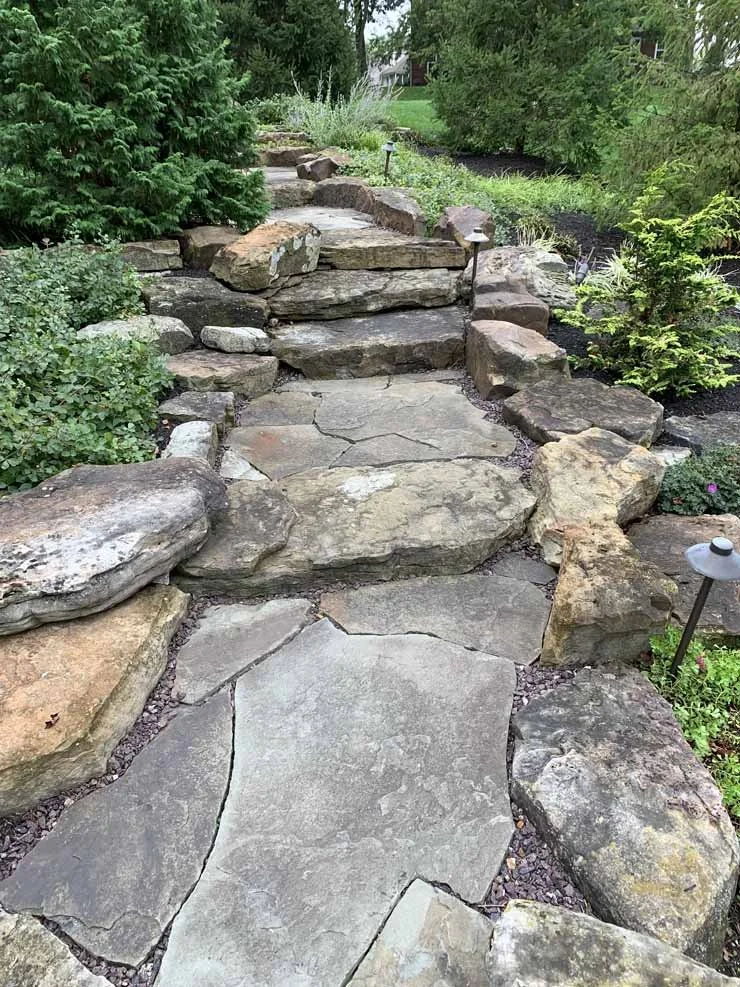
• Naturalist Hardscaping uses irregular flagstone with gravel-infilled joints instead of tight, uniform paver patterns
• Material options include Pennsylvania Bluestone, Oklahoma Cameron Sandstone, and Sydney Peak stone
• Paths and layouts wind rather than run on a straight axis
• Planting leans on California native and drought-tolerant species: oak, sycamore, deer grass, salvia, and California poppy
• Shade often comes from tree canopy alone, or a rustic live-edge timber pergola when structure is needed
Naturalist Hardscaping: A Backyard That Looks Like It Grew There
Not every homeowner wants a backyard that looks designed. Some want the opposite: a space that feels like it has always been there, shaped more by the land than by a blueprint. Naturalist Hardscaping is the answer to that instinct, and it is one of the more technically demanding styles we build, precisely because "looking effortless" takes real skill to execute.
We see strong demand for this look in Laguna Beach and Ladera Ranch, where lot sizes and topography often lend themselves to a more organic, less formal layout than a flat suburban yard would allow.
The Hardscape Foundation
The defining feature of Naturalist Hardscaping is irregular stone with gravel or soil infill between joints, rather than tight mortar lines. The stone itself needs to carry real character, since it is doing most of the visual work.
Pennsylvania Bluestone is a classic choice for this style, prized for its natural cleft surface and the subtle color variation between pieces, ranging from blue-gray to soft lavender tones depending on the quarry run.
Oklahoma Cameron Sandstone brings a warmer palette, with buff, tan, and rust tones that read especially well against California native planting. It has a slightly rougher texture than bluestone, which suits the wilder aesthetic of this style.
Sydney Peak stone rounds out our options for clients who want a more dramatic color range or a distinct regional look for a signature feature, such as a stepping-stone path or a boulder-and-flagstone seating area.
Layout matters as much as material selection here. Straight axis lines and formal borders undercut the whole point of the style. Paths should curve, widen and narrow, and follow what feels like a natural walking line rather than the shortest distance between two points. Boulders, used as accent pieces at path edges or as informal seating, reinforce the sense that the landscape existed before the hardscape was added.
The Planting Palette
This is the style where California natives genuinely shine. Coast Live Oak and California Sycamore are our preferred anchor trees, both offering a canopy that looks like it belongs to the region rather than an imported aesthetic. A multi-trunk crape myrtle works well as a secondary tree where seasonal color is wanted.
Underneath, the planting should feel like it is spreading rather than placed. Deer grass, yarrow, and salvia in mixed drifts create the layered, slightly wild look this style depends on. California poppy, allowed to self-seed along path edges, adds seasonal color that changes year to year rather than staying static.
Ground treatment stays natural: buff-toned decomposed granite for path infill, never a sharp-edged or brightly colored gravel that would read as manufactured against the stone.
Shade Structures
More often than not, this style relies on tree canopy for shade rather than a built structure, which fits the overall philosophy of letting the landscape do the work. When a client does want a structure, a rustic pergola with raw or live-edge timber beams is the right call. Skip painted or stained wood; a natural, weathering finish belongs here far more than a polished one.
Why It Works on the Right Lot
Naturalist Hardscaping is not the right fit for every property. It needs room to breathe and, ideally, some existing topography or mature planting to build around. But on the right lot, in Laguna Beach, Coto de Caza, or a larger parcel in Ladera Ranch, it produces some of the most distinctive, least generic-looking backyards we build.
If you have a property with character you want to work with rather than pave over, we would like to see it. Reach out at westhillsmasonry.com/contact or call 714-519-5009.