
Natural Stone vs. Man-Made Stone Veneer: What's the Real Difference?
Key Takeaways
• Natural stone usually costs more, and it often needs hand-shaping (called "tooling") that adds extra labor time.
• Manufactured stone veneers, like El Dorado Stone, Cultured Stone, or Creative Mines, are molded from real stone and go up faster because they skip the tooling step.
• Both types weigh about the same, roughly 13 to 15 pounds per square foot.
• For homes near the marina, or other tough outdoor spots, natural stone is the safer long-term choice.
• Manufactured stone should never be installed near pools, spas, or water features. Certain natural stones handle water much better.
• Tall walls (30 feet and up) and large-format stone panels each need the correct bonding mortar for the job.
• The grout joint, including the sand and color, can affect how well a wall resists staining and how custom the final look feels.
Stone veneer can turn a plain wall into the best-looking part of a house. But not all stone veneer is the same. There are two main kinds: natural stone and manufactured stone (sometimes called "artificial" or "cultured" stone). Brands like El Dorado Stone, Cultured Stone, and Creative Mines make the manufactured kind.
Both types can look amazing. But they behave very differently once they're on the wall. Here's what homeowners in Newport Beach, Dana Point, and San Clemente should know before picking one.
Cost and Labor: Where the Trade-Off Really Shows Up
Natural stone almost always costs more than manufactured stone. Part of that cost is the material itself. But part of it is labor.
Real stone doesn't come in perfect, matching shapes. Sometimes a piece needs a little extra shaping, called tooling, so it fits snugly against the next piece. Even a small amount of tooling takes time. And time is labor. That labor adds up across a whole wall.
Manufactured stone works differently. It's molded to fit together with very little adjustment, so it can often be "dry fit," meaning it's set in place without cutting or shaping. In fact, tooling manufactured stone is something we try to avoid altogether. Cut into it too much, and you'll expose the concrete underneath the surface layer. That doesn't look good, and it isn't easy to fix.
Weight: The One Thing That's Almost the Same
Here's a fact that surprises a lot of homeowners. Even though natural stone and manufactured stone are made completely differently, they weigh about the same. Both typically run 13 to 15 pounds per square foot. So when it comes to how much extra weight a wall or structure needs to support, the two materials are close to equal.
Location Matters More Than You'd Think
Not every home sits in the same conditions. Homes near the marina, for example, deal with salt air, moisture, and weather that's tougher on building materials. In these spots, we lean toward natural stone. It holds up better over time in conditions like these.
Water features add another layer to this decision. Some natural stones do well right next to pools, spas, and fountains. Manufactured stone does not. It should never be installed in or directly around water features, pools, or spas. The material simply isn't made for that kind of constant water exposure.
What Goes on Behind the Scenes: Tall Walls and the Right Adhesive
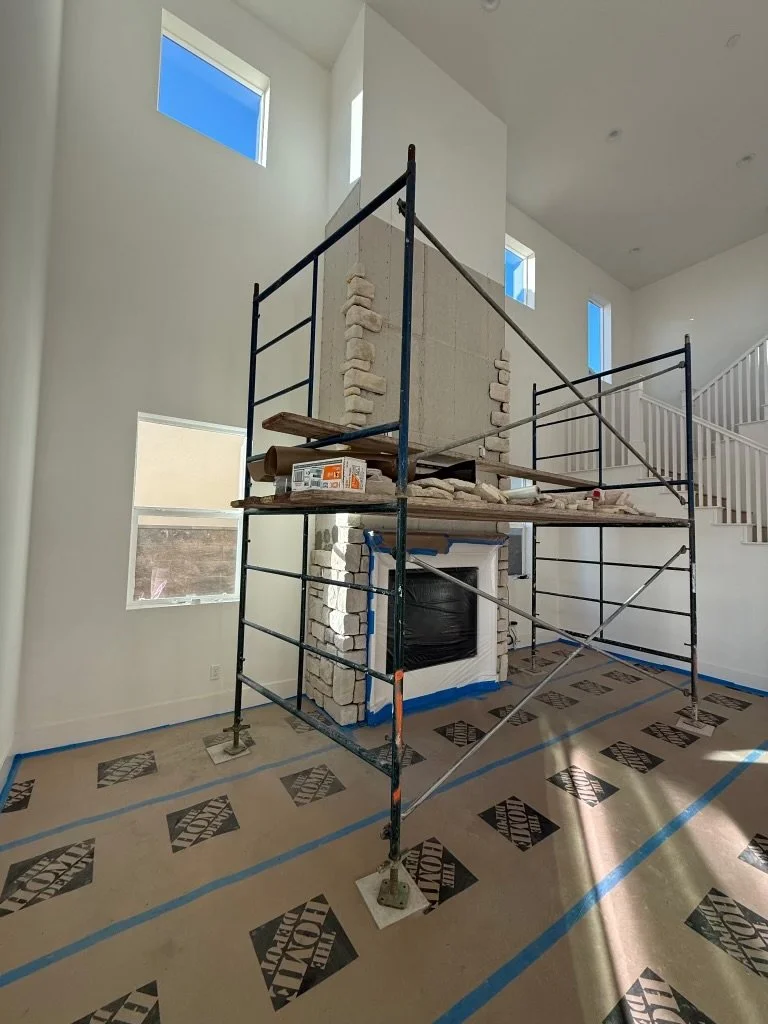
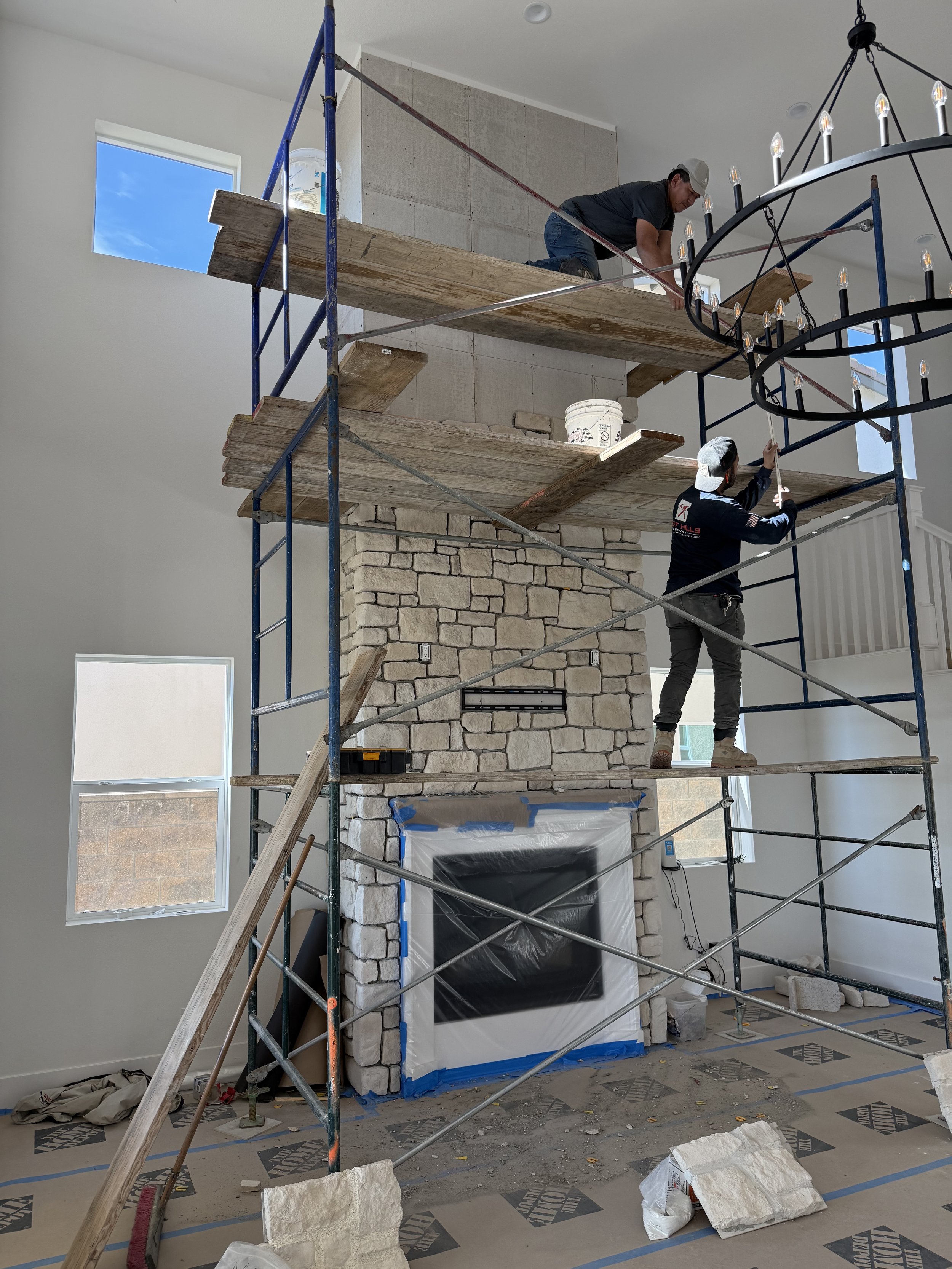
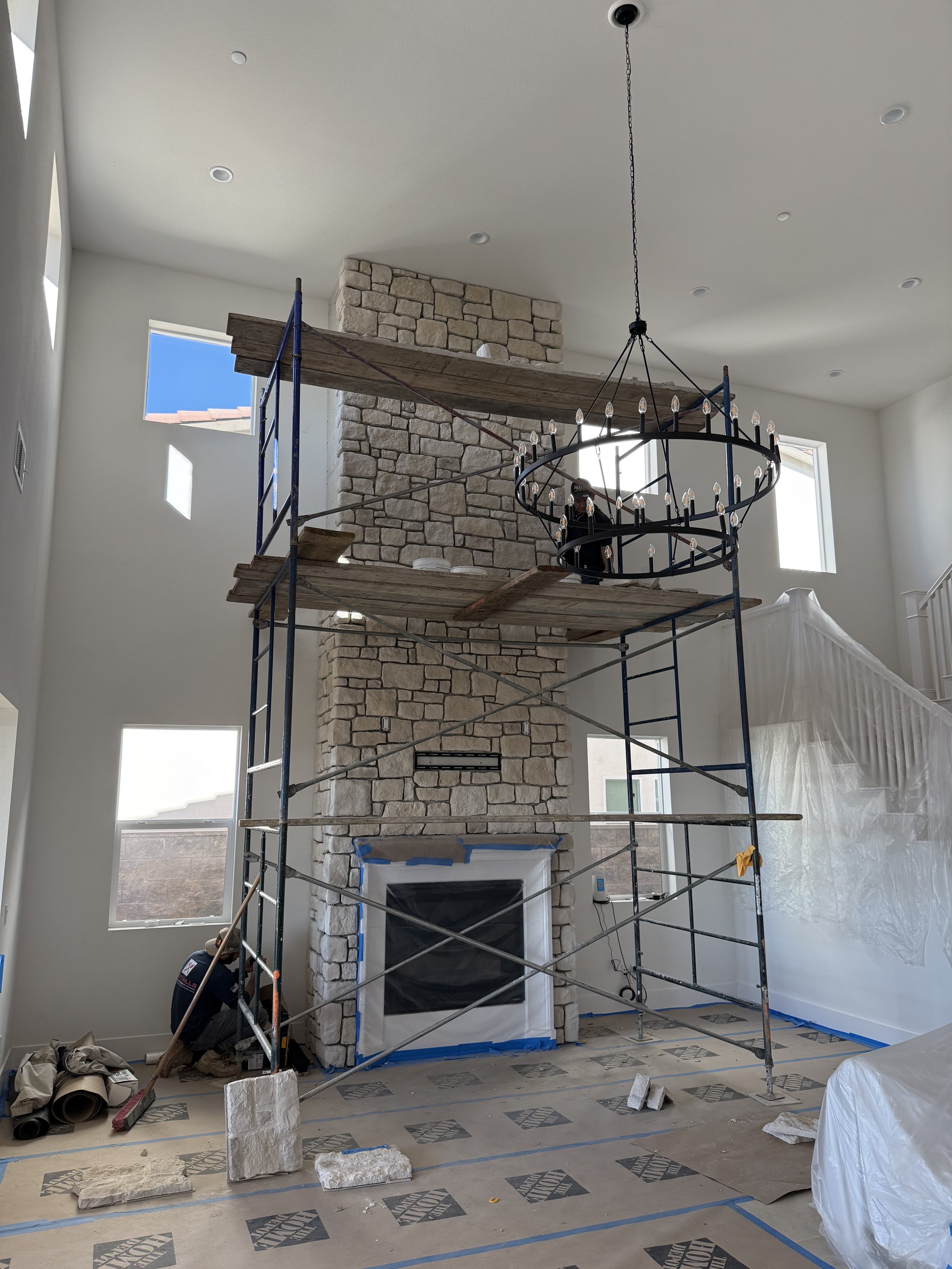
Some of our stone veneer installations go piece by piece up walls that reach 30 feet or higher on residential homes. At that height, and at that scale, the mortar adhesive holding each piece matters just as much as the stone itself.
The wall underneath the veneer is usually a cementitious surface, meaning it's made from cement-based material. The bonding mortar has to be made to stick properly to that surface, or the whole installation is at risk over time. Large-format stone panels, which are bigger and heavier pieces, often need a different adhesive altogether than smaller, standard-sized pieces.
This is one of those parts of the job a homeowner never sees once the wall is finished, but it's exactly what separates a wall that lasts decades from one that doesn't.
The Finishing Touch: Grout Joints
Once the stone is set, there's still one more decision that changes the entire look of the wall: the grout joint.
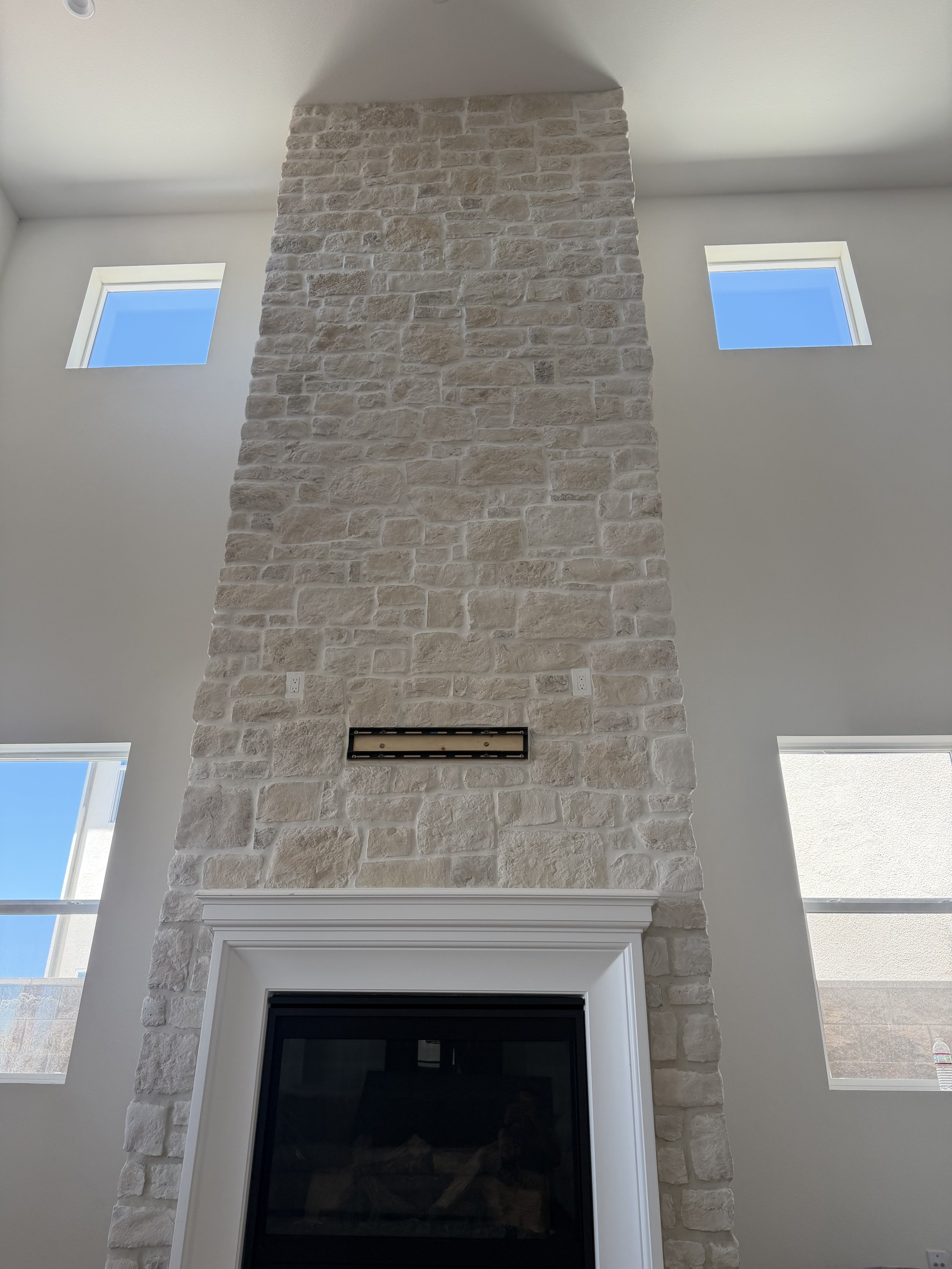
The mortar used between each stone can be colored, and the sand mixed into it matters too. We use products like Orco VP Joint, which uses finer sand and helps resist efflorescence, that white, chalky residue that can sometimes form on masonry over time.
Beyond color and sand, there's also the technique. A grout joint can be raked, sponged, or left as an over-grout finish, and each one gives the wall a different personality. This is where a stone veneer installation becomes a true custom piece, built from the bedding mortar up, through stone selection, to the very last detail in the grout joint.
Bringing It All Together
Choosing between natural stone and manufactured stone veneer isn't just about which one looks better in a photo. It comes down to your home's location, your budget, where the stone will sit, and how tall or large the installation will be. Both materials can create a beautiful result when they're used the right way, in the right place, by people who understand the difference.
At West Hills Masonry, we walk homeowners through this decision on every project, and we handle every detail, from bedding mortar to the final grout joint, with the same level of care.
Ready to talk through your project? Visit westhillsmasonry.com/contact or call us at 714-519-5009.