Comparing Retaining Wall Contractors in Orange County: What to Look For
Key Takeaways:
• A retaining wall does two very different jobs at once: it manages water and grade on your property, and it can completely reshape the aesthetic and value of a front or back yard.
• Retaining walls are one of the few hardscape features where the engineering, not the finish material, is what determines whether the project succeeds or fails.
• A low quote on a retaining wall almost always means something is missing: soil engineering, a proper site plan, permit costs, or all three.
• These are typically significant investments, often six figures or more depending on scope, and that’s not a reason to cut corners. It’s the reason to get the engineering right the first time.
• West Hills Masonry handles retaining walls as full engineered projects: site plans, soil and civil engineering, city permitting, and inspector sign-off, not just a wall built on a quote.
Most hardscape features are primarily aesthetic. A retaining wall is different. It’s structural. Built correctly, it holds back soil, manages drainage during heavy rain years, and can turn a sloped or awkward lot into genuinely usable, high-end outdoor space. Built incorrectly, it fails, sometimes gradually, sometimes all at once, and the cost of fixing a failed retaining wall is almost always higher than the cost of building it right in the first place.
This matters most on hillside terrain, which describes a lot of Orange County. Communities like Anaheim Hills, Yorba Linda, San Clemente, Laguna Beach, and Newport Coast are full of sloped lots where a retaining wall isn’t optional, it’s what makes the property usable at all.
Two Jobs, One Wall
A well-engineered retaining wall does double duty on an Orange County property:
Function. During heavy rain years (El Niño winters are the obvious example), a retaining wall is often the single most important structure on a sloped property. Properly engineered drainage behind the wall redirects water where it needs to go instead of letting it pool, saturate the soil, and push against the wall face until something gives.
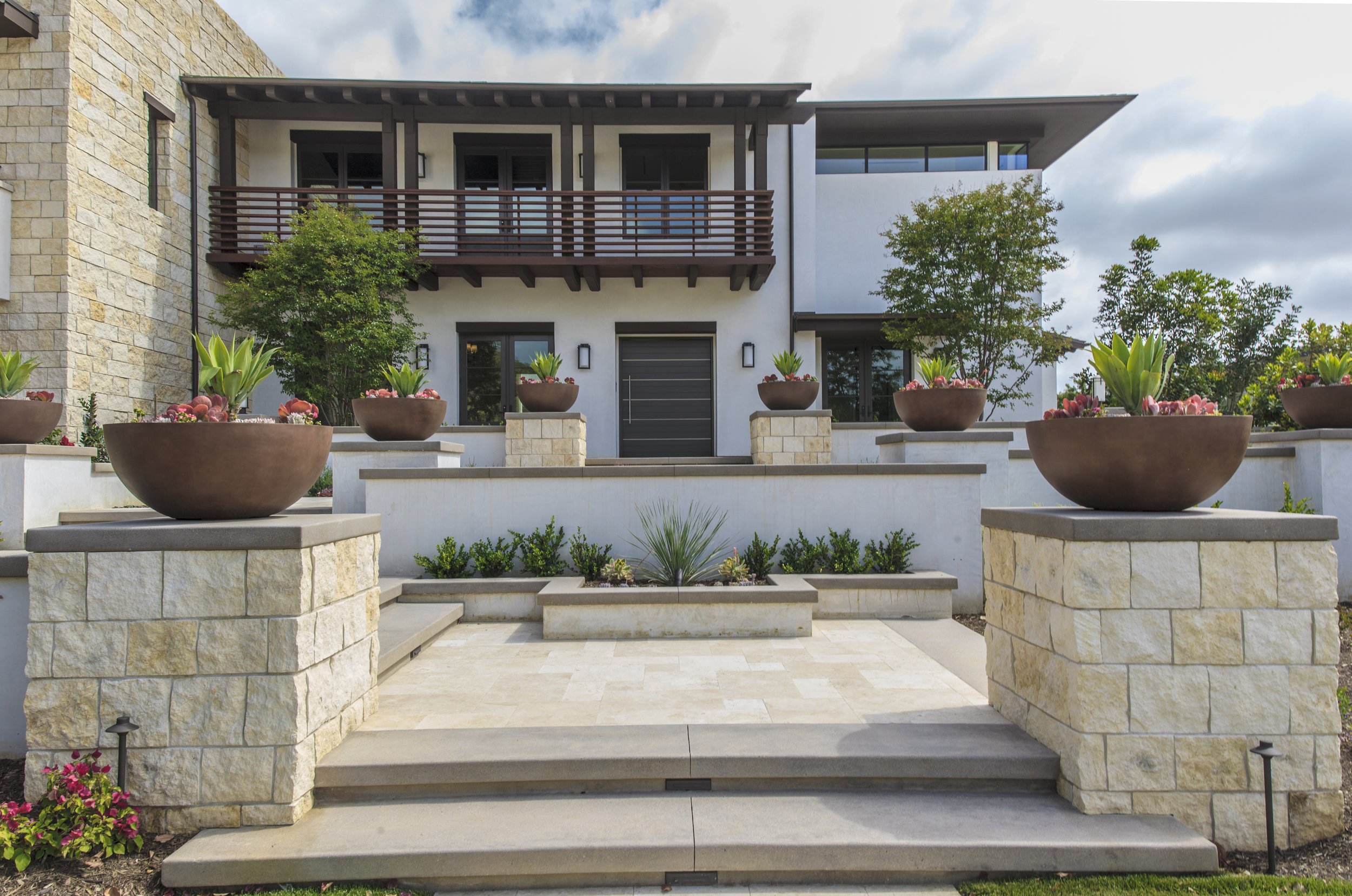
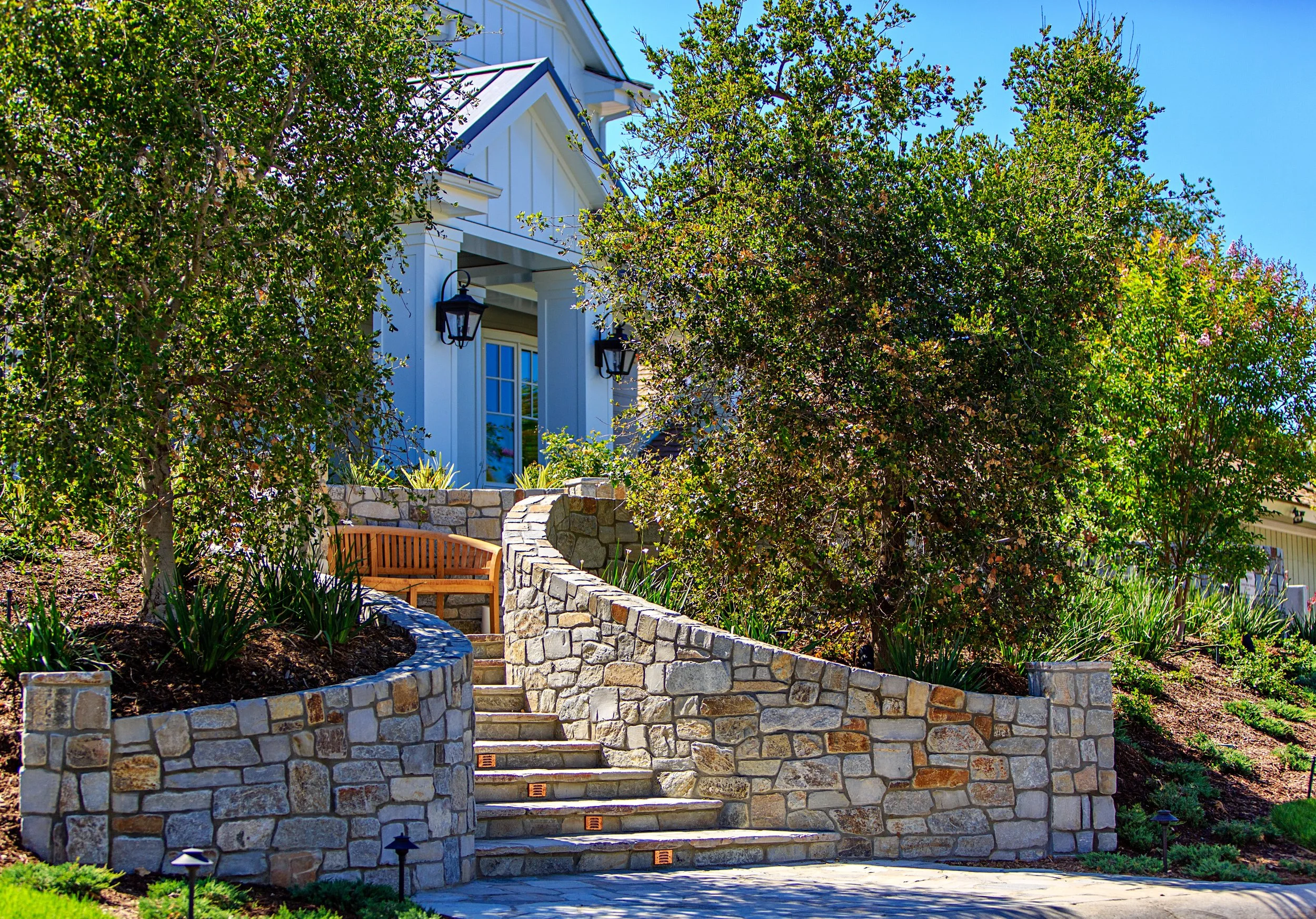
Form. The same wall that solves a drainage problem can also completely change the contour and presentation of a property, front or back. A stepped, terraced hillside; a raised, level yard where there used to be an unusable slope; a clean architectural edge instead of an eroding embankment. For high-end properties, the retaining wall is often what makes the rest of the landscape design possible.
Why the Engineering Matters More Than the Material
With most hardscape projects, the finish material is the main decision. With a retaining wall, the engineering underneath it is what actually determines whether the project holds up. That includes:
• Soil engineering to understand what the wall is actually holding back and how it will behave when saturated
• A proper architectural site plan, not a sketch, that accounts for grade, drainage, and adjacent structures
• Civil engineering sized to the wall’s height, length, and load, since a wall over a certain height (and many under it, depending on conditions) requires stamped engineering, not a contractor’s best guess
• City permitting and code compliance, which varies by jurisdiction across Orange County
• Inspector sign-off at the appropriate stages of construction, not just a final walkthrough
Why the Cheapest Quote Is Usually the Riskiest One
This is the area where we tell clients most directly: don’t shop a retaining wall on price alone. A contractor who quotes significantly under everyone else is almost always missing something, and it’s rarely the materials. It’s the parts you can’t see in a quote: proper soil analysis, engineered drainage, permit costs, or the structural engineering itself. An inexperienced contractor may not even know these are required until the city rejects the plans, or worse, until the wall is already built.
These are not small projects. Depending on height, length, access, and site conditions, a properly engineered retaining wall is often a six-figure investment. That’s exactly why the engineering has to be right from the start. A wall that fails doesn’t just need a repair, it often needs to be demolished and rebuilt, at far greater cost than doing it correctly the first time.
Why Work With West Hills Masonry
We treat retaining walls as full engineered projects, not a masonry line item. That means site plans, soil and civil engineering, permitting, and coordination with city inspectors are all part of how we approach the work, alongside the craftsmanship of the wall itself. For homeowners investing in a high-end property, that’s the difference between a wall that looks right for one season and one that performs for decades.
Ready to Discuss Your Retaining Wall Project?
West Hills Masonry designs and builds engineered retaining walls throughout Orange County. Whether you’re solving a drainage problem, reshaping a sloped property, or planning a high-end hardscape build around a new wall, we handle the engineering and the construction from the same team.
Call (714) 519-5009 for a consultation, and let’s talk through what your property actually needs.