
A Day in the Yard: From First Coffee to the Last Ember
Key Takeaways
The finest backyards are designed around a full day, not around a single feature.
Morning, midday, golden hour, dinner, and fire each ask something different of the stone, the shade, and the light.
Surface tone, seat height, and shade placement decide whether a yard is lived in daily or admired from the window.
What makes it feel effortless sits below the surface: base preparation, drainage, and true lines.
Backyards planned at this level typically represent an investment of $250,000 to $500,000, depending on scope.
At 6:45am on a clear morning in Dana Point, the stone is still cool underfoot. Coffee is in hand. The marine layer is lifting off the hills, and somewhere behind a low wall, water moves over a stone edge with a sound like a slow exhale.
Nothing about this moment is an accident. Someone designed it months earlier, with a level, a sun chart, and a very specific idea of how an ordinary Tuesday should feel.
That is how we think about a backyard. Not as a list of features, but as a day, arranged. The terrace, the shade, the table, and the fire are not separate purchases. They are scenes in the same story, and the story is only as good as the transitions between them.
Here is what one day looks like, from first light to the last ember, and what it takes to build it.
6:45 AM: The Terrace That Greets You
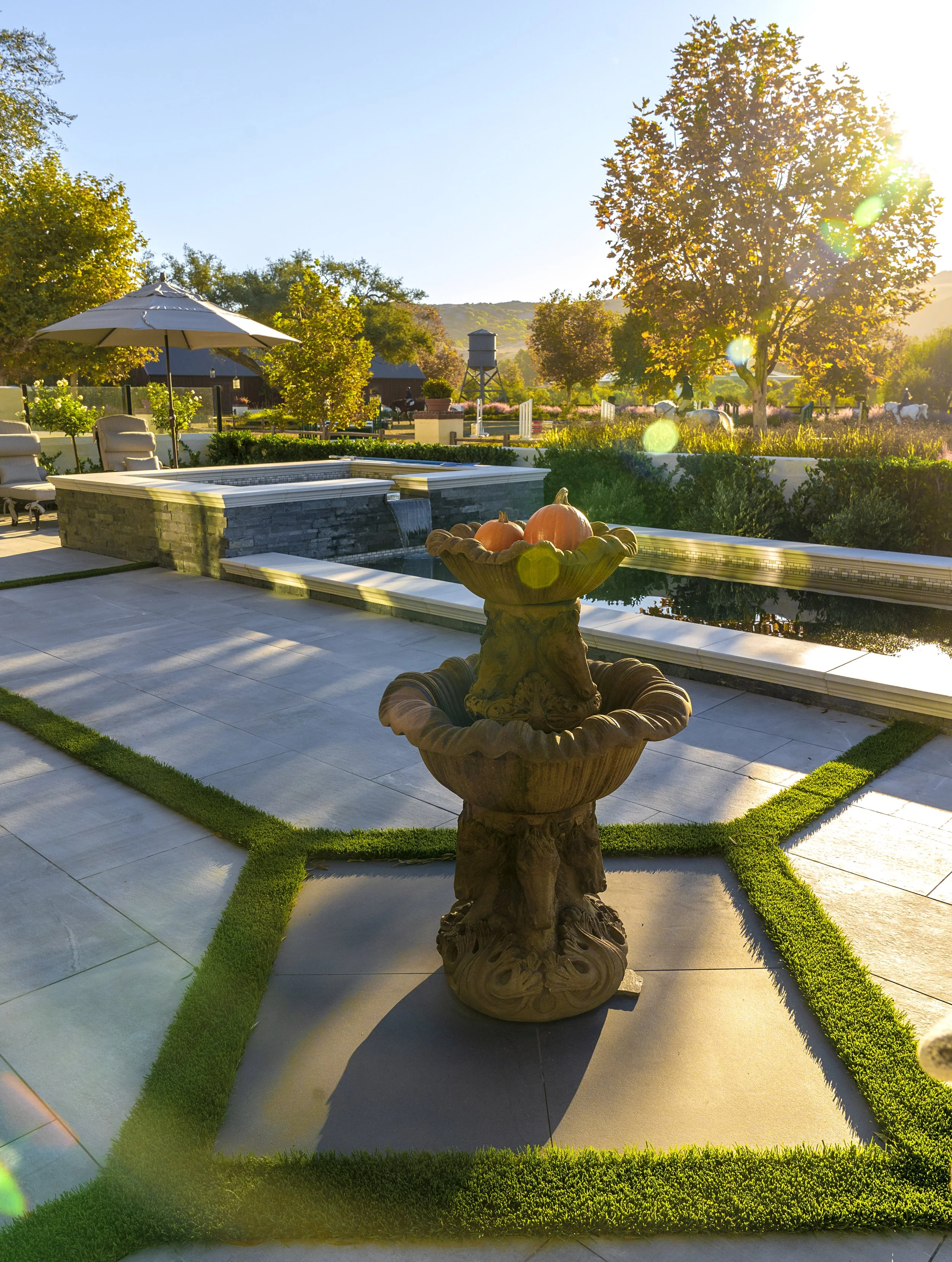
The morning terrace has one job: to make leaving the house feel like arriving somewhere. It sits just outside the kitchen door, where the first coffee is poured, and it faces the direction the morning light comes from.
Several small decisions make it work. The paving is set flush with the interior threshold, so stepping outside requires no thought at all. The stone is a lighter, honed tone that stays comfortable underfoot in the early hours and long after the sun has climbed. A seat wall, built at a height made for sitting, gives the corner a place to rest a mug and a moment. And the sound of water, low and constant, does what no planting can do: it quiets everything else.
10:00 AM: Shade for the Working Hours
By mid-morning the sun has changed the rules. A yard that felt perfect at seven can feel harsh at ten, which is why we draw the shade plan before we draw the paving plan.
For homeowners in Newport Beach and Laguna Niguel who now work from home, this is the hour that decides whether the yard becomes a daily place or a weekend one. A shaded corner with room for a table, power tucked discreetly into the wall, and a view of something green turns the yard into the best office in the house. Shade can come from a structure, a mature canopy, or the house itself. What matters is that it is planned, and that the stone beneath it reads as cool and quiet instead of bright and hard.
Surface color matters more than most people expect. Darker paving in full afternoon sun holds heat and becomes uncomfortable barefoot. Lighter travertine and limestone tones stay noticeably kinder, which is one of many reasons we specify material by how it will be lived on, not only how it photographs.
4:30 PM: Golden Hour
There is an hour in the afternoon, somewhere between four and six depending on the season, when Orange County light turns low and warm and rakes across every surface it touches. This is the hour a yard earns its keep.
Textured stone comes alive in this light. A dry-stack or hand-split wall throws fine shadow lines. A fireplace face glows. Planting turns to silhouette against the top of a retaining wall. In San Juan Capistrano, where the hills sit close and the light lingers on older stone, this is the hour people stop what they are doing and simply stand outside.
We plan for it deliberately. We orient seating to catch it, choose stone tones that warm instead of wash out, and leave one clear place to stand with a drink and do nothing at all. That last detail is rarely on a spec sheet. It is often what clients remember.
7:30 PM: The Long Table
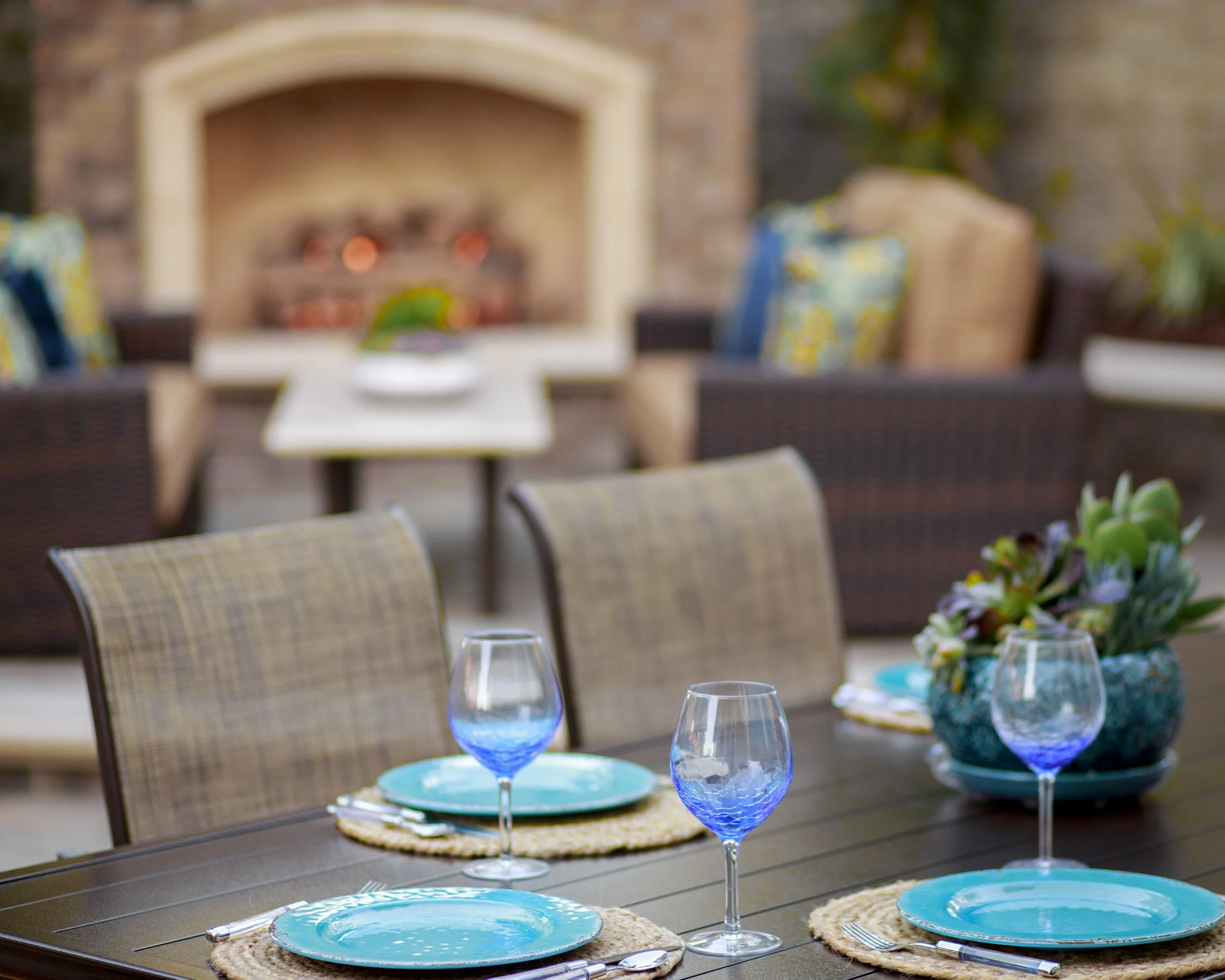
Dinner outdoors succeeds or fails on three things: proximity, light, and comfort.
Proximity means the kitchen and the table are close enough that the cook stays part of the evening. Light means the illumination is placed at the stone and the planting, never aimed at faces. We light the wall, not the guests. Warm, low, and quiet, so conversation stretches long past dessert. Comfort means the surface under the table is level and tight-jointed, chairs sit without rocking, and no one is guarding a heel from an open joint.
Then there are the steps. Every change of level in the yard gets its own quiet light at the edge, so that walking back to the house after the third glass of wine is easy and safe. It is the kind of detail nobody notices until it is missing.
10:00 PM: The Last Ember
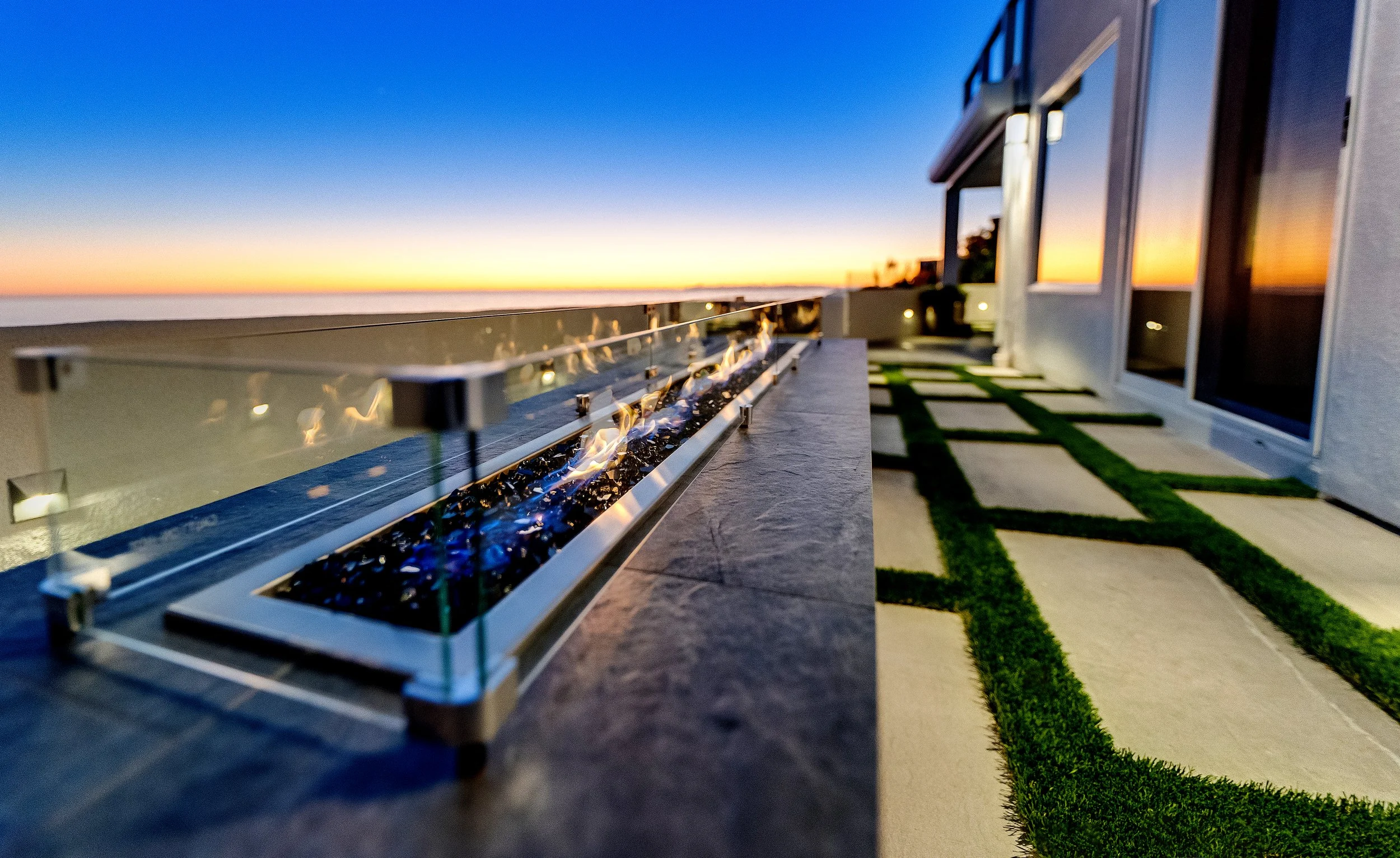
The day closes at the fire. Seating is set at a distance that gives warmth without crowding, with walls and benches built at heights that invite people to linger. Someone adds a log. The conversation slows. The house glows behind you, the yard settles into shadow, and the stars come out over the hills.
This is the scene people mean when they say a home feels like a retreat. It is not a trick of decoration. It is stone, fire, and light arranged by someone who thought about how ten p.m. should feel.
What You Never See, and Why It Matters
Every hour described above depends on work that is invisible by design.
A patio that stays true for decades begins with a base that is excavated, compacted, and built to hold its level. Water is directed away from the home with a subtle, consistent fall, commonly a quarter inch per foot, so that the yard drains without ever looking sloped. Joint lines run straight. Edges are cut, not broken. Wall courses are set to a line and checked again.
We think of it the way a fine automobile is engineered: the experience of quiet confidence is the product of precision nobody sees. You will never look at the compacted base under your terrace. You will simply never think about it, which is the point.
From the crew: Our masons set stone knowing which hour it will be seen at its best. A wall face is chosen to catch low light. A step is cut so its shadow line falls where it should. It is not a slogan. It is the difference between a job that is finished and a yard that is finished well.
How It Ages
A yard built this way does not peak on the day the crew leaves. Natural stone warms with sun and weather. Joints settle into character. Planting fills in and softens the edges. Year twenty is better than year one, because the materials were chosen to grow into their setting instead of fighting it.
That confidence is why we stand behind the work in writing. Our warranty exists because we expect the yard to be exactly as good, and better, long after the invoice is forgotten.
The Investment
Backyards planned around an entire day, with terraces, shade structures, water, outdoor dining, and fire, typically represent an investment of $250,000 to $500,000, depending on scope, materials, and site conditions. Signature projects with extensive terracing, custom stone work, or multiple structures can extend beyond that range. Every project begins with a design consultation and a full-color rendering, so you see the day before we build it.
Begin the Conversation
If you can picture your own version of this day, we would like to hear about it. Schedule a design consultation at westhillsmasonry.com/contact or call us at 714-519-5009.