
Key Takeaways
The best backyards grow easier to enjoy with age, and the same design choices serve strollers, guests, injuries, and every generation.
Level thresholds, gentle grades, wide paths, and secure surfaces do most of the work, and none of them need to look like accommodations.
Walkways at or under a 1 percent slope (about 1/8” of rise over 10 feet) feel effortless, and any ramp should be gradual and designed as part of the landscape.
Consistent steps, integrated handrails, layered lighting, and well-placed seating make every level of the yard usable.
These features add little to a project when planned from the beginning, and cost far more to add later.
The finest compliment a yard can receive is one nobody ever gives out loud: that it is easy.
Easy to step out onto. Easy to walk across. Easy to sit in, to garden in, to host in, at forty and at eighty. Easy in the way a beautifully engineered car is easy: everything works, and nothing calls attention to the effort behind it.
This is what we mean by designing a backyard you will still love at 80. It is not a "senior" yard. It is not clinical, and it should never look like one. It is a beautiful yard with the friction removed, so that it stays a pleasure across every decade you own it.
Why Ease Serves Everyone
Designing for ease at eighty also happens to serve everyone else who will ever use the yard. The parent with a stroller. The guest in heels. The teenager with a sprained ankle. The friend who has had a long day and would rather not think about where they step.
Good design reduces friction for everyone, quietly. Homeowners in San Juan Capistrano and Dana Point, where hillside lots and multiple levels are part of the charm, often tell us this is the thing they wish they had understood before they built the first time.
Begin at the Threshold
The most important step in any backyard is the first one: the transition from the house to the terrace.
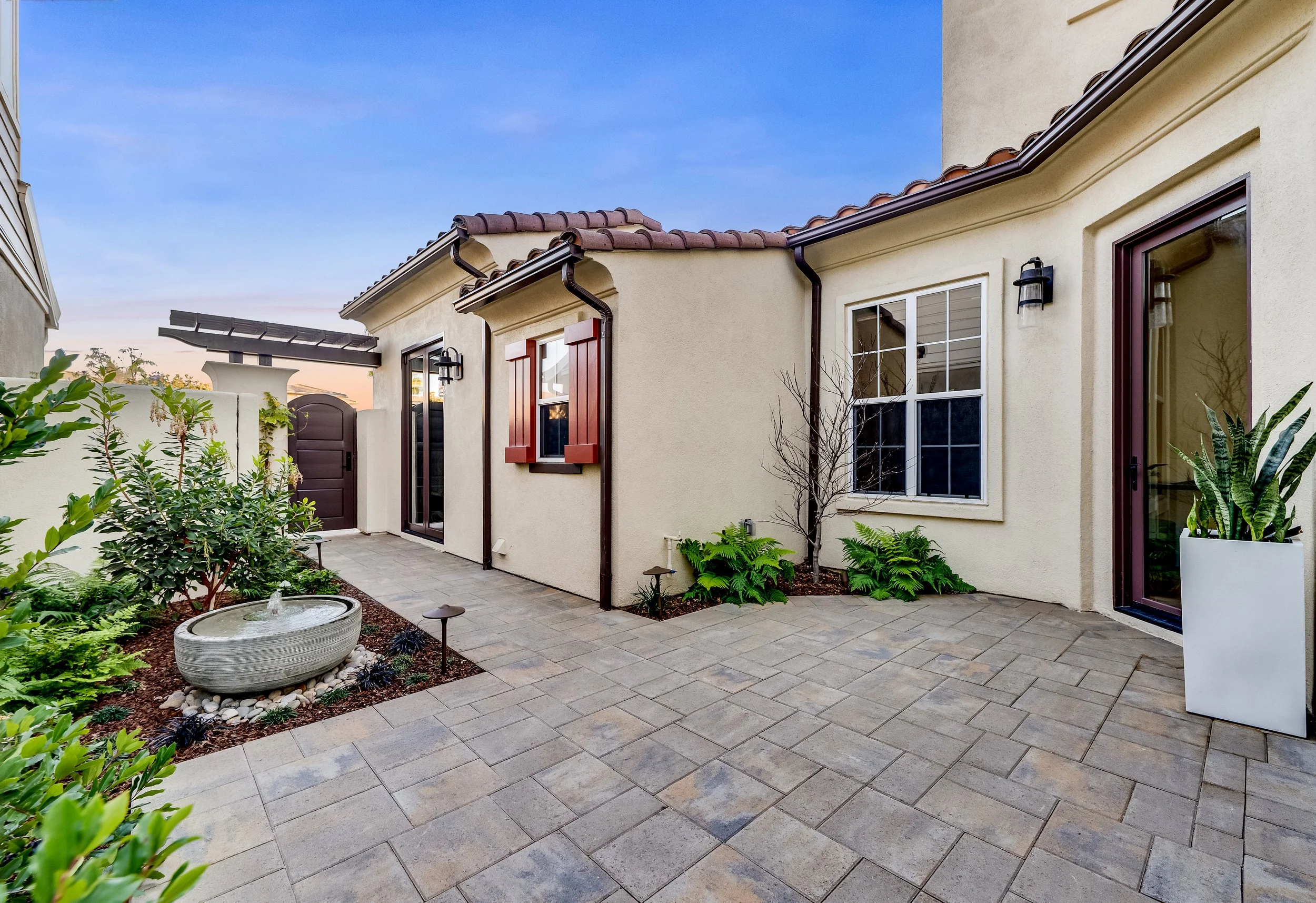
A flush threshold, with paving set level to the interior floor wherever the architecture allows, makes the yard feel like an extension of the home instead of a separate destination. Where a change in level is unavoidable, a generous landing and a broad, shallow step preserves the ease. No lips. No tripping edges. No surprises.
Gentle Grades, Wide Paths
Orange County's hillsides give yards their beauty and their challenge. The answer is to shape the land with intention.
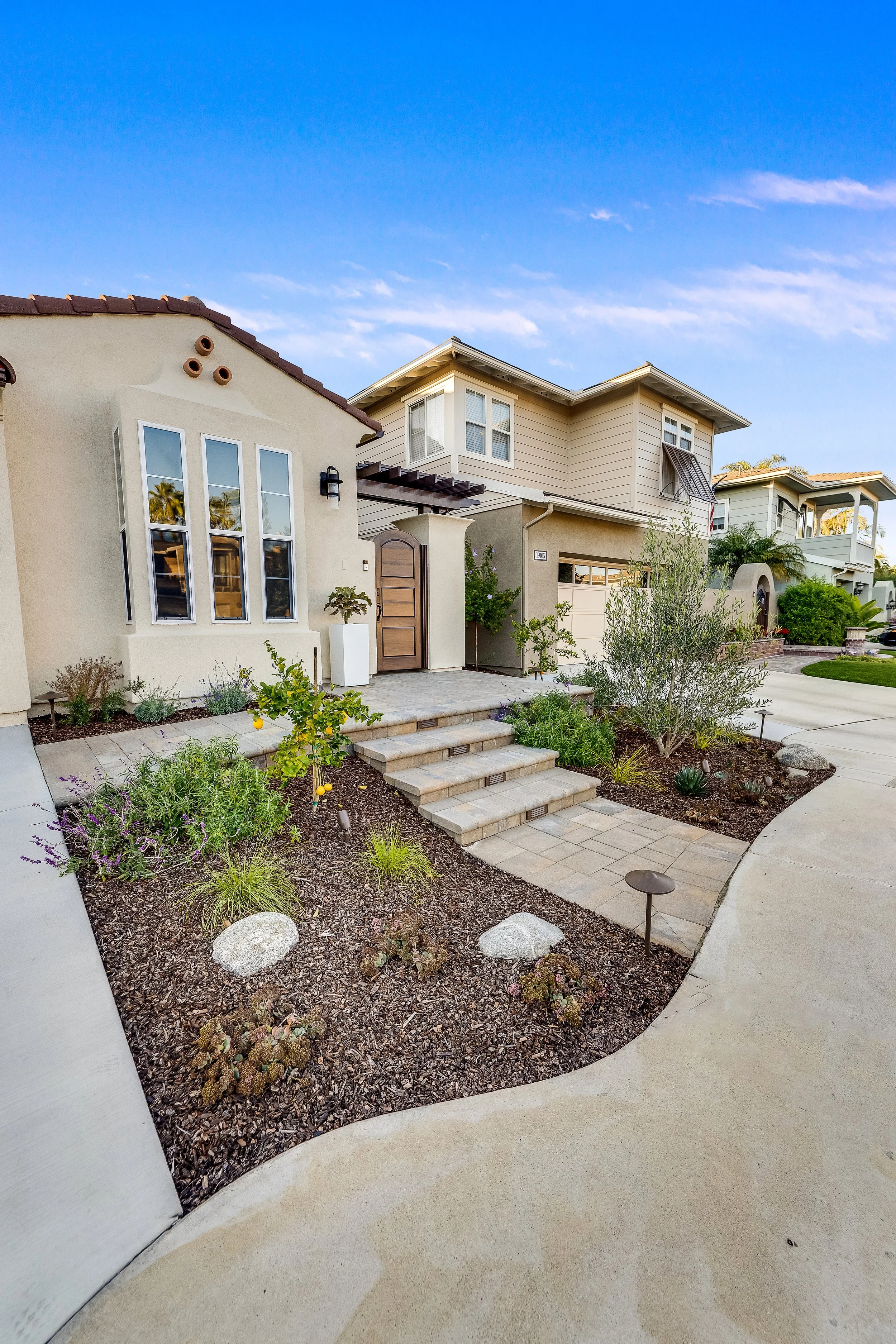
Main walkways feel effortless at a slope of 5 percent or less, which is roughly one foot of rise across twenty feet of length. Where more elevation must be gained, a well-designed ramp, gradual at no steeper than 1 foot of rise per 12 feet of run, can be woven into the landscape as a curving garden path. Done well, no one sees a ramp. They see a lovely walk through the planting.
Width matters just as much. We plan primary paths at four feet at minimum and five feet where possible, wide enough for two people to walk side by side, for a walker or a wheelchair to pass without effort, and for a guest carrying a tray to feel entirely at ease.
Surfaces That Stay Secure
Beauty and grip do not have to compete. The right surface is one that looks refined and stays secure, particularly when damp.
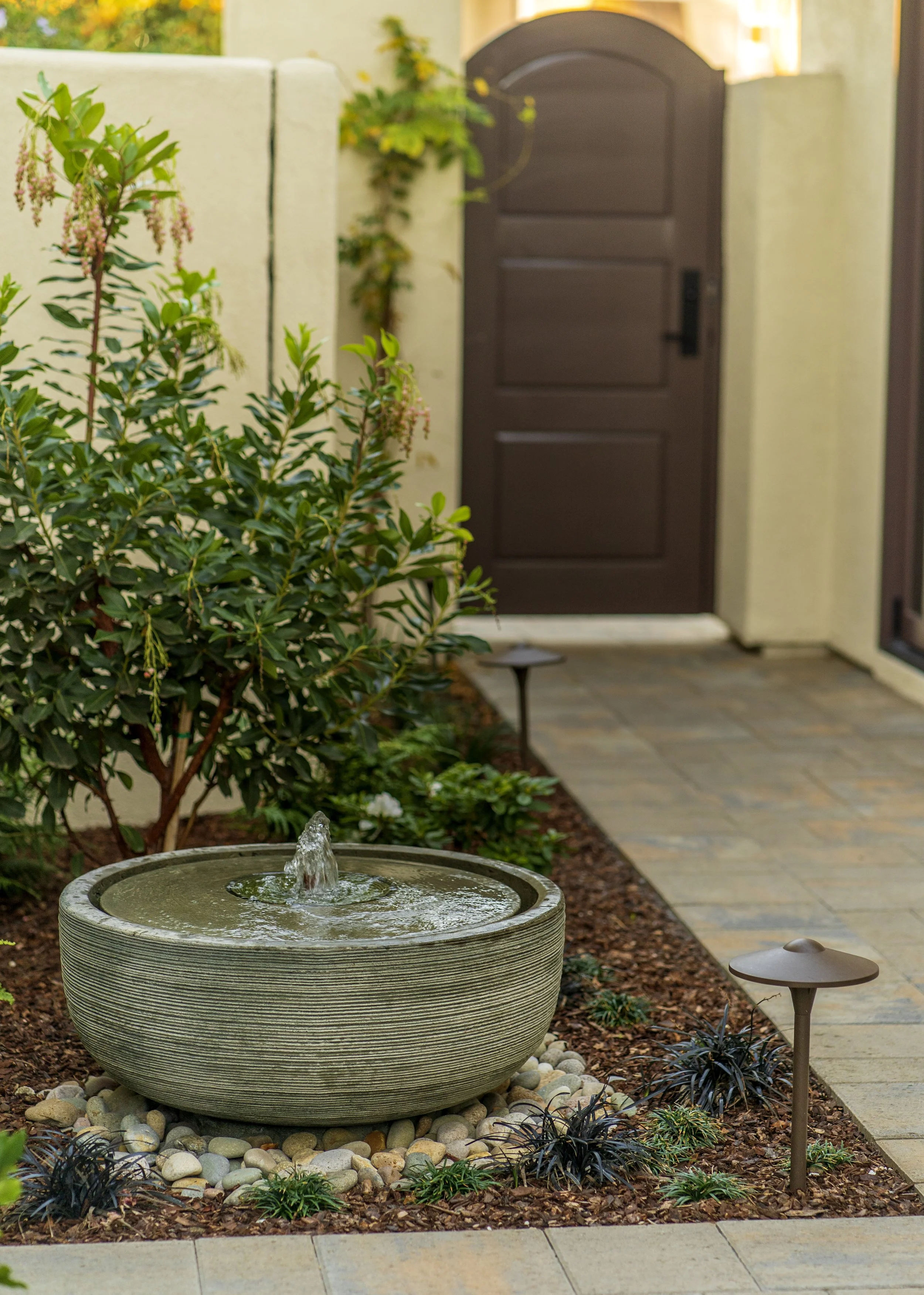
We avoid glossy, polished finishes in exterior walking areas and near water. Instead, we select textured, slip-resistant stone and paving with ratings appropriate for wet exterior conditions, and we pay careful attention to how surfaces meet each other so there are no lips or sudden changes in texture underfoot. Contrast between adjacent surfaces, such as a distinctly toned edge along a step, helps the eye read changes in level easily, at any age.
Steps and Handrails That Belong
Steps are where a yard is most likely to fail people, and where thoughtful design does the most good.
Every step in a run should be identical in height and depth, because the body learns a rhythm quickly and stumbles when it is broken. We prefer generous treads and moderate risers, broad landings at meaningful intervals, and lighting at each step edge. We avoid isolated single steps, which are the most common trip hazard in any yard.
Handrails can be built into the architecture. A stone wall with a smooth, comfortable cap can serve as a rail along a stair. A seat wall can flank a walkway and offer support at the exact points where someone might want it. The best handrail is one guests never realize is a handrail.
Seating at Every Turn
A yard that is easy to love invites rest. We plan places to sit at natural intervals: a bench at the top of a stair, a seat wall along a garden path, a shaded chair at a viewpoint. Seat walls built a little higher than a standard chair, around 18 to 20 inches, are easier to rise from and comfortable to sit on for the long conversation.
Raised Planters and Effortless Gardens
Gardening should remain a joy for as long as anyone wants it. Raised stone planters, set at a comfortable working height, let a gardener tend herbs, roses, or citrus without stooping. Drip irrigation keeps watering simple. A smaller lawn or a well-designed turf area reduces maintenance without reducing beauty. Every choice is aimed at keeping the yard something you do because you love it, never because you must.
Homeowners in Laguna Hills and Anaheim Hills often tell us this is the feature that changes daily life most. The garden stays part of the routine.
Light for Confidence
Evening lighting is where beauty and safety meet. Soft, layered, glare-free light on paths, steps, and thresholds lets the yard feel secure after dark, so that a walk to the fire or back to the house is always easy. Motion-activated and dimmable options add convenience. The principle stays the same: light the surface, hide the source.
The Craft Underneath
Ease is a product of precision. A path stays smooth because the base beneath it is properly prepared and drained. A step stays consistent because every riser was measured and checked. A wall cap feels comfortable because someone chose the profile and finished the edge by hand.
From the crew: We check every step twice: once with a level and once by walking it. The level tells you it is right. Walking it tells you it feels right. Both matter.
How It Ages
A yard designed for ease does not need to be redone as life changes. It simply keeps working. Stone warms and settles. Plantings mature. The paths are as comfortable at eighty as they were at fifty, and the family enjoys the yard without ever having to adjust to it.
We stand behind our work in writing because a yard meant for decades should be built for all of them.
The Investment
When these principles are built into a project from the start, they typically add very little to the overall investment, and they cost far more to add later through rework. Backyard projects designed with this level of care typically represent an investment of $250,000 to $500,000, depending on scope, materials, and site conditions. Every project begins with a design consultation and full-color rendering.
Begin the Conversation
If you want a yard that stays effortless for the next thirty years, let us design it with you. Schedule a consultation at westhillsmasonry.com/contact or call us at 714-519-5009.